Article
Ice Fishing for Panfish
Bluegills, crappie and perch bite all winter under the ice. Here's where they are at first ice, midwinter and late ice, the tiny jigs and rigs that catch them, and how to stay safe out there.
November 3, 2026
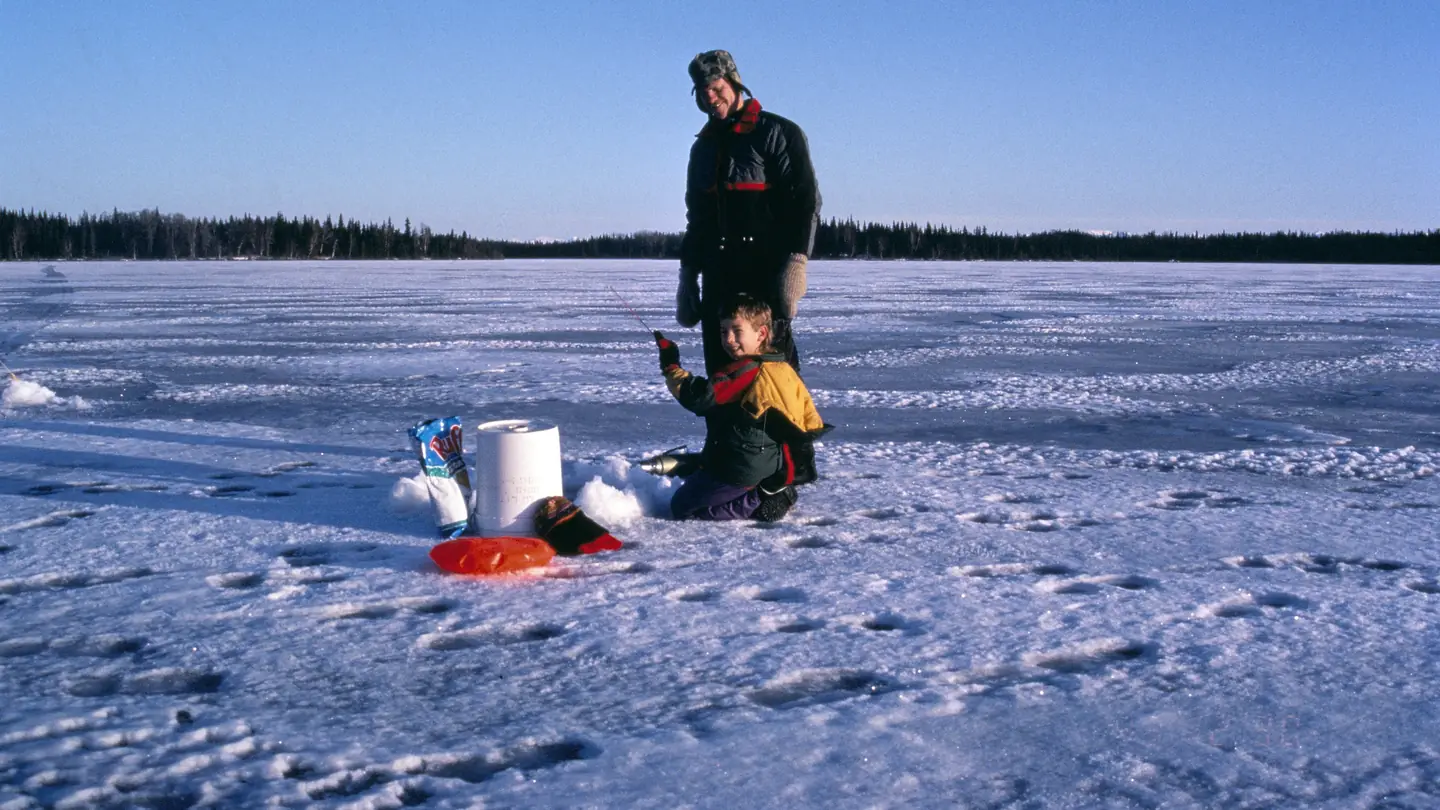
When the lakes lock up, panfish don't stop eating. Bluegills, crappie and perch bite all winter, and ice fishing for them is simple, cheap, and some of the best fishing of the year. Nothing on the ice matters more than safety, so start there.
Safety first
- No ice is 100 percent safe. Follow your state's ice-safety guidance and local reports. One experienced guide waits for at least 4 inches of good, clear ice before walking out.
- Check as you go. Tap the ice ahead of you with a spud bar on early ice. Don't walk past where you've checked.
- Wear ice picks (awls) around your neck or on your jacket, so you can pull yourself out if you go through.
- Wear a life jacket walking out on early ice.
- Spread out from your fishing partners rather than bunching up.
- Bring a headlamp and a compass or GPS in case of snow squalls.
Where panfish are
First ice
Early ice is a continuation of the fall bite. Panfish are where you left them in the fall, often tightly schooled in and around the shallow weeds. The ice is clear and thin, the water is calm and clear, and the fish are spooky.
- Bluegills and crappie: in and along the weedbeds. A hole over a weed edge often beats one over open water.
- Perch: this is the one time of year they're often in very shallow water, near points connected to shore.
Midwinter
The easy shallow bite fades and much of it slides deeper. In ice-belt lakes, crappie spend midwinter moving between the weedlines and the deeper basins. Expect to move more and work harder for bites.
Late ice
As the days lengthen and the ice starts to soften, panfish get aggressive and start moving toward their spawning areas.
- Crappie leave the basins and move up onto 10- to 20-foot flats and mid-depth brush, cribs and timber, often on the end of the lake where the ice melts first. They cruise high, sometimes right under the ice, and chase baits.
- Green weeds in the shallows hold crappie and bluegills.
Gear
- Rod: a short, light ice rod with a sensitive tip.
- Line: 2- to 4-pound. Panfish inspect a bait before they take it, so thin line gets more bites.
- Auger, scoop and a bucket or shelter.
- Sonar or a flasher shows you the bottom, the fish, and your jig. Seeing a fish rise to your bait tells you what's working. Units that look off to the sides let you drill right on top of the fish instead of drilling dozens of holes to search.
- A lake map app to find depth changes, weedlines and flats.
Lures
- Tiny jigs: 1/64 to 1/16 ounce, tipped with a couple of maggots, a wax worm, a small minnow or a micro soft plastic. A small horizontal jig packed with maggots works on almost every panfish.
- Ice flies: very light flies with hackle that sink painfully slowly. Pressured panfish, especially bluegills in the weeds, often want that slow fall.
- Small spoons and jigging minnow lures: for searching and for aggressive perch and crappie.
Fall speed matters. Tungsten jigs are denser than lead and sink faster, which gets you down quickly and keeps you in touch with the jig. But a jig that plunges into a school can spook it, and some days a slow-falling lead jig or fly works much better. Carry both and experiment.
Two ways to fish it
Jigging
Drop the jig to the depth of the fish (or just above them), then work it. Start with small lifts and drops to get attention, then slow down to tiny jiggles and pauses when fish come in. For perch on the bottom:
- Lift and hold: a few inches above the bottom.
- Bottom snap: tap the bottom and snap the jig back up, then hold. On soft bottom it kicks up a little silt.
- Tight-line twitch: jiggle the jig in place on the bottom for a second, then stop. Watch for a slight lightening of the line.
Slip bobber
Good for kids and for fishing a second hole.
- Drop a weight down the hole to find the depth.
- Pull the line back up and slide a bobber stop to set the bait at the depth you want.
- Drop the baited jig and bobber back in.
- Set the hook if the bobber jiggles, sinks or does anything odd.
Stealth on the ice
- Drill all your holes at once rather than drilling, fishing, then drilling again. The cutting sound spooks fish, especially in shallow water.
- Drill only as many as you need to start.
- Leave a little slush in the hole on clear early ice to cut the light shining down.
- Fish under snow patches on clear ice. The snow shades the hole, and patches can mark weeds below.
Find them, then follow them
Panfish schools move under the ice, and a hot hole can go cold fast. If a school stops biting, move a few holes over or try a new spot. Fish are usually most active near dawn and dusk.
For each species, see Crappie Fishing Through the Seasons, Bluegill and Sunfish Fishing and Yellow Perch Fishing.
Before you go
Ice fishing rules (number of lines, shelters, tip-ups) and panfish limits differ by state. Check your state's current rules and ice safety guidance before you go.
Cover photo: U.S. Fish and Wildlife Service (public domain).