Article
Yellow Perch Fishing
Perch travel in schools near the bottom, and once you find one you've found dozens. Here's where perch go from the spring spawn to summer and fall, and the small jigs, spoons and baits that catch them.
November 3, 2026
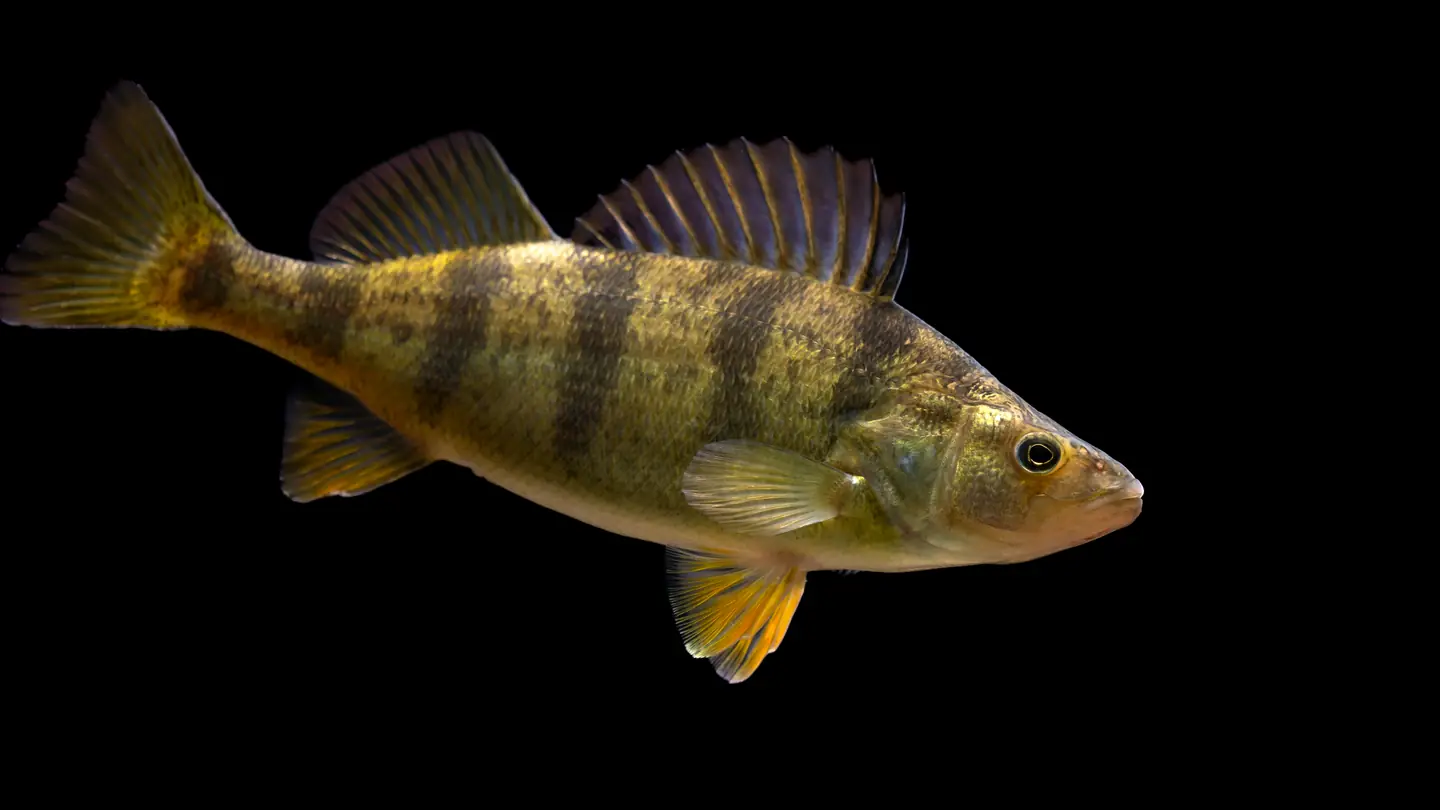
Yellow perch are schoolers. Where there's one, there are usually dozens, cruising together near the bottom. Find a school and you can catch them as fast as you can rebait; lose it and you'll catch nothing. Perch fishing is mostly about finding the school, staying on it, and putting a small bait right on the bottom in front of it.
Where perch are through the year
Spring: the spawn
Perch spawn soon after ice-out, when the water is between about 45 and 52°F, usually April into early May in the North, right after the walleyes. They don't make nests. Instead, females drape long ribbons of eggs over weeds, roots, brush and fallen trees in shallow water.
Where: shallow, sheltered bays off the main lake, marshes, sloughs, and back lakes connected by channels or creeks. Bays with some old bulrushes or weeds that survived the winter are ideal. Perch gather near these spots even before the ice goes out, and spring into early summer is some of the fastest perch fishing of the year.
Summer: deeper schools
In summer, perch school up deeper, on or within a few feet of the bottom. On big lakes, perch are often the most dependable bite in midsummer, when walleyes and bass get tough. Use your electronics: perch near the bottom show up easily on sonar.
Fall and winter
Perch are one of the top targets through the ice. See Ice Fishing for Panfish.
Finding and staying on a school
- Search with sonar. Run over likely areas and look for fish on or near the bottom.
- Search with a bigger lure. A small spoon or a jigging minnow lure covers water and draws perch in fast. On smaller lakes, scale it down.
- Hold your position. Once you find them, stay right on top of them. Repeatedly throwing and pulling up an anchor can spook the school; a trolling motor that holds position works better.
- Keep moving when it dies. Perch schools move, and a school can get "fished out" fast. If the bite stops, move to find a fresh school.
Lures and baits
Perch eat a lot of their food right off the bottom: insect larvae, tiny crustaceans and small fish. Keep your bait low.
- Small jigs: 1/64 to 1/16 ounce, tipped with a piece of worm, a minnow, a wax worm or a few maggots, or with a small soft plastic. Leave some worm trailing off the hook so it wiggles.
- Small spoons: great for attracting a school. Jig them, let them fall to the bottom, and lift a little.
- Jigging minnow lures: big perch eat small perch, so a perch-colored jigging minnow works all year. Work it hard to attract fish, or barely move it.
- Minnows: live minnows on a small hook or jig.
- Multi-hook rigs: two or three hooks on short droppers above a sinker put baits at different heights off the bottom.
If perch keep stealing your live bait, switch to a small soft plastic on a small jighead. Sometimes it gets hard strikes when bait gets nibbled.
Working the bottom
- Lift and hold: let the bait touch bottom, then lift it a few inches and hold it there.
- Bottom snap: drop the lure to the bottom and snap it right back up a few inches. On soft bottom, it puffs a little cloud of silt. Then hold.
- Tight-line twitch: with the jig on the bottom and the line just tight, jiggle it in place for a second, then stop. A bite is often just a slight lightening of the weight as a perch sucks it in.
Don't overwork it. Perch don't need constant action; sometimes a bait that barely moves gets the most bites.
Tackle
- Rod: light or ultralight spinning.
- Line: light, 2- to 4-pound for small lures, 6-pound if walleye may be around. Perch inspect a bait before they bite, so thin line helps.
- Jig weight: heavy enough to get down and keep the line straight, light enough for perch to inhale. Tungsten jigs sink faster than lead of the same size; sometimes a slow-falling light jig is better. Experiment.
Dawn and dusk are often the best times. Keep a tight line: perch are usually hooked in the lip, and slack lets them shake free.
Small perch?
In lakes with too many perch competing for food, or with lots of pike, perch often stay small. If a lake only gives up small perch, try another lake rather than another lure.
For other panfish, see Crappie Fishing Through the Seasons and Bluegill and Sunfish Fishing.
Before you go
Perch bag limits differ by state and sometimes by lake. Check your state's current freshwater rules before you go.
Cover photo: U.S. Fish and Wildlife Service (public domain).