Article
Where Trout Hold in Streams
Trout pick spots that give them food, shelter from current, and safety. Learn to read riffles, runs, pools, seams and pockets, and how water level, season and sun change where trout sit.
November 3, 2026
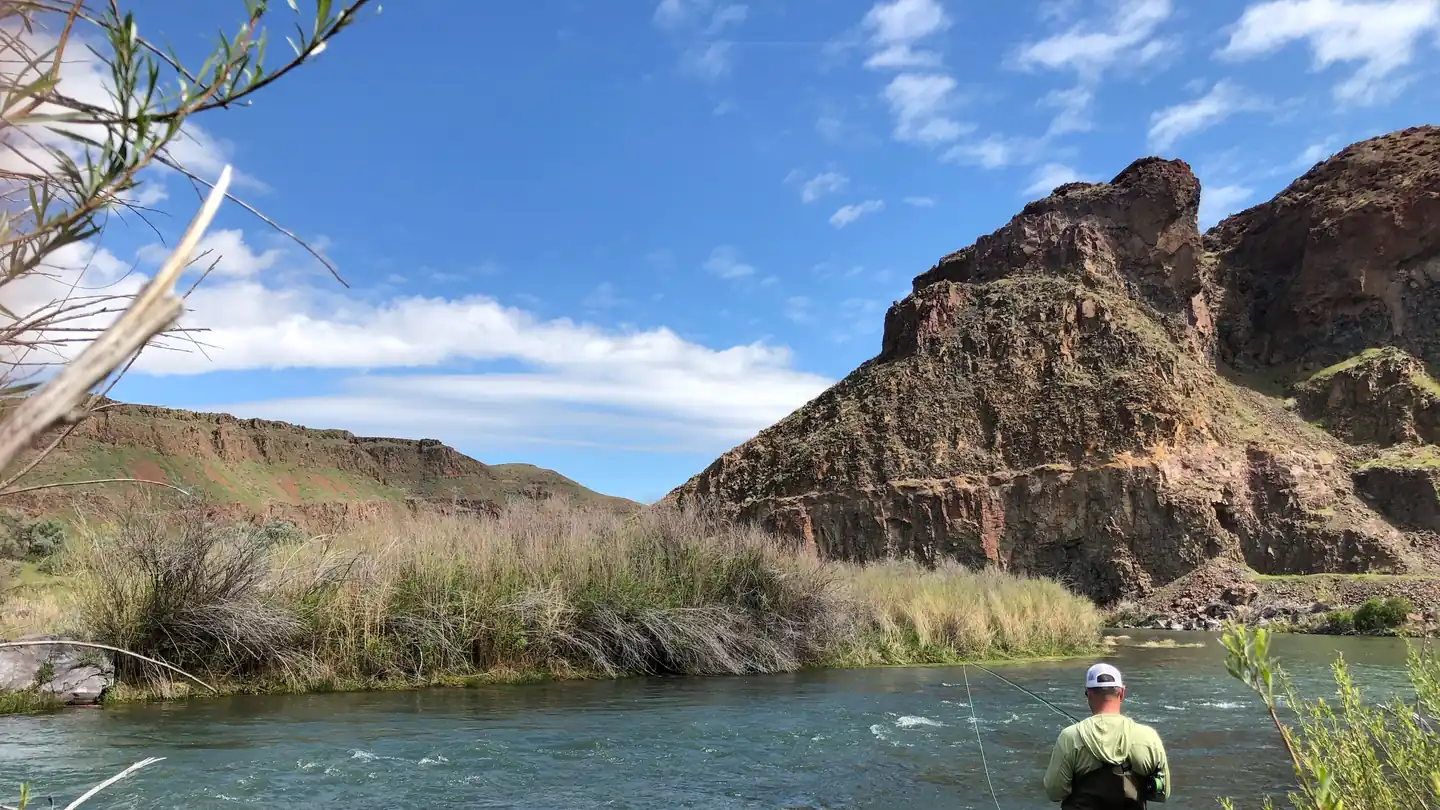
A trout stream can look like a long, uniform ribbon of water, but trout are very particular about where they sit. Every trout wants three things: a spot where it doesn't have to fight the current all day, food coming to it, and safety from predators. Find water that offers all three, and you've found trout.
The three kinds of water
Most streams are a repeating pattern of riffles, runs and pools.
- Riffles: shallow, fast water bubbling over rocks. This is where the stream's insects live: mayflies, stoneflies and caddisflies.
- Runs: deeper, smooth-flowing water.
- Pools: deep, slow water, and a favorite place for trout.
The three come together, one after another, and trout use all of them. Work each pool and run from head to tail, paying special attention to the pockets and the inside edges.
What to look for
Current seams
A seam is the line where fast water meets slow water. You can often see it as a line of bubbles or a change in the surface. Trout hold on the slow side and dart into the fast side to grab food as it washes past. Seams are some of the most reliable trout spots on any stream. The most active fish usually sit at the upstream end.
Eddies
Where the current curls back behind a point, a rock or a bend, trout hold on the edges of the swirling water.
Pocket water
The small, slower pockets behind and in front of rocks in a riffle or fast run. Each one can hold a trout. Fish them all.
Cover
Undercut banks, sunken logs, branches and big rocks. Trout feel safe under or beside them. Any place where you can't see the bottom, because of depth, shade or a broken surface, is worth a cast.
How conditions move trout
High water
When the stream is high and fast after rain or snowmelt, trout move toward the banks, into places where something blocks the current. Fish close to the bank. Worms are a great bait right after a rain.
Normal water
At typical levels, trout spread out through the pools, runs and pocket water.
Low, clear water
In late summer droughts, trout crowd into the deepest, shadiest spots with cover and broken surface water. Pockets in riffles still hold fish. Low, clear water makes trout spooky, so go lighter and use subtle colors.
Sun and clouds
Trout seek shade on bright days. Cloudy days are often better, and in bright sun, fish the shaded banks and the deep water.
Through the seasons
- Summer: trout feed best early and late in the day, when the water is coolest. The middle of a hot afternoon can be slow and stressful for trout. Move upstream to cooler water, or fish near cold springs and tributaries, which act as cool refuges.
- Winter: trout move into slow, deep water: back eddies, side channels and the inside edges of seams. They won't move far for food, so fish each spot thoroughly and slowly. The best fishing is often late morning to mid-afternoon, when the water is warmest.
Approach
Stream trout spook easily, especially in small streams. If you can see them, they can see you.
- Fish upstream. Wade and walk upstream, quietly, and cast up into the water ahead of you.
- Move quietly. Tread softly on the bank and wade slowly. Vibrations, wakes and clouds of mud put fish down.
- Stay low and dress drab. Keep rocks, trees and bushes between you and the fish.
- Wear polarized sunglasses to see into the water and spot rocks, edges and fish.
- Short casts first. Fish the close water before you cast to the far side, making each cast a little longer.
- Rest a spooked spot. If you blow a pool, let it settle for a while before fishing it again.
For what to throw, see Trout Baits and Rigs and Trout Lures: Spinners, Spoons and More. For stocked waters, see How to Catch Stocked Trout.
Cover photo: Larisa Bogardus, Bureau of Land Management (public domain).