Article
Trout Baits and Rigs
Worms, eggs, dough bait and minnows catch more trout than anything else, but only if they drift or float naturally. Here's which bait to use, and the three rigs that cover streams and ponds.
November 3, 2026
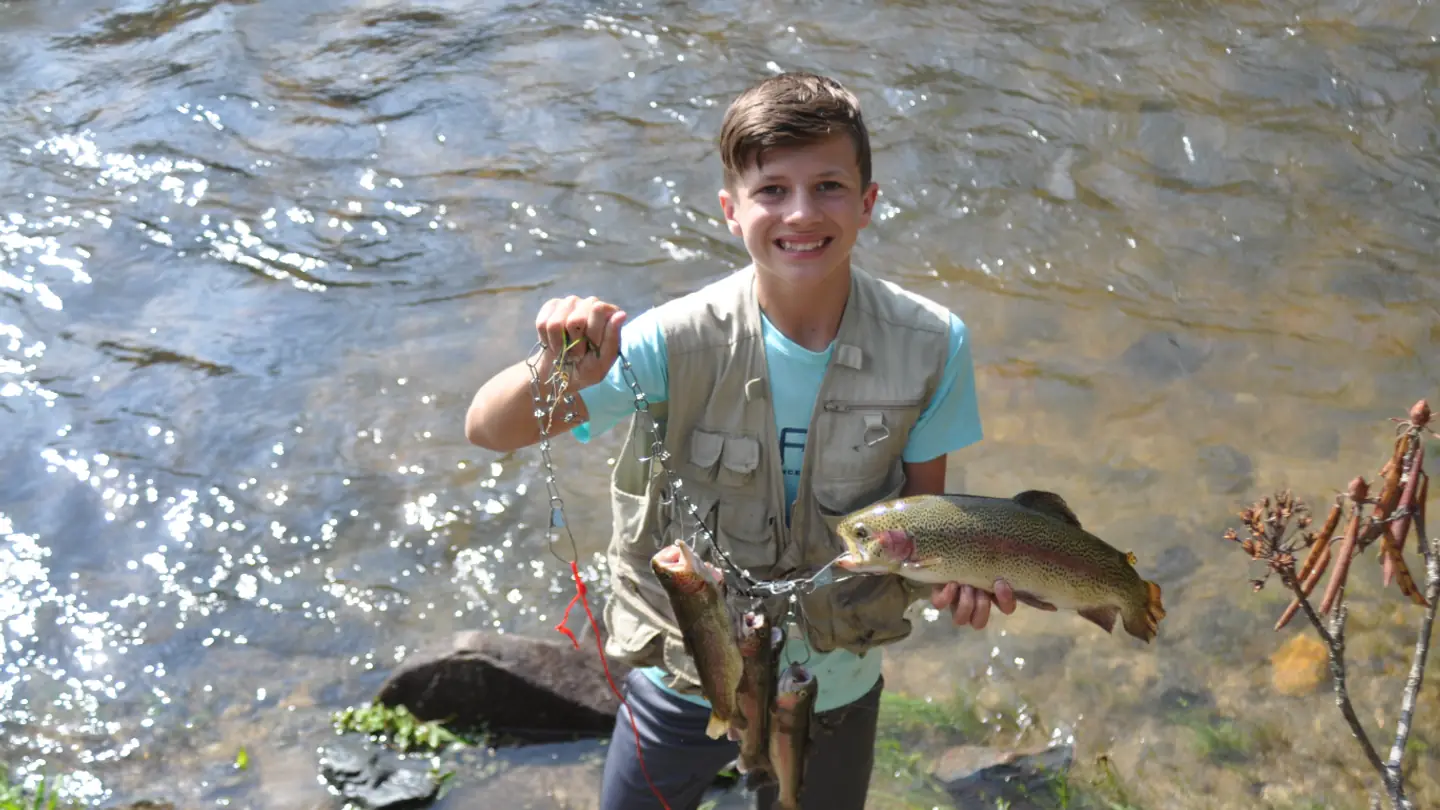
Bait is the surest way to catch trout, stocked or wild. But a worm that drags along the bottom like a rock, or a ball of dough buried in the weeds, won't get eaten. The whole game is getting your bait to drift or float naturally where trout can see it. Three simple rigs do that in almost any water.
The baits
| Bait | Notes |
|---|---|
| Worms | The best all-around trout bait. Nightcrawlers, cut in pieces, or small red worms. |
| Floating dough bait | The top bait for stocked trout. Floats off the bottom where fish see it. |
| Salmon eggs and synthetic eggs | Classic for rainbows, drifted through pools and behind boulders. |
| Minnows and shiners | Good for bigger browns; check whether minnows are allowed. |
| Wax worms and mealworms | Small, tough grubs; great tipped on a jig or spinner and in winter. |
| Corn, marshmallows | Simple baits that sometimes catch pressured stocked fish. |
| Grasshoppers, crayfish, nymphs | Natural foods, especially in summer streams. |
Hooking a worm: run the hook through once or twice and leave a tail trailing. If fish keep nipping the tail without getting hooked, use a smaller piece.
Hooks: small and light. Sizes 6 to 10 cover most trout bait, matched to the bait size. Fine-wire hooks keep live bait lively. Egg hooks and circle hooks suit dough and eggs.
Line: light. Trout are wary, so 2- to 8-pound line, and lighter in clear or heavily fished water.
Rig 1: the drift rig (streams)
The basic stream rig is almost nothing: a hook, your bait, and a split shot or two above it.
- Tie on a size 6 to 10 hook.
- Pinch one small split shot onto the line a few inches above the hook. Use as little weight as possible; sometimes none at all.
- Cast upstream of where you think trout are holding and let the bait drift down with the current, at or just a little slower than the surface water.
- You want the bait close to the bottom, just ticking it now and then. If it hangs up constantly, take weight off. If it never touches, add a little. When in doubt, err on the high side.
- Keep the rod tip up and reel in slack as the bait comes back toward you so you can feel the bite.
Too much weight is the most common mistake. It drags the bait unnaturally and snags constantly. A worm with no weight at all, cast well upstream of a deep hole, often drifts down perfectly.
Rig 2: the float rig (pools and slow runs)
In deep pools, long slow runs, and water too snaggy to drift on the bottom, hang the bait under a small float.
- Clip a small float (a bobber) on the line. Set it so the bait hangs just above the bottom, usually 12 to 18 inches below the float in shallow water, deeper in deeper pools.
- Add a split shot a few inches above the hook to get the bait down in faster current.
- Cast upstream and let the float carry the bait down with the current.
The float doubles as a bite indicator: it twitches when a trout is checking out the bait and goes under when it takes it.
Rig 3: the sliding-sinker floating-bait rig (ponds and lakes)
This is the rig that catches the most stocked pond trout. It holds a buoyant bait just off the bottom, in plain view.
- Slide a small egg or bullet sinker (around 1/8 ounce, more for longer casts) onto your main line.
- Tie a small barrel swivel below it. The swivel stops the sinker.
- Tie 18 to 24 inches of light leader (4-pound, fluorocarbon if you have it) to the swivel. Use a longer leader if there are weeds on the bottom.
- Tie on a size 6 or 8 egg hook or circle hook.
- Mold enough floating dough bait around the hook to float it. (Or use an air-inflated nightcrawler.)
Cast it out, let it settle, and reel up the slack. The sinker sits on the bottom and the bait floats up at the end of the leader. When a trout takes it, the line slides through the sinker so the fish doesn't feel the weight.
Hooking: with a circle hook, just reel steadily when the line moves off. With a regular hook, sweep the rod to set the hook.
Patience pays. Pond trout cruise, so casting out and waiting works. If you haven't had a bite in about 10 minutes, check your bait and recast.
This rig snags in streams. Use it in ponds and lakes, or very slow pools.
Tackle
Light or medium spinning gear, or push-button spincast gear for beginners, with 2- to 8-pound line.
Where bait isn't allowed
Some streams are artificial-lures-only or fly-fishing-only, and some ban live bait or minnows. Read the rules for each water. Never dump leftover live bait into the water.
For lures, see Trout Lures: Spinners, Spoons and More. For where to drift your bait, see Where Trout Hold in Streams.
Cover photo: Crystal Thomas, U.S. Fish and Wildlife Service (public domain).