Article
The Ultimate Guide to Walleye Fishing
Walleye in lakes, reservoirs and rivers: how light, wind and water temperature run their day and their year, the spawn, summer weeds and basins, fall and ice, jigs, live-bait rigs, slip bobbers, crankbaits and trolling, and the tackle to match.
November 10, 2026
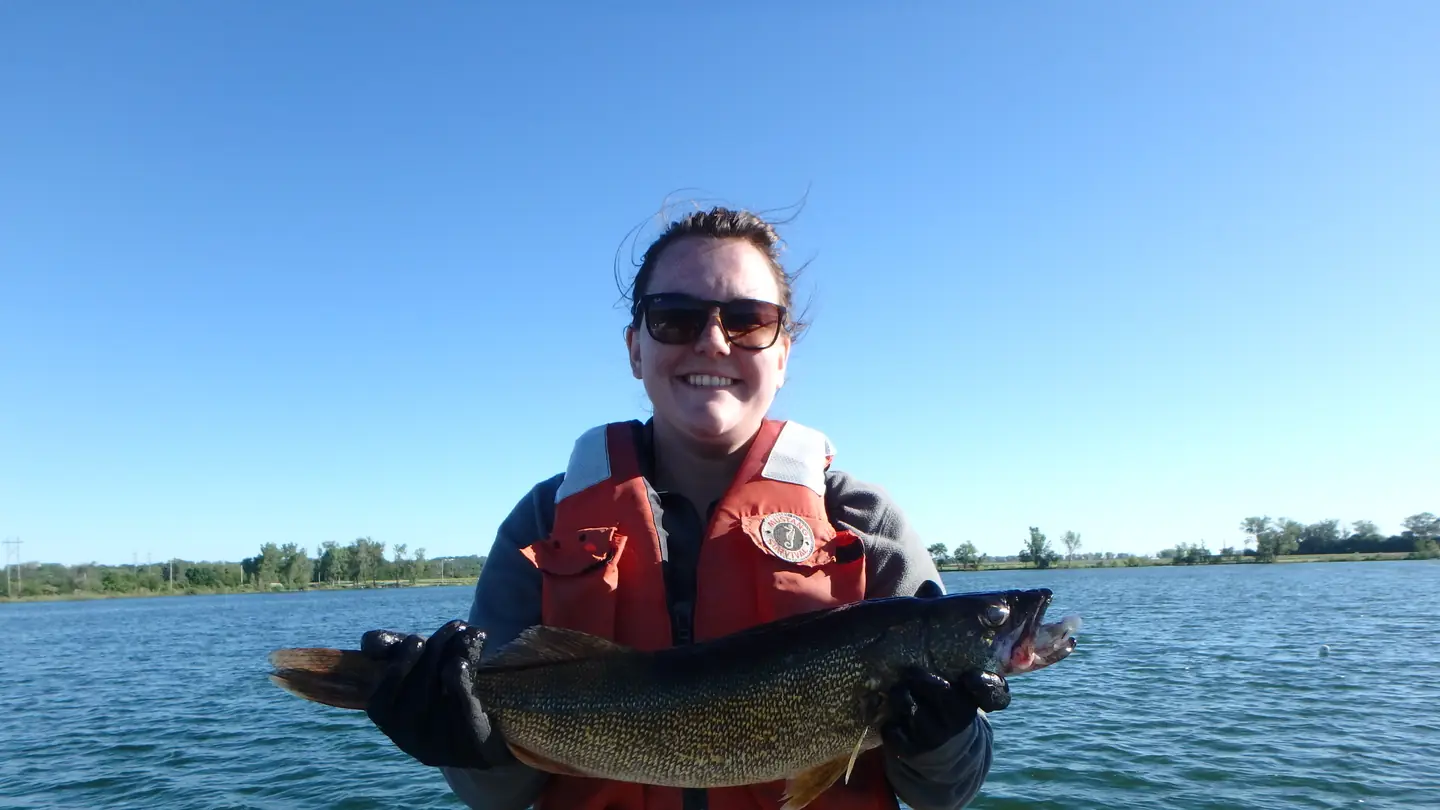
Walleye are coolwater fish of lakes, reservoirs and big rivers, with big, light-gathering eyes, sharp teeth and a taste for minnows, leeches and crawlers. They can be hard to pin down: on the points one evening, gone the next morning. Most of that comes down to light, wind and water temperature, and once you understand those, walleye get a lot more predictable. This guide covers it all.
Know the fish
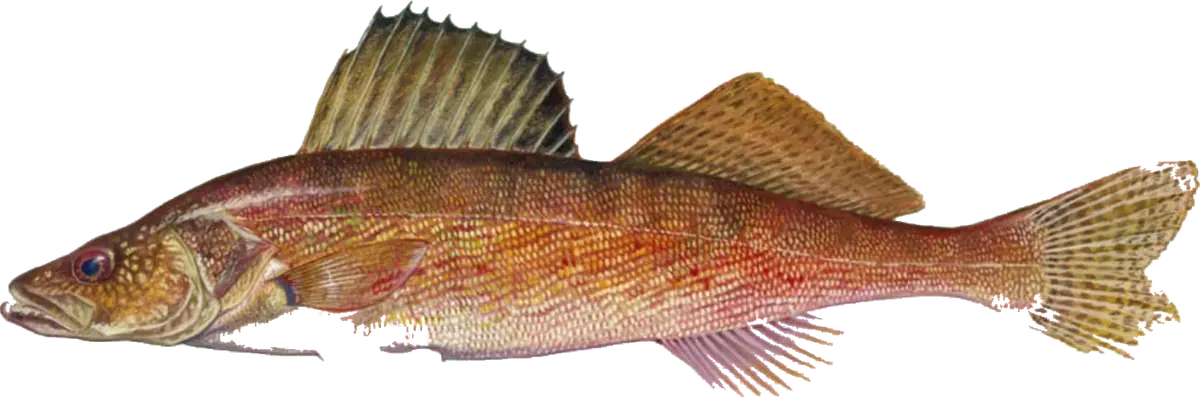
Walleye. Painting: Duane Raver, U.S. Fish and Wildlife Service (public domain).
Walleye are long, mottled olive-gold to greenish-brown fish with two dorsal fins, sharp teeth and a white tip on the lower lobe of the tail. Their cousin, the sauger, lacks that white tip and grows smaller. Walleye are native to central North America, from the Appalachians to the Rockies and north into Canada, and have been introduced widely. They can reach 12 to 15 pounds; adults eat mostly fish, following schools of perch, herring, shad, ciscoes and smelt.
Their eyes explain their behavior. A reflective layer in the eye lets walleye see and feed in dim light and murky water. They're light-sensitive, which is why walleye feed most at dawn, dusk and night, on overcast days and in wind-chopped water, and why they hold deeper or in cover when the sun is high.
Light, wind and water
- Low light: dawn, dusk and after dark are prime, especially for shallow fish. On busy lakes, night fishing can be the best way to find quiet, feeding walleye.
- Wind: choppy water breaks up the light, and walleye move onto shallow reefs and points on windy days.
- Clouds: an overcast day can keep shallow fish feeding all day.
- Depth: deep fish are more active in daylight than shallow fish, so fish deep structure when the sun is up and shallow structure in low light.
- Fronts: walleye are coolwater fish, and an early-fall cold front can turn them on.
Walleye through the year
| Season | Where they are | How to fish them |
|---|---|---|
| Spring spawn (about 40 to 50°F, peaking 44 to 48°F) | Clean, hard cobble, gravel and rubble in 1 to 10 feet: rocky tributaries, below dams, rocky shorelines, reefs, riprap and gravel bars. River fish return to the same spawning areas every year. Prespawn fish wait downstream in deeper, slower water. | Jigs with grubs or minnows cast to current breaks and bar tops; shore fishing is good |
| Late spring and early summer | Shallow sandy flats and rocky shorelines; warmer water early. Some fish move into weed flats near spawning areas, 4 to 8 feet in stained lakes and 8 to 12 feet in clear ones, and stay all summer. | Slip bobbers with leeches or minnows, jigs, live-bait rigs; some of the easiest walleye fishing of the year |
| Summer | Mid-lake structure: sunken islands, humps, reefs, offshore drop-offs and channel edges; the base of deep structure just above the thermocline; suspended offshore in steep reservoirs; weeds at the depth of the best growth. Shallow reefs at night and on windy days. | Vertical jigging and live-bait rigs deep in daylight; trolling crankbaits or crawler harnesses; slip bobbers and crankbaits over shallow flats at night |
| Fall | Back near shore on deep rocky points and weedlines; then, after turnover, deep structure and basins. Fish school tightly and feed through the day; the late-fall move to the shallows at dusk and night is the best shot at a trophy. | Search fast with trolled crankbaits and spinners, then slow down with jigs, blade baits and live bait; slow-troll minnow plugs near points at dusk |
| Winter and ice | Little horizontal movement; first-ice fish are on the same points and structure they used in fall, moving up and down with light and feeding. | Jigging spoons, small rattle baits, jigging minnows and blade baits; tip-ups with minnows |
In rivers, walleye fishing is best in early spring and fall. In high water, look in eddies and quiet pockets near shore; in low water, in deeper runs and pools. Island tails, the points at stream mouths, bridge-pier eddies, wing dams, wood and current seams all hold fish.
For more, see Walleye Seasons and Where to Find Them.
Where to look on a lake
Walleye relate to the bottom and to structure:
- Points, especially wind-blown ones and those with quick access to deep water.
- Drop-offs and breaklines, sunken islands, humps and reefs.
- Outer weed edges and, in some lakes, the weeds themselves.
- Inflows and tributary mouths, especially where clear water meets dirty water.
They also suspend over open water to follow schools of baitfish. Use your electronics to find the structure and the fish on it, and remember that heavily fished spots push walleye to secondary structure nearby.
Baits
Live bait is a walleye staple. Minnows (including shiners and herring), leeches and nightcrawlers are the big three, fished on jigs, spinner harnesses, live-bait rigs or under slip bobbers. Walleye are often light biters, so a stinger hook (a small second hook behind the first) helps on minnows, and tandem hooks help on crawler rigs.
Rigs and methods
Jigging
A jig is the most versatile walleye lure. Use 1/8 to 3/8 ounce (1/4 ounce is the go-to), lighter in shallow water and heavier in deep water or current, tipped with a twister tail or other soft plastic, a minnow, a leech or a crawler. Bounce it along the bottom on structure with near-constant movement, or vertical-jig it under the boat. In river current, cast to current breaks and the tops of sandbars, or pull the jig off a bar and let it fall. A weedless jig with half a crawler can be pitched into wood and rocks.
Live-bait rigs
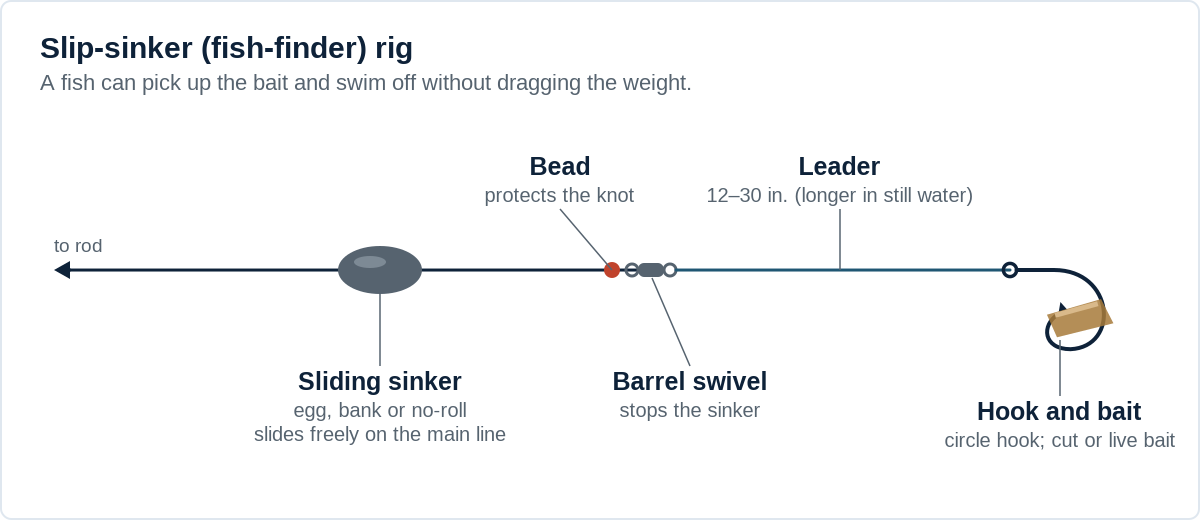
A slip-sinker rig (a walking sinker sliding above a swivel, a leader and a plain hook with a leech, minnow or crawler) lets a light-biting walleye take the bait without feeling the weight. Drag it slowly along breaks and points. Bottom bouncers with a crawler harness or plain snell do the same job faster, and in deeper water. Keep the slack out of your line so you feel the bite.
Slip bobbers
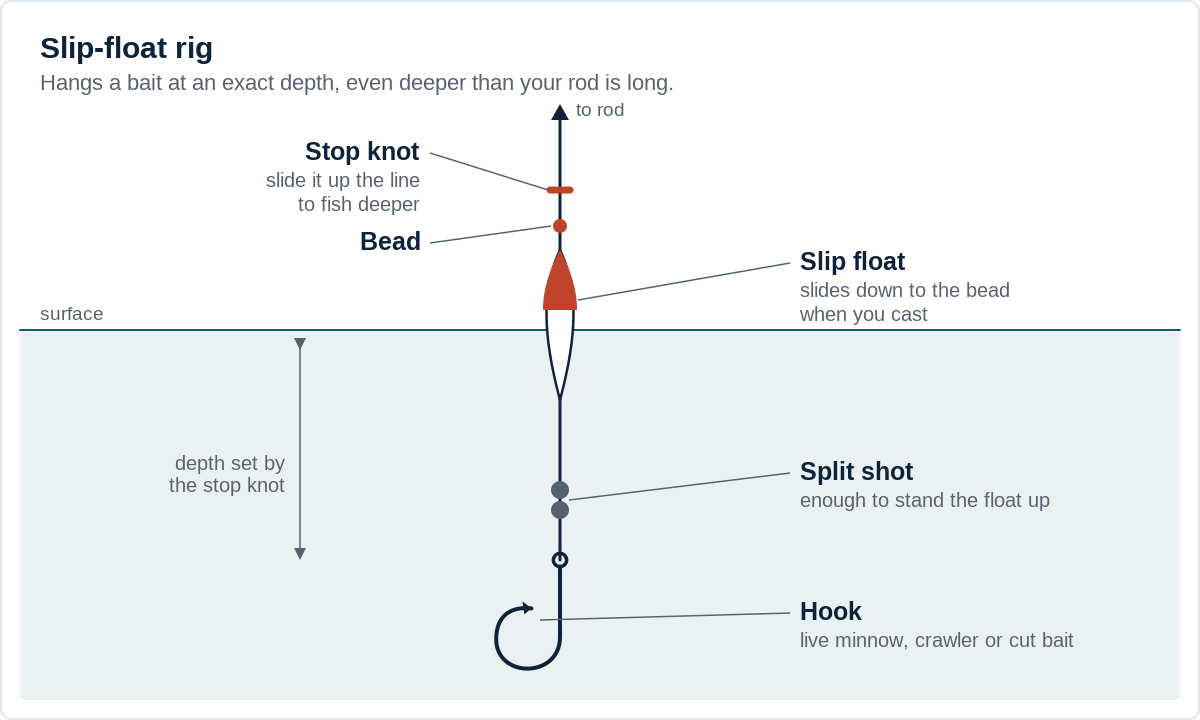
A slip bobber hangs a leech, minnow or crawler right in front of walleye in shallow to medium depths, over weeds, rock piles and reefs, and lets shore and dock anglers reach fish where deep water is close. Use a lighted bobber at night.
Crankbaits and trolling
Walleye smash crankbaits, and trolling covers water to find scattered fish:
- Minnow plugs long-line trolled over shallow flats, or slowly trolled near points and shorelines at dusk and after dark in fall.
- Deep-diving crankbaits along deep weedlines and breaks.
- Spinner harnesses with a crawler, trolled or drifted.
- Leadcore line to reach suspended fish in reservoirs.
Boat speed matters more than lure choice. Change speed until you get bit, then hold it. In fall, use the fastest presentation that still catches fish; when they turn neutral, slow down with jigs and live bait.
Blade baits
A blade bait lifted and dropped on the deep end of a drop-off, or swum through the water column, is a cold-water favorite as the water drops below the mid-50s °F and through the ice.
For lures and rigs in more depth, see Walleye Jigs, Rigs and Crankbaits.
Tackle
| Use | Rod | Reel and line |
|---|---|---|
| Jigging and live-bait rigging | 6'8" to 7' medium or medium-light spinning, fast action | 2000- to 3000-size reel; light braid (or 4- to 8-pound line) with a couple of feet of fluorocarbon leader |
| Casting and trolling crankbaits | A heavier rod for deep divers and leadcore | 10- to 20-pound line |
| Ice | A slightly heavier ice rod for jigging spoons | Light line |
Walleye shake their heads at the boat, so net them in one smooth scoop rather than chasing them with the net.
Before you go
Walleye seasons, size and slot limits, and bag limits are set by each state and often by individual lakes. Check your state's current freshwater rules before you go. Walleye follow forage such as yellow perch; for perch fishing, see Yellow Perch Fishing. For the species page, see walleye.
Cover photo: U.S. Fish and Wildlife Service, Mountain-Prairie Region (public domain). Rig diagrams: Basic Fishing.