Article
Walleye Jigs, Rigs and Crankbaits
Jigs, live-bait rigs, slip bobbers and crankbaits catch most walleyes. Here's how to fish each one, which live bait to use in which season, and how to trigger finicky fish.
November 3, 2026
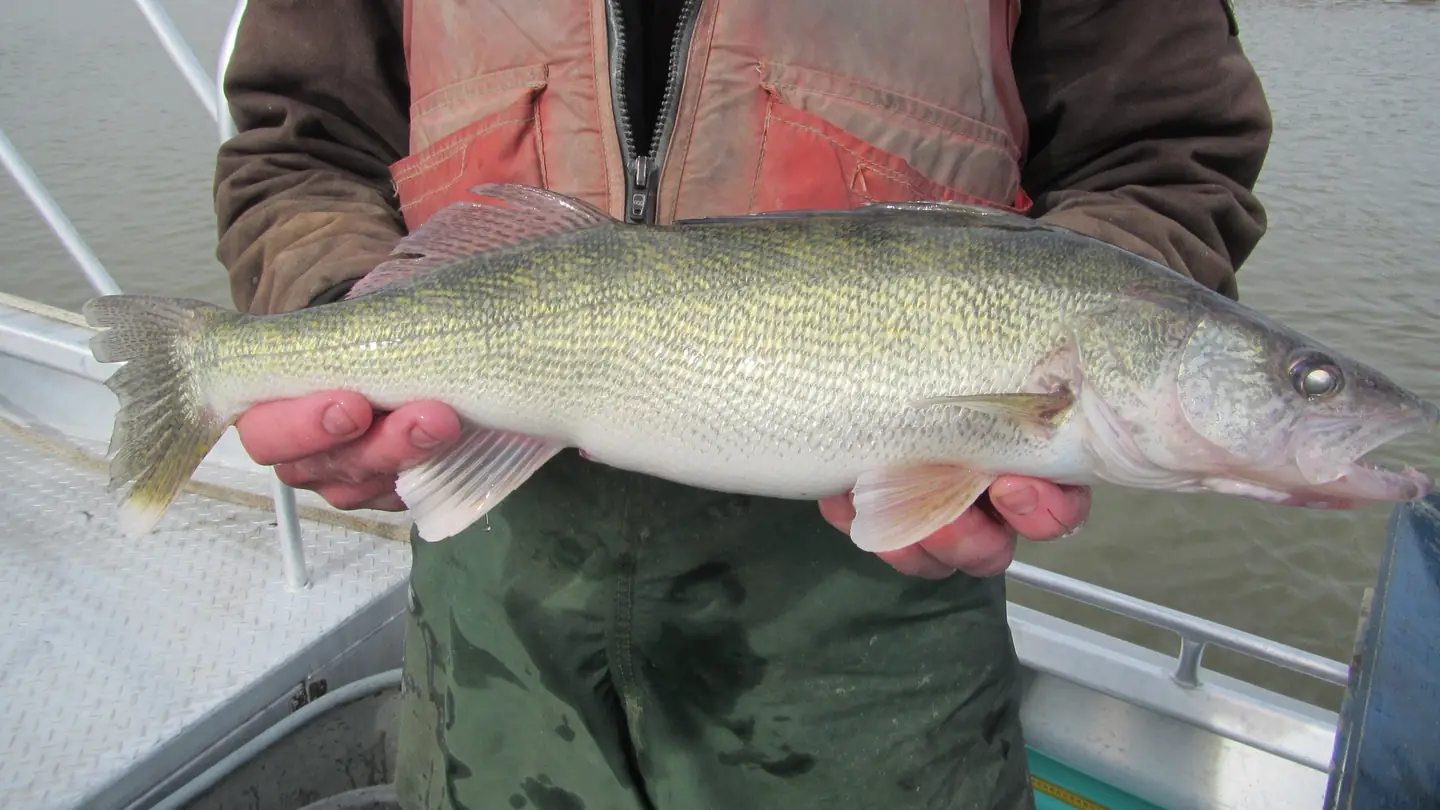
Most walleyes are caught on four things: a jig, a live-bait rig, a slip bobber, or a crankbait. Each has its time. The trick is matching the method to where the fish are and how hard they're willing to chase, and knowing when to slow down or speed up.
Tackle
- Rod: a spinning rod around 6 feet 8 inches to 7 feet, medium or medium-light power, fast action. It covers jigging, rigging and casting.
- Reel: a 2000 to 3000 size spinning reel.
- Line: 4- to 8-pound for light, finesse presentations; 10- to 20-pound for crankbaits and more aggressive fishing. Many anglers use braid for feel, with a couple of feet of fluorocarbon leader on the end, which fish can't see even in clear water.
- Trolling: a heavier rod for deep-diving crankbaits. Leadcore line and planer boards are for later.
Jigs: the walleye staple
A jig tipped with a minnow, leech, piece of nightcrawler or soft plastic catches walleyes everywhere.
- Weights: carry 1/8 to 3/8 ounce. A 1/4-ounce jig is the go-to. Lighter in shallow water, heavier in deep water and current. In rivers, a heavier jig helps you feel the bottom, even in 8 to 12 feet.
- How to fish it: keep it bouncing along the bottom and structure with near-constant movement. Cast it to current breaks and sandbars in rivers; pull it off the edge and let it fall.
- Trailer hooks: when using big minnows or crawlers, add a small trailer hook in the tail of the bait. Short-biting fish get hooked.
- Ripping: for active fish, cast a jigging minnow lure and rip it back with sharp sweeps of the rod. It darts and flutters like a wounded baitfish and covers water much faster than a jig and minnow.
Live-bait rigs and crawler harnesses
In summer, dragging live bait slowly along the bottom is one of the most reliable ways to catch walleyes.
- Live-bait rig: a sliding sinker above a swivel, then a long leader to a small hook with a leech, minnow or crawler. Drift or troll it slowly along edges and flats, keeping the sinker ticking bottom.
- Crawler harness: a nightcrawler on a two-hook harness behind a small spinner blade, trolled or drifted. Bigger spinner blades and bright or hammered metal blades help in dirty water or bright sun.
- Mayfly hatches: when walleyes are gorging on mayflies, they're hard to catch. A small spinner with a short piece of crawler on a small hook, counted down and retrieved slowly, can work.
These are slow, precise methods. They're best once you've found fish that aren't aggressive enough to chase a faster lure.
Slip bobbers
A slip bobber hangs live bait right in front of a walleye's face at any depth, and you can set it precisely. It's deadly in shallow and medium depths, and at night with a lighted bobber.
Crankbaits
Walleyes are predators, and sometimes they want something moving fast.
- Casting around weeds: shad-shaped crankbaits twitched over and along weeds are deadly on shallow walleyes, especially in low light or wind. Smaller, shallow-running baits for shallow weeds; deeper-running ones along the outer weed edge.
- Matching the weeds: where weeds reach near the surface, work a floating minnow plug in a stop-and-go retrieve just over them. Where weed tops are a few feet down, use a suspending minnow plug. Where weeds are deep or sparse, run a deeper-diving shad crankbait between the stalks; an occasional snag means you're in the zone.
- Trolling: troll crankbaits along deep weedlines, breaks and open water to cover ground and find fish. Speed matters: some cranks catch walleyes at under 1 mph in cool water and near 3 mph in summer. Change speed until you get bit, then stay at that speed.
- Fall search tactic: cooling water makes walleyes willing to hit faster lures. Troll crankbaits and spinners to find schools quickly, then slow down if needed.
Fishing for the mood
| Fish mood | Method |
|---|---|
| Aggressive, scattered | Troll or cast crankbaits, rip jigging lures |
| Located but neutral | Jig and live bait, live-bait rig, crawler harness |
| Tight to cover, finicky | Slip bobber with a leech or minnow |
Start fast to find fish, then slow down only as much as you need to.
A few more tips
- Presentation beats color. Speed, action, depth and angle matter more than color. If your partner is catching fish and you're not, copy what they're doing before you blame the color.
- Dirty water: rattles, bigger blades, bright or glow colors and scent help walleyes find your bait.
- Netting: walleyes often shake their heads right at the boat and throw the hook. Have the net ready and scoop the fish in one smooth motion as soon as it's in reach.
For where to find them, see Walleye Through the Seasons.
Before you go
Walleye limits, slot limits and seasons differ by state and by water. Check your state's current freshwater rules before you go.
Cover photo: U.S. Fish and Wildlife Service (public domain).