Article
Walleye Through the Seasons: Where to Find Them
Walleyes move from spawning rocks in spring to weeds, flats and deep structure in summer, then into tight schools in fall. Here's where to look each season, in lakes and rivers, and when they feed.
November 3, 2026
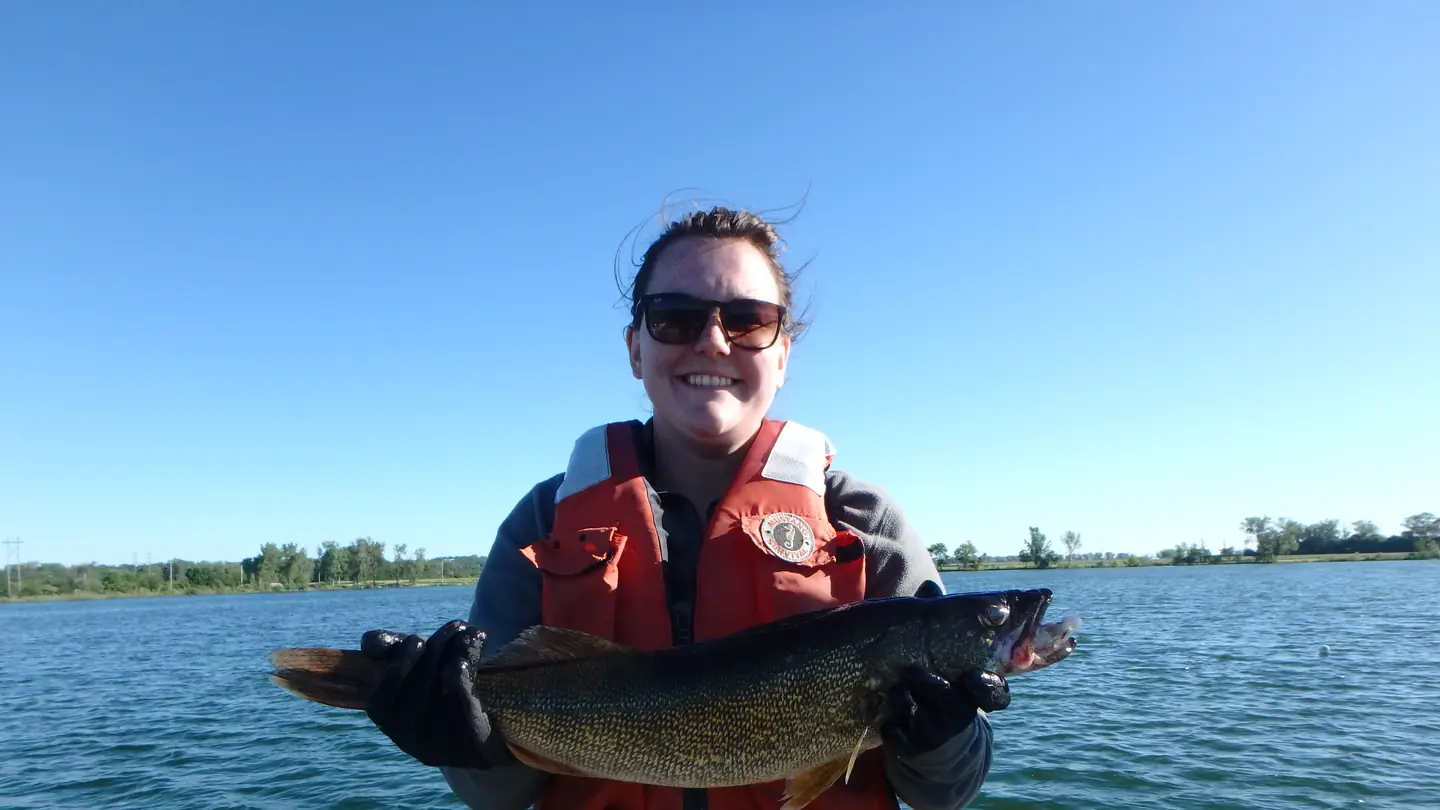
Walleyes have a reputation as tough fish to figure out, and finding them is most of the battle. Once you find a school of feeding walleyes, the action can be fast. They move a lot through the year, and they feed on their own schedule, keyed to light, wind and water temperature. Here's where to look.
What walleyes like
- Low light. Walleyes see well in dim light and feed best when light is low: dawn, dusk, night, cloudy days, and when wind chops up the surface. A breeze and clouds usually mean a better bite.
- Hard bottom and edges: rock, gravel, sand flats, drop-offs, points and weed edges.
- Food: they follow baitfish.
Spring: spawning rocks and current
Walleyes spawn very early, often right after ice-out, when the water is about 40 to 50°F, with the peak around 44 to 48°F. They spawn on clean, hard bottom, such as cobble, gravel and rubble, in 1 to 10 feet of water. They return to the same spawning spots year after year.
In rivers: spawning areas include rocky tributaries, the water below dams, rocky shorelines, current breaks and gravel bars. Before the spawn, walleyes hold just downstream of those areas in deeper, slower water near food, and move upstream as the spawn gets closer. Good prespawn spots:
- Current breaks, the bigger the better
- The stretch one or two miles below a dam or rapids that stops fish from going farther
- Just upstream of neck-downs at bridges and narrows, where current slows
- Wing dams, points and slack water near tributaries
- Steep edges of sandbars, inside bends, broken rock lines and fallen trees
- Mouths of tributaries and backwaters, especially where clearer water meets dirtier river water
You don't need a boat; many of these spots are within casting distance of shore.
In lakes: after spawning, walleyes spend spring on shallower sandy flats and rocky shorelines, looking for the warmest water in the lake. Spring is one of the easiest times of year to catch them.
Summer: weeds, flats and deep structure
In summer, walleyes look for cooler water and spread out. Some move to mid-lake structure; some never leave the weeds.
- Mid-lake structure: sunken islands, humps, offshore drop-offs and the base of deep structure just above the thermocline. Deeper fish are more active during the day, so if you can only fish in daylight, fish deep.
- Weedbeds: some walleyes stay in shallow weeds all summer, especially in lakes with good weed growth. In stained lakes, look in 4 to 8 feet; in clear lakes, 8 to 12 feet in early summer. They're often scattered across the weed flat in small groups. The most active fish are usually at the depth where the weeds grow best. Shallow weed walleyes feed mostly at night, at dawn and dusk, and on windy or cloudy days.
- Rock reefs: shallow reefs come alive at night and on windy days.
- Reservoirs: in steep-banked reservoirs, many summer walleyes suspend offshore over deep water along tight contour lines.
Popular structure gets fished hard every day. When it does, walleyes move to secondary spots that see fewer anglers.
The heat of summer can be the toughest walleye fishing of the year. Early summer is still good, and in midsummer the bite is often concentrated in short bursts around sunrise and sunset.
Fall: trophy time
Fall is when the biggest walleyes are caught. Cooling water sets off a feeding binge before winter.
- Late summer into early fall: walleyes move back toward shore, onto deep rocky points and weedlines.
- Turnover: when the lake turns over in fall, fishing can be tough and fish scatter for a while.
- After turnover: with oxygen back in deep water, walleyes drop to deep structure, open basins, or suspend. With shallow weeds dying, both walleyes and baitfish are out in the open where your electronics can see them.
- They school up. Fall walleyes often gather in tighter packs. Find one, and more are nearby.
- They feed all day. Unlike summer, fall walleyes often feed through the day instead of only at dawn and dusk.
Winter
Walleyes are a popular target through the ice, and many of the same jigging lures work. See Walleye Jigs, Rigs and Crankbaits.
Finding them faster
- Use your electronics to find structure, temperature changes and fish.
- Fish the wind. Wind and clouds cut the light, and walleyes on shallow reefs and flats feed more on windy days.
- Move until you find them. Walleye fishing rewards covering water.
For how to catch them once you find them, see Walleye Jigs, Rigs and Crankbaits.
Before you go
Walleye seasons, slot limits and size limits differ by state and often by lake or river, and some waters have spring closures. Check your state's current freshwater rules before you go.
Cover photo: Daniel James, U.S. Fish and Wildlife Service (public domain).