Article
The Ultimate Guide to Crappie Fishing
Black and white crappie through the year: where the schools go from late ice to the spawn, summer and fall; small jigs, minnows and floats; vertical jigging, spider-rigging and trolling; and the light tackle that keeps them hooked.
November 10, 2026
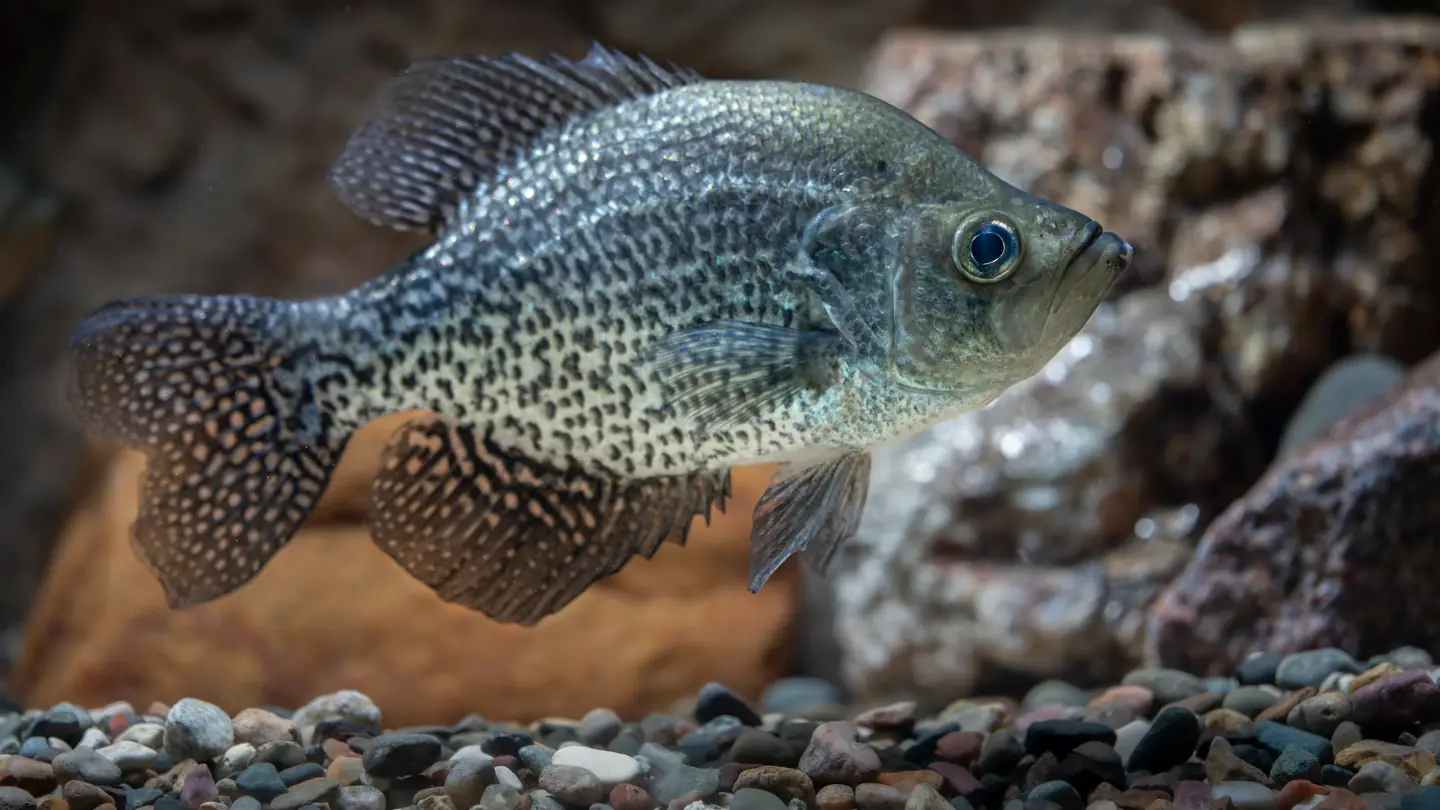
Crappie are a cold-season favorite: many waters give up more of them from October to April than in summer. They school up, so where you catch one you'll usually catch a bunch; they bite small jigs and minnows all year, including through the ice; and they're among the most popular panfish in the country. They're also notorious for being in one spot today and gone tomorrow, and for holding at one exact depth. Find the school and the depth, and crappie fishing gets easy. This guide covers how.
Know the fish
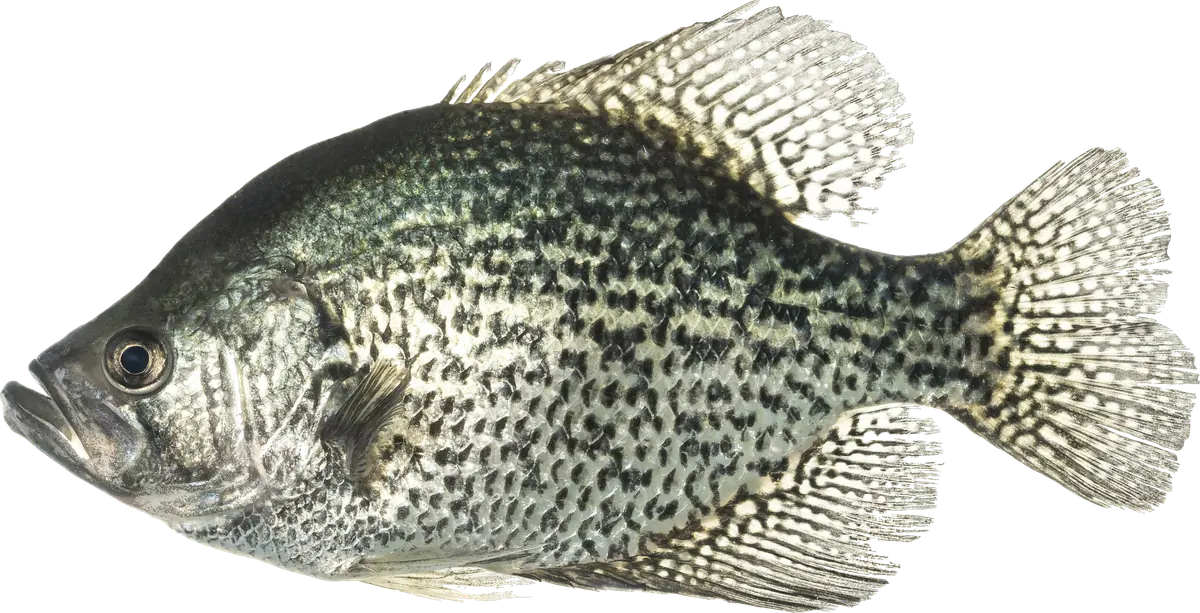
Black crappie. Painting: U.S. Fish and Wildlife Service (public domain).
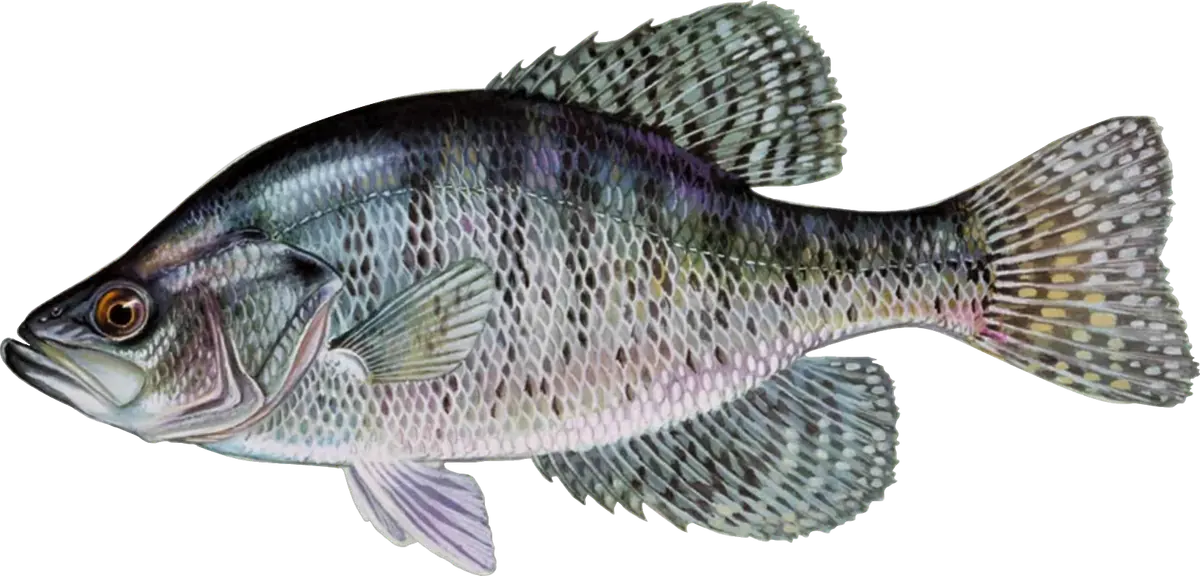
White crappie. Painting: Duane Raver, U.S. Fish and Wildlife Service (public domain).
There are two species, and they often live in the same lake.
| Black crappie | White crappie | |
|---|---|---|
| Markings | Irregular black blotches, no clear bars | Faint vertical bars |
| Dorsal spines | 7 or 8 | 6 or fewer |
| Water | Clearer water, often with weeds | Warmer, murkier lakes, rivers and backwaters; weeds not needed |
| Food | More insects and crustaceans | More small fish |
Both are now found across the lower 48 states. White crappie are especially prolific and can overpopulate and stunt in small lakes.
Crappie have small, soft, papery mouths. That shapes the tackle: light line, soft rods, gentle hooksets.
Crappie through the year
Crappie often stay in the same general part of a lake all year, moving shallow and deep along the same structure. The calendar shifts with latitude (the spawn can start in winter in Florida and not until late spring in the North), but water temperature is the guide.
| Period | Water | Where they are | How to fish them |
|---|---|---|---|
| Late ice | Under the ice, late winter | Leaving the deep basins for shallow spawning bays, often where the ice melts first, by way of 10- to 20-foot flats, cribs, brush and timber. They cruise high, sometimes just under the ice. | Small jigs with tiny plastics; red, black and white |
| Early spring | Above about 50°F | Moving shallow: flats of 5 to 10 feet in the low to mid-50s, brush piles, contour changes, sun-warmed walls and bulkheads, back coves and partly sunken trees. Males go first. | Small jigs and tubes under a float set midway down; small suspending minnow baits worked slowly |
| Spawn | About 60 to 65°F (white crappie sometimes later) | 18 inches to 3 feet in protected, brushy or weedy shallows | Jigs and minnows under a float; easy fishing from shore |
| Postspawn and early summer | Around 75°F | Following creek channels back out; suspended on the first drop-off next to the spawning areas, often 12 to 18 feet; some return to weeds in 10 to 15 feet | Vertical jigging; trolling small crankbaits |
| Summer | Warmest water | Deeper transitions at the base of drop-offs, scattered in weeds, and around brush | Jig or minnow at the depth of the school; electronics help |
| Fall | Cooling toward 50°F | Feeding hard, then moving from 10 to 15 feet toward the deeper basins along points and drop-off edges; shallower in low light | Downsize and fish vertically and slowly; small blade baits and lipless crankbaits |
| Winter | Cold water and ice | Deep basins | Small jigs fished slowly; see Ice Fishing for Panfish |
Spring is the peak and fall is a close second.
The rules of crappie fishing
- Find the school, then find the depth. Crappie school at a specific depth and often suspend above structure. Once you catch one, note exactly how deep, and keep your bait there.
- Fish above them. Crappie feed upward, so a bait slightly above the fish beats one below them.
- Fish the cover. Submerged trees, brush piles, stumps, docks, cribs and weed edges.
- Keep moving until you find them, then stay put. Electronics are a huge help for finding suspended schools.
- Be quiet in shallow water.
- Experiment with color. Bright colors like chartreuse and pink in murky water or on cloudy days; natural white, silver, gold and shad patterns in clear water.
Baits and lures
| Bait or lure | How to use it |
|---|---|
| Live minnows | The preferred crappie bait, under a float or on a plain hook; killies, small shiners and worms work too |
| Small jigs, 1/32 to 1/16 ounce | Hair, marabou or soft-plastic grub and tube bodies; the most versatile crappie lure |
| Jig with a small spinner ahead of it | Prespawn fish in stained water |
| Small suspending minnow baits | Early spring, worked slowly |
| Small crankbaits | Trolled for postspawn and summer fish |
| Small blade baits and lipless crankbaits | Fall and winter, vertically or with short casts |
Rigs and methods
Under a float
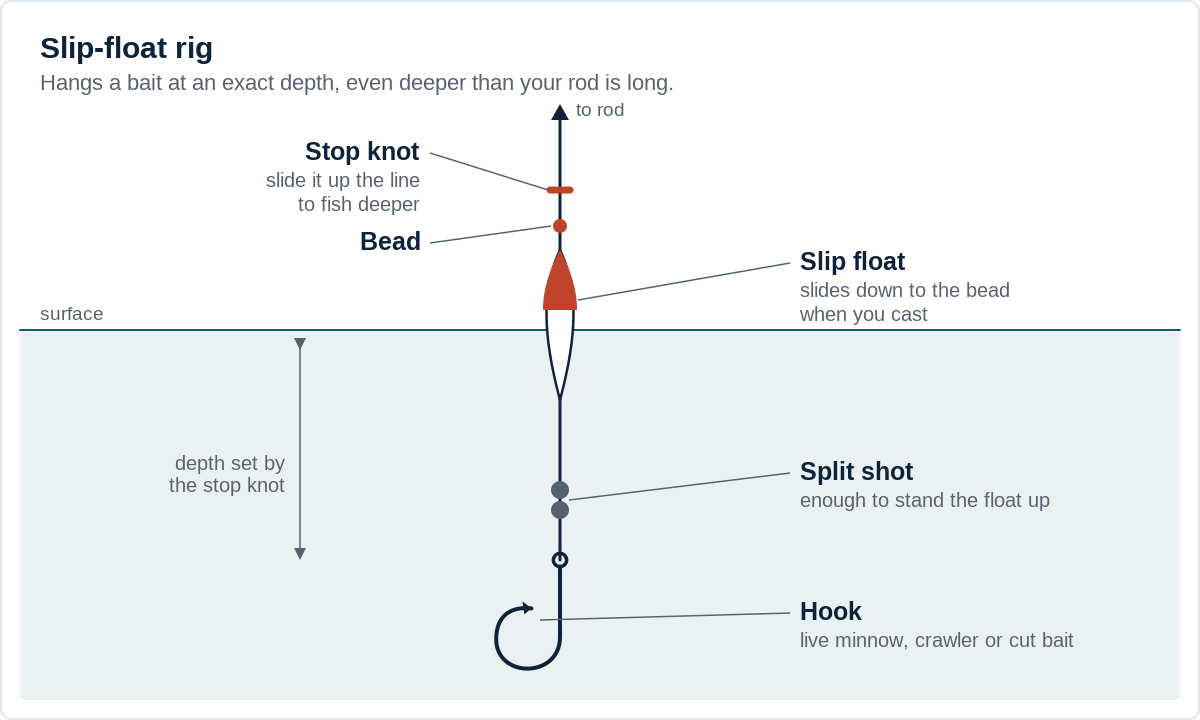
A small jig or a minnow under a float is the classic, year-round crappie rig and the best way to keep a bait at the exact depth of a suspended school. A fixed cigar-shaped float works in shallow water; a slip float lets you fish deeper than your rod is long. Set the depth so the bait rides at or just above the fish, and add just enough split shot to stand the float up. From shore, a long ultralight rod and a float let you reach fish along drop-offs.
Vertical jigging
When crappie are in brush, timber or cribs, or deeper on drop-offs, get right over them and fish straight down. Lower the jig to the depth of the fish and hold it there, with only small lifts. Many bites come as the jig falls, so watch the line.
Spider-rigging and long rods
Across the South, spider-rigging (fishing a spread of long rods baited with minnows) is a common way to find and work crappie in spring. Long rods with a float and a small jig also make it easy to swing fish up and over brush.
Trolling
Postspawn and summer fish suspended along drop-offs can be trolled with small crankbaits, about 1.5 to 2.5 mph, in an S pattern over creek channels and drops so the lures change speed and depth.
Setting the hook
Don't set hard; you'll tear the hook out of that soft mouth. When the float goes down or the line jumps, just reel and lift.
Tackle
| Use | Rod | Line and reel |
|---|---|---|
| Casting and float fishing | Light or ultralight spinning, about 6 ft; longer for pitching and casting floats | 4- to 6-pound line on a small (500 to 1000 size) reel; mono's stretch helps keep hooks in soft mouths |
| Swinging fish over brush, spider-rigging | Long, light rods | Light line |
Flexible rods help you see and feel the lightest bites and protect the soft mouths.
Before you go
Crappie limits are set by each state, and some lakes have special size or bag limits. Check your state's current freshwater rules. For a shorter, season-by-season look, see Crappie Fishing Through the Seasons.
Cover photo: Sam Stukel, U.S. Fish and Wildlife Service (public domain). Rig diagram: Basic Fishing.