Article
Porgy Rigs, Baits and Chumming
A high-low rig, a bucket of clams and a little chum is all it takes to fill a cooler with porgies. Here's how to set up, how to hook these quick-biting fish, and when jigs work better.
November 3, 2026
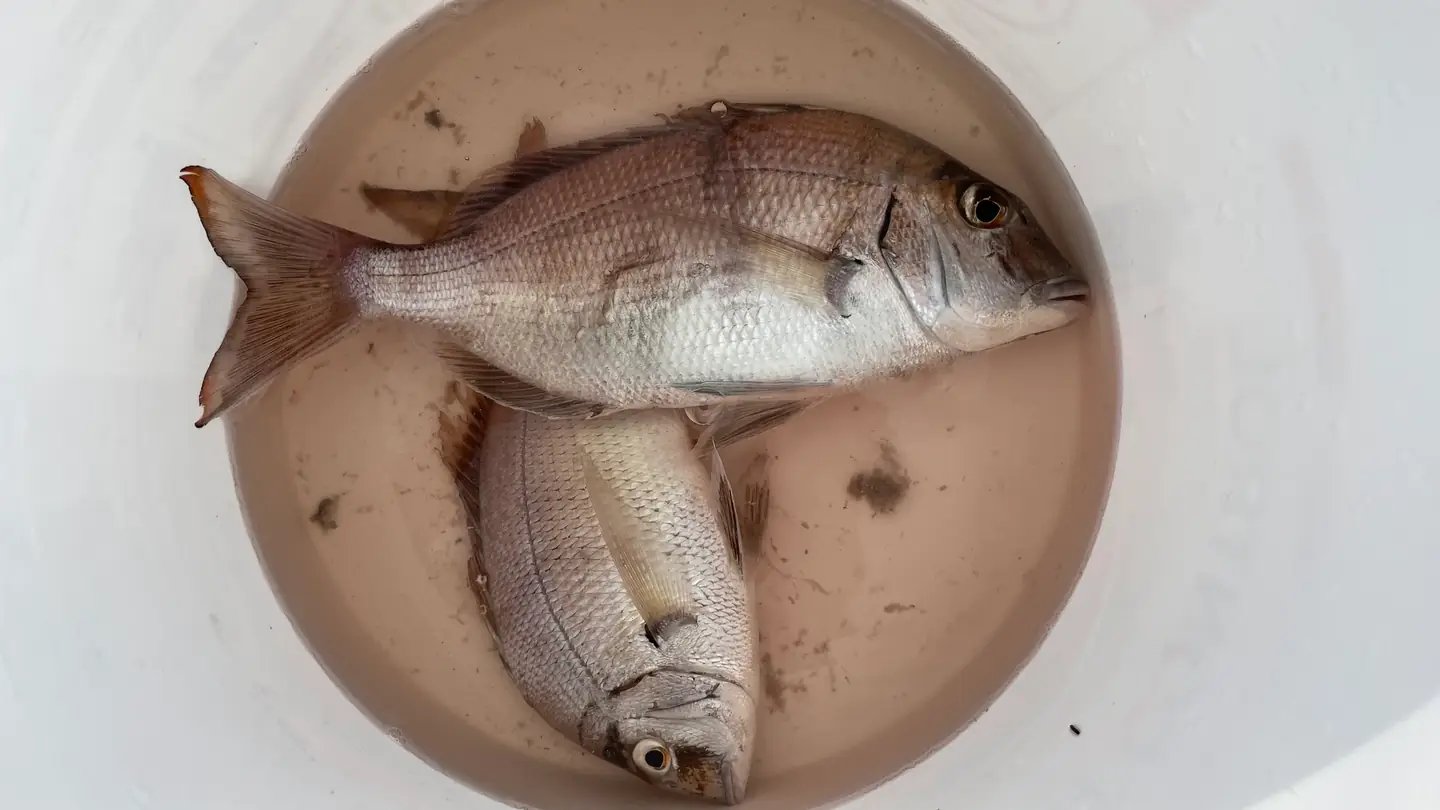
Porgy fishing is the simplest saltwater fishing there is, and one of the most fun. It's the trip to take kids and new anglers on: steady action, double hookups, and a cooler of good eating fish at the end of the day. A few details still separate the boats that catch a pile of big porgies from the ones that catch a bucket of small ones.
Tackle
You don't need anything heavy.
- Rod: 6½ to 7 feet, with a sensitive tip to feel the bottom and the bite and enough backbone to lift two fish at once. Porgy rods don't need a stiff backbone; a lighter rod is more fun. A shorter, light rod works fine in shallow water.
- Reel: a small conventional reel handles the heavier sinkers you need in deeper water. Spinning gear works in shallow water.
- Line: 12- to 20-pound braid. You'll feel every bite, and it holds up against rocks.
The high-low rig
The standard porgy rig is a two-hook bottom rig: a bank sinker at the bottom and two hooks on dropper loops above it, one near the bottom and one higher. Porgies feed close to the bottom, often within about a foot of it, so both hooks are in the zone.
- Hooks: small. A No. 2 baitholder hook is a common choice. If sea bass are around too, carry a few rigs with larger hooks.
- Sinker: 3 to 12 ounces, depending on depth and tide. Use enough to hold bottom with your line close to straight down.
Bait
- Clams: the standard porgy bait, fresh or freshly salted, cut in small pieces.
- Squid: cut into small strips. It's tougher than clam and stays on the hook longer when porgies are picking at it.
- Others: bloodworms and shrimp also catch porgies.
Cut bait into small pieces. And check your hooks often: porgies are expert bait-stealers, and a bare hook catches nothing.
Chumming
Chum is what turns a few bites into a steady pick. Once you've found fish and anchored:
- Use ground clam. Freshly ground clam bellies in a chum pot lowered to the bottom works best. Head boats often run two pots at once.
- Keep the chum close, the baits back. Put the chum pot near the boat and let your baits sit a little farther back in the slick, where the bigger porgies tend to be.
- Fish where the current carries the chum. The slick spreads with the tide; your baits need to be in it.
- Don't overdo it. Chum should draw fish and keep them competing, not fill them up.
Hooking and handling
Porgies bite fast and often. When you feel a solid tug, lift the rod and reel steadily. Doubles are common.
Watch out for the spines. The dorsal fin is sharp enough to cut your hand open. A dehooking tool lets you release small fish without handling them.
Finding bigger porgies
If you're catching only small fish:
- Move. Bigger porgies often school in a different spot.
- Go deeper. The larger schools are in deeper water away from shore.
- Try behind the boat. In shallow water, porgies can be shy of the boat; cast or let baits drift back.
- Drift to search, anchor to fish. Drift over rocky humps and mussel beds, dragging the sinker, until you find good fish, then anchor and chum.
Jigs and lures
Porgies aren't only bait fish. They'll hit small lures, and lures often pick out bigger fish:
- Small metal and slow-pitch jigs on deep rock piles.
- Blade and vibe baits: light vibes in shallow water, heavier blade baits deeper or in current. Rip them up off the bottom and let them fall.
- Small bucktails or jig heads with soft plastics, fished near the bottom.
Cleaning and cooking
Bleed your porgies and drop them into a slurry of ice and salt water as soon as they're caught. They're excellent eating: scale and gut them, score the skin, and grill or pan-roast them whole, or fillet them for broiling, tacos or frying in batter.
For where to find them, see Porgies (Scup): When and Where to Find Them. Porgies often share structure with black sea bass; see Black Sea Bass Rigs and Jigs.
Before you go
Porgy size limits, bag limits and seasons are set by state and federal managers and change often. Check your state's current saltwater rules before you go.
Cover photo: Bobby McCabe via iNaturalist (CC BY 4.0, cropped).