Article
Porgies (Scup): When and Where to Find Them
Porgies are the easiest fish on the coast to catch once you find them. Here's when they arrive, where the big ones hold through the summer and fall, and how to find a school.
November 3, 2026
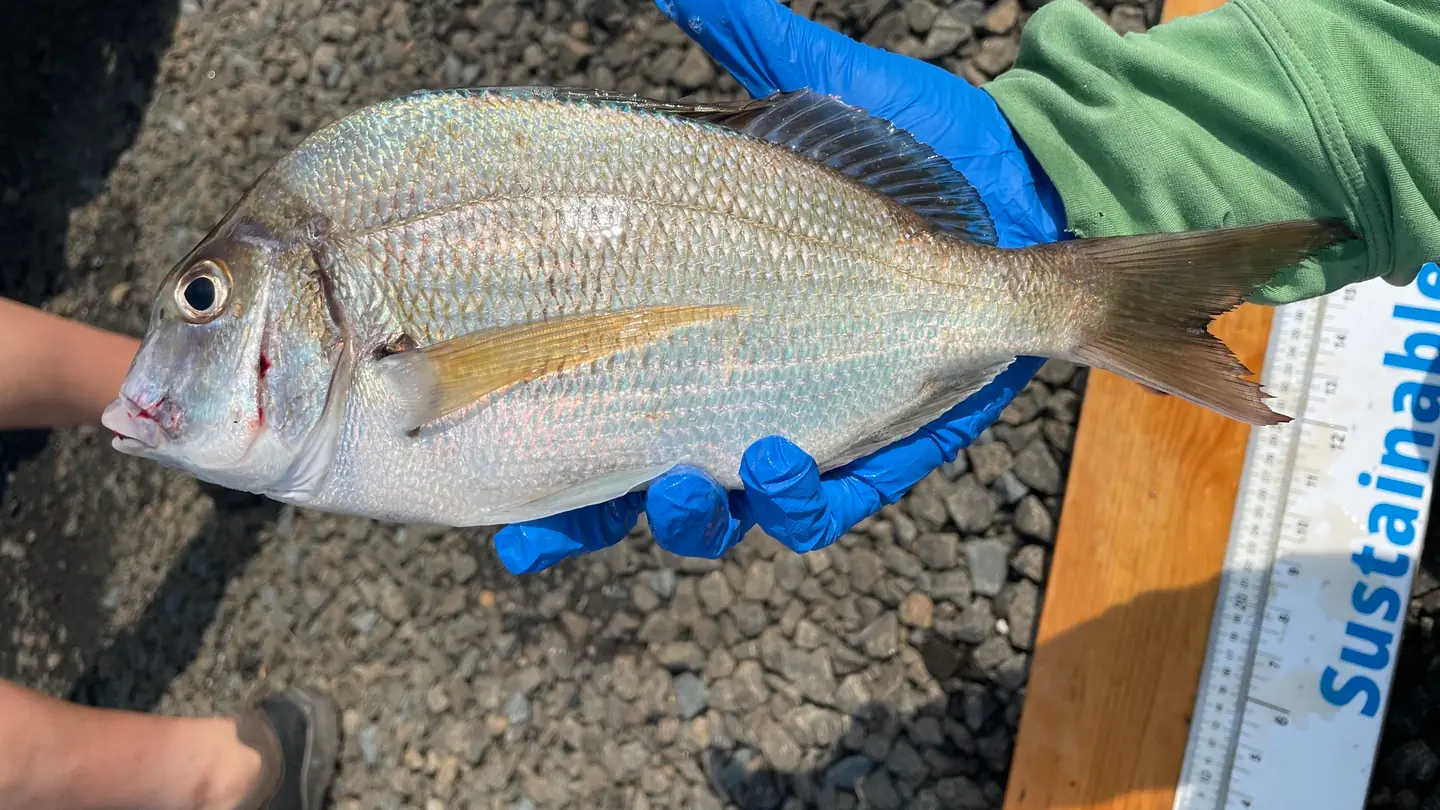
Porgies, called scup in New England, are the panfish of the salt. They're everywhere from New York to southern Massachusetts in summer, they bite all day, they fight hard for their size, and they're excellent to eat. Once you've found a school, catching them is easy. Finding the school, and finding the big ones, is the skill.
Know your porgies
Porgies are deep-bodied, silvery-brown fish with a steep forehead and a sharp, spiny dorsal fin. They have small front teeth and rows of molars for crushing the shellfish and crabs they pick off the bottom. Anglers sort them by size:
| Name | Size |
|---|---|
| Sand porgy | About half a pound |
| Bay porgy | About a pound |
| Humpback, sea porgy, "pork chop" | A pound and a half to 3 pounds and up |
Most fish run a half pound to 2 pounds, and 4-pounders aren't unusual. A porgy over 6 pounds is a real trophy. They're slow-growing and can live about 20 years.
The season
Porgies are a warm-water fish. They spend winter offshore in deep water along the outer continental shelf and move inshore as the water warms in spring. They're sensitive to cold, and a sudden drop in water temperature can kill them.
Spring: arrival
The first porgies show up in late April and early May. Early in spring they're often on sandy bottom. In eastern Long Island, big fish spawn in the bays in spring, then the schools spread out around the points and into the Sound. Porgies spawn from May through August.
Summer: everywhere
June is often the best month for porgies, and fishing stays good all summer. After spring, they move from sand to rockier bottom: rock piles, mussel beds, reefs and wrecks. During the summer heat, when many other fish go deep or quiet, porgies and sea bass are often the main bottom-fishing targets nearshore.
Fall: big fish, then gone
Porgies fatten up in fall, and some of the biggest fish of the year come in September and October. As the water cools, they form bigger schools and move to deeper water. By October, most are heading offshore and south for the winter.
Where they hold
- Mussel beds are the number one porgy spot. Porgies browse the beds for food.
- Rock piles, reefs and wrecks, and sandy bottom right next to rocks and reefs.
- Bridges, piers and bulkheads hold porgies within reach of shore anglers, mostly smaller fish.
- The middle of bays and deeper water is where the bigger schools are. You'll usually need a boat.
Most porgy fishing happens in 25 to 100 feet of water. Porgies feed close to the bottom, often about a foot up.
Finding the school
Porgies move. A spot that was full of fish yesterday can be empty today, especially after a storm.
- Drift to search. Drift across likely bottom (rocky humps, mussel beds, the edges of reefs) until you start getting bites.
- Then anchor and chum. Once you find fish, anchor up and start a chum slick to bring the school to you. See Porgy Rigs, Baits and Chumming.
- If you're catching only small fish, move. Bigger porgies often school together in slightly different spots or deeper water.
- In shallow water, fish behind the boat. Porgies in shallow water can shy away from the boat, and the best bite may be farther back.
Sharing the bottom
Porgies share rocky ground with black sea bass and tautog. If you're fishing for those species, porgies are the fish that keep stealing your bait. If you're fishing for porgies, a sea bass or tog is a welcome bonus.
Handling and eating
Watch the dorsal fin: the spines are sharp enough to cut your hand badly, so handle porgies with care.
Porgies are excellent eating, sweet and flaky. For the best quality, bleed them and put them straight into a slurry of ice and salt. They're good scaled and grilled whole, broiled, pan-fried or fried in batter.
Before you go
Porgy size limits, bag limits and seasons are set by state and federal managers and change often. Check your state's current saltwater rules before you go.
Cover photo: Bobby McCabe via iNaturalist (CC BY 4.0, cropped).