BasicFishing— home

Saltwater

Speckled Trout

Where to find them, how to catch them and the tackle to use.

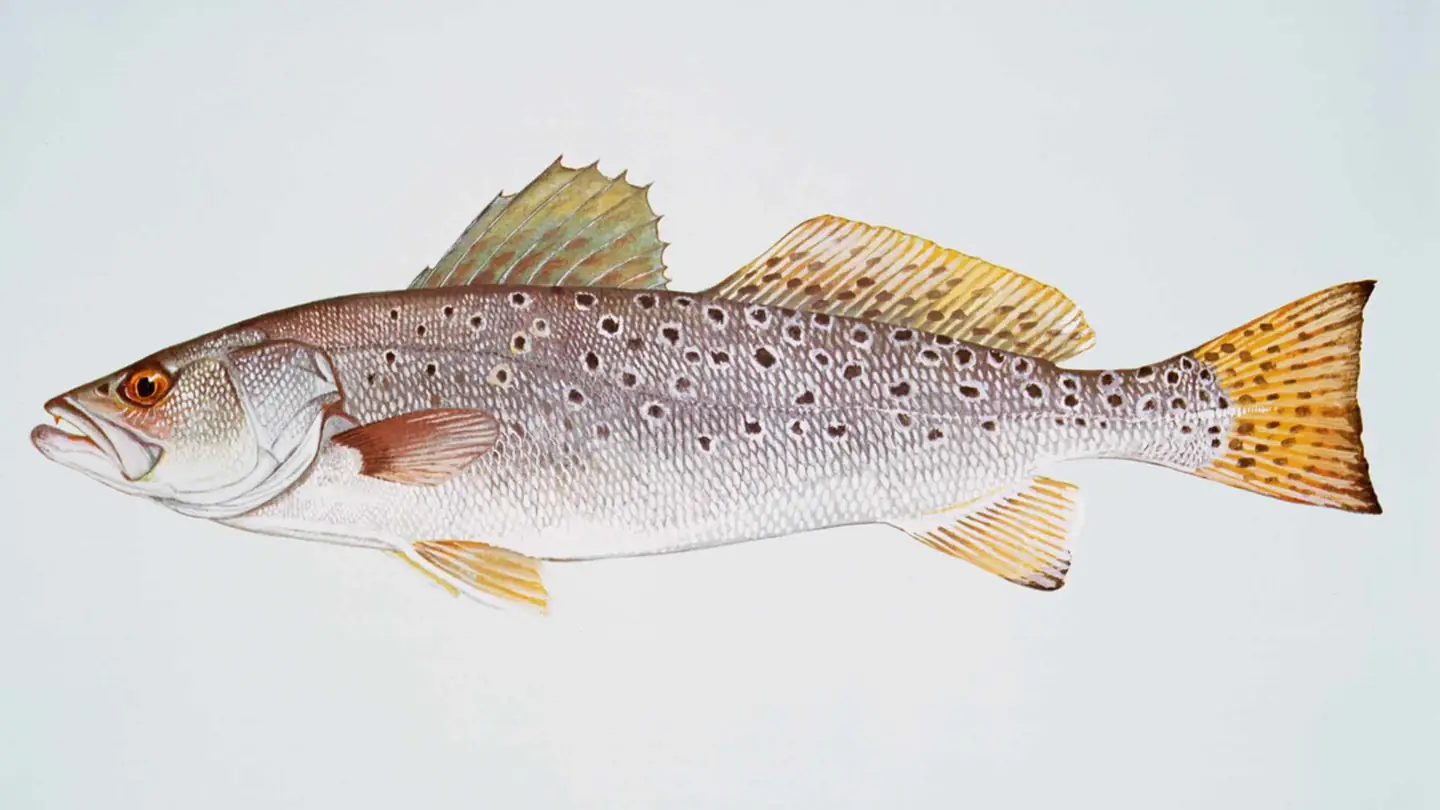
Speckled TroutNot to scale

At a glance

Typical size
Most are 1 to 4 pounds and 14 to 25 inches; big "sow" trout over 5 pounds are prized, and they grow to about 16 or 17 pounds
Range
Atlantic coast from about New York to Florida and the Gulf of Mexico to Mexico; uncommon north of Virginia and Delaware Bay
Habitat
Shallow bays, estuaries and tidal rivers with seagrass, oyster beds, marsh edges, creek mouths and drop-offs
Best season
Spring and fall in the shallows; summer at dawn and dusk; winter in deep creeks, rivers and channels
Common methods
Casting lures over grass and structure, popping corks with live bait, drifting, night fishing under lights
Baits and lures
Live shrimp, finger mullet, pinfish, small croakers and mud minnows; soft plastics on jigheads, suspending and sinking twitchbaits, topwaters, spoons

01Introduction

The speckled trout, properly the spotted seatrout, is the favorite inshore fish of anglers from the Chesapeake Bay to Texas. It isn't a true trout but a member of the drum and croaker family, a slim, silvery fish with a dark back covered in round black spots and a pair of sharp canine teeth at the tip of its upper jaw. Specks are aggressive, take lures and live bait readily, and are good to eat. Most are 1 to 4 pounds; the big females, called "sows," can top 10 pounds.

02Where to Catch

Range: the Atlantic coast from about New York south to Florida and around the Gulf of Mexico to Mexico. They're uncommon north of Delaware Bay and Virginia and most abundant from the Carolinas south. Unlike many inshore fish, speckled trout can spend their entire lives in one estuary.

Habitat: shallow bays, sounds, estuaries and tidal rivers, usually in less than 10 feet of water, around seagrass beds, oyster bars, marsh edges, creek mouths, drop-offs and other structure. They like water from about 60 to 80 degrees.

Seasons:

  • Spring: trout move out of their winter holes onto the shallow flats and into the main bays as the water warms. They spawn from spring into fall, at night, in bays and over grass.
  • Summer: they feed in the shallows early and late in the day and drop into deeper holes and structure in the heat.
  • Fall: some of the year's best fishing, as trout feed hard on shrimp and baitfish leaving the marshes.
  • Winter: they move into deeper water: creeks, rivers, channels, harbors and dredged basins. On sunny winter days, big trout slide up onto shallow mud and grass that warms quickly.

Speckled trout are sensitive to cold. A sudden hard freeze can kill many of them, especially at the northern end of the range.

03How to Catch

Popping corks and live bait

A live shrimp under a popping cork, popped every so often, is the classic trout rig and catches fish everywhere. Finger mullet, pinfish, pigfish, small croakers and mud minnows work too, on a float, free-lined with little or no weight, or on a light Carolina rig in deeper water. Drifting a free-lined bait is effective in strong current.

Lures

Soft plastics on light jigheads, worked over grass or bounced along channel edges, catch the most trout. Suspending and sinking twitchbaits are favorites for bigger fish, especially worked slowly in cold water. Topwater walking baits draw explosive strikes at dawn and dusk from big trout in warm, shallow water, and spoons work well in summer. At night, trout gather to feed under dock and bridge lights, where small jigs shine.

Finding big trout

Big trout eat big meals, mostly other fish, and they often stay apart from schools of small trout. They travel regular routes between deep resting water and shallow feeding areas. Fish those shallows quietly, without hull slap or splashing, use larger lures that imitate palm-size baitfish, and be patient.

Handling

Speckled trout have soft mouths, so set the hook firmly but not hard, and keep the drag light. They're delicate: release unwanted fish quickly and gently. Size and bag limits, and closures after cold-stun events, vary by state, so check your state's regulations.
04Tackle

A 6½- to 7-foot light to medium spinning rod with a 2500- or 3000-size reel, 10- to 20-pound braid and a fluorocarbon leader handles nearly all trout fishing. Use light jigheads (about 1/16 to 1/4 ounce) for soft plastics in shallow water and heavier ones in current. Some anglers spool slightly heavier braid in case a red drum takes the bait.

05Questions anglers ask

Is a speckled trout a trout?

No. Its proper name is spotted seatrout, and it's a member of the drum and croaker family, a cousin of the red drum and weakfish, not a relative of freshwater trout. Speckled trout, specks and spotted weakfish are all common names.

How do I tell a speckled trout from a weakfish (gray trout)?

Speckled trout have distinct round black spots on the back that extend onto the dorsal fins and tail. Weakfish have faint, wavy lines or tiny speckles instead of bold spots.

Why are big trout called sows?

Most very large speckled trout are females, which grow bigger and live longer than males. A big female can spawn many times in a season and release up to a million eggs, so many anglers release their biggest trout.

What are cold stuns?

Speckled trout can't stand very cold water. A sudden hard freeze can stun and kill large numbers of trout in shallow water, especially at the northern end of their range, and some states close the fishery after a cold-stun event to protect the survivors. Check your state's regulations after a severe cold snap.

Reading

Speckled Trout articles

November 10, 2026

Speckled Trout Fishing

Speckled trout (spotted seatrout) school over grass, oyster shell and creek channels from the Chesapeake south. Here's where they hold through the year, how the tide and cold water change them, and the lures and baits that catch them.