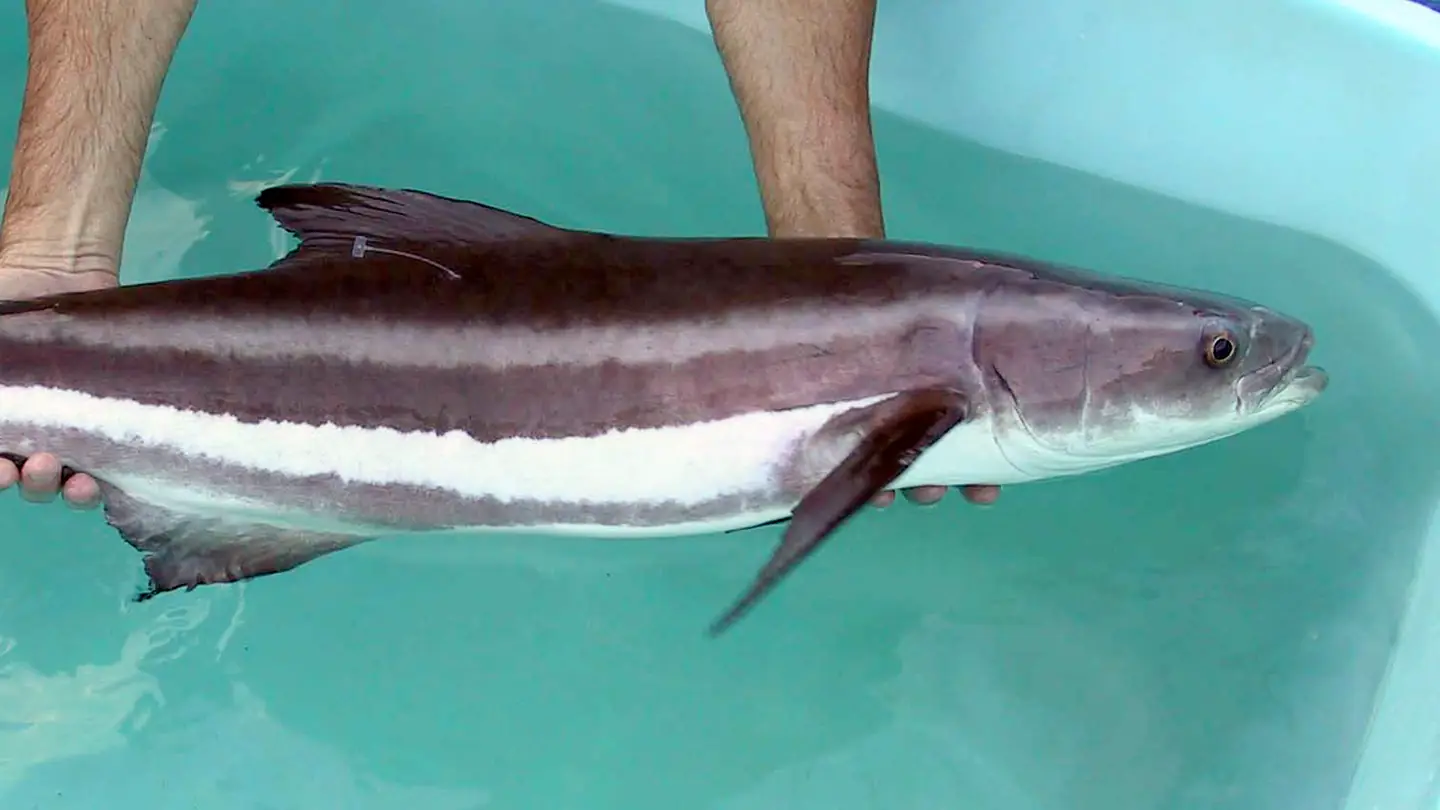
Sight casting
On calm days, cruise slowly and watch for cobia swimming near the surface, under floating objects and with rays or turtles. Cast a live bait, a heavy bucktail jig or a big soft plastic ahead of the fish so it crosses its path; a cobia that ignores a lure often eats one that's swum past and allowed to fall. Fly anglers use big streamers on heavy rods.
Anchoring with bait and chum
In sounds and on nearshore reefs, anchor up-current of good bottom, put a chum slick out with fresh cut menhaden, and fish live menhaden, threadfin, mullet or eels, or fresh boneless cut bait, on the bottom with just enough weight to hold, plus a bait under a float near the surface. Cobia often feed in a short window around the tide change, and they come up the slick to investigate.
Reefs and markers
During the run, cobia hold around nearshore artificial reefs, wrecks and channel markers. They often follow hooked fish to the surface, so keep a bait or jig ready to drop to them, but don't cast right on top of them.
Landing and keeping
Cobia run hard for structure and can thrash violently when boated. Tire them out before bringing them in, and handle them carefully. Rules are strict and change often, so check your state's size, bag and season limits before you keep one.