Article
The Ultimate Guide to Fluke Fishing
Summer flounder from the first spring flats to the deep-water doormats: where fluke hold through the season, drifting and drift control, bucktails and teasers, rigs and baits, hooking them, and tackle.
November 10, 2026
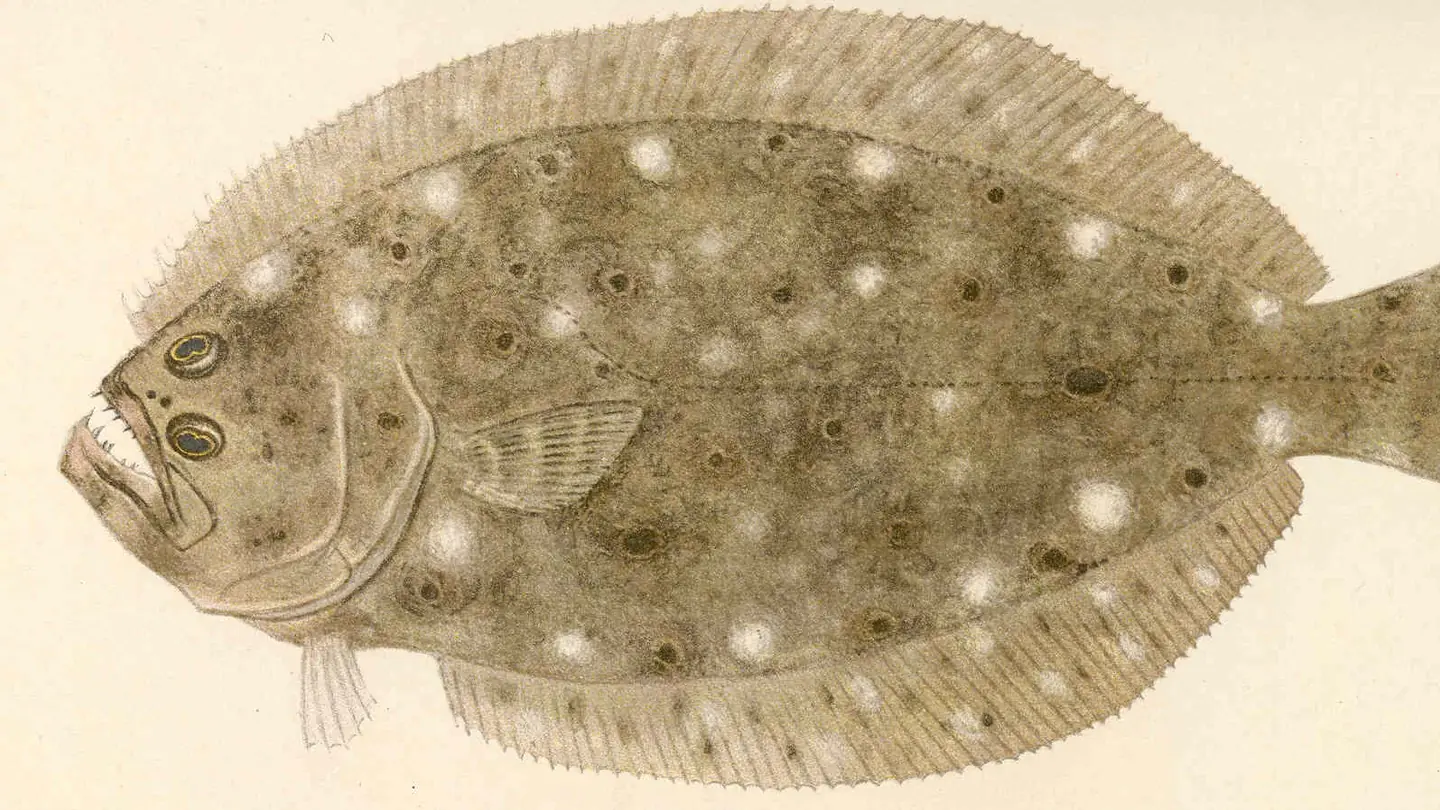
Fluke (summer flounder) are the backbone of summer inshore fishing from Cape Cod to the Carolinas. They're in the bays, inlets and ocean from spring through fall, they bite in the middle of a sunny afternoon when nothing else will, and the big ones, the "doormats," are some of the most sought-after fish on the coast. They're also ambush predators that lie on the bottom, which makes fluke fishing a game of moving a bait across the right bottom at the right speed. This guide covers where they are through the season, how to drift for them, the rigs and baits that work, and how to hook more of the fish that bite.
Know the fish
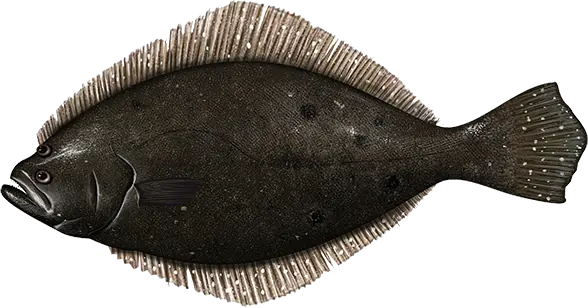
Summer flounder (fluke). Painting: Jack Hornady, NOAA Fisheries (public domain).
Fluke are left-eyed flatfish: lay one down with its eyes up and the head is on the left. They have 10 to 14 eye-like spots scattered on the brown upper side. They range from Nova Scotia to Florida and are most abundant from Cape Cod to Cape Fear. Most run 15 to 22 inches and 1 to 3 pounds; 8 pounds is a big fish, called a doormat, and the biggest top 20 pounds. Bigger, older fish tend to be more common toward the north of the range.
Fluke bury themselves in the bottom and change color to match it, then ambush passing baitfish, squid and shrimp. Two things follow from that:
- They want a moving bait. A bait that sits still on the bottom gets ignored. Drift it, bounce it or hop it.
- They feed all day. Because they ambush rather than hunt in the dark, fluke bite in bright midday sun as readily as at dawn.
The fluke season
| When | Where they are |
|---|---|
| Spring (late April into June) | Moving in from offshore onto shallow back-bay flats, mudflats and channel edges, usually in 3 to 15 feet over dark mud and sand that warms first. Early-season fish look for water in the 60s °F. Around Memorial Day is often the best chance at a big fish without leaving the inlet. |
| Early summer | Still on the flats, sometimes very shallow, and along creeks and channels off the flats. |
| Midsummer (July and August) | As the bays heat up, fish drop into channel bottoms and lower channel edges, and many move to the inlets and the ocean, where each tide brings cooler water. Edges of 25 to 40 feet by August; bigger fish deeper. |
| Late summer and fall | Bigger fish on ocean lumps, ridges, reefs and wrecks, often 50 to 90 feet deep. |
| Winter | Offshore on the continental shelf, out of reach of most anglers. |
Fluke are caught inshore roughly May through October in most years, with the best fishing often in August. For the details, see Fluke Seasons and Where They Hold.
Where fluke hold
Fluke set up where current carries food to them, usually at a change in depth or bottom:
- Edges. Where a flat drops into a channel, the edges of sandbars, and slopes in inlets.
- Channels. Bay and inlet channels act as funnels on a strong tide. Marked boat channels hold fluke.
- Holes and bridges. Deep holes scoured around bridge pilings.
- Hard bottom. Shell, mussel beds, gravel and rock attract bigger fish than plain sand.
- Structure offshore. Lumps, reefs and wrecks hold the biggest fluke. Work the edges and stay tight to it.
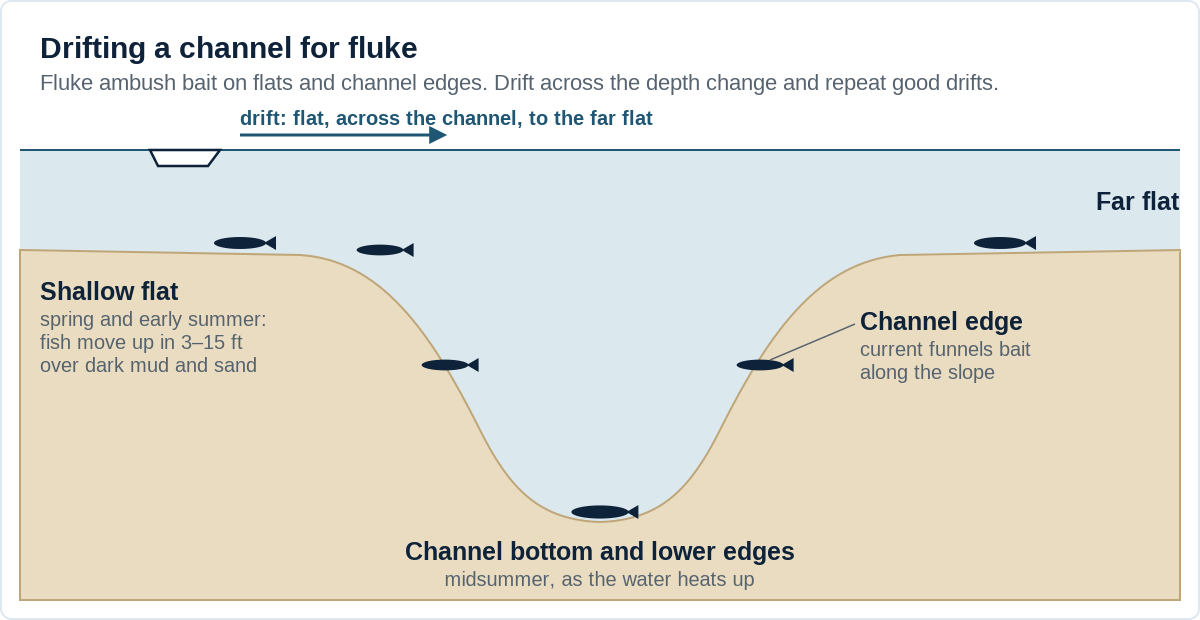
Tide matters. On shoals, fluke may sit in the channels at low tide and slide up onto the shallows at high tide. Early in the season, the outgoing tide that carries warm water off the flats often fishes better than the cold incoming. A strong tide washes food off the banks into the channels.
Drifting: the main method
Drifting is the most common way to fish for fluke because it covers ground and keeps your bait moving.
- Set up a drift that crosses a depth change: from the flat, across the channel, onto the far flat; or along an inlet slope, a bar or a ledge.
- Keep the bait on the bottom. As the drift goes deeper, let line out; as it gets shallower, reel in. Hop the bait along as you go.
- Control your speed. If wind and tide are pushing you too fast, slow down with a drift sock (sea anchor), or even a bucket on a line. If the drift is dead, bump along with a trolling motor or the engine.
- Drift with the boat sideways to the wind so everyone's lines fish.
- Repeat what works. Fluke travel in small groups, even the big ones. When you catch one, note the spot, run back up-current and drift through it again, tightening the drift to the hot zone.
From shore or at anchor, cast up and across the current and drag or hop the rig back along the bottom.
Bucktails and teasers
A bucktail jig is the standard fluke lure. It's the weight and the lure in one, it bounces the bottom where fluke look up to feed, and changing weight takes one knot.
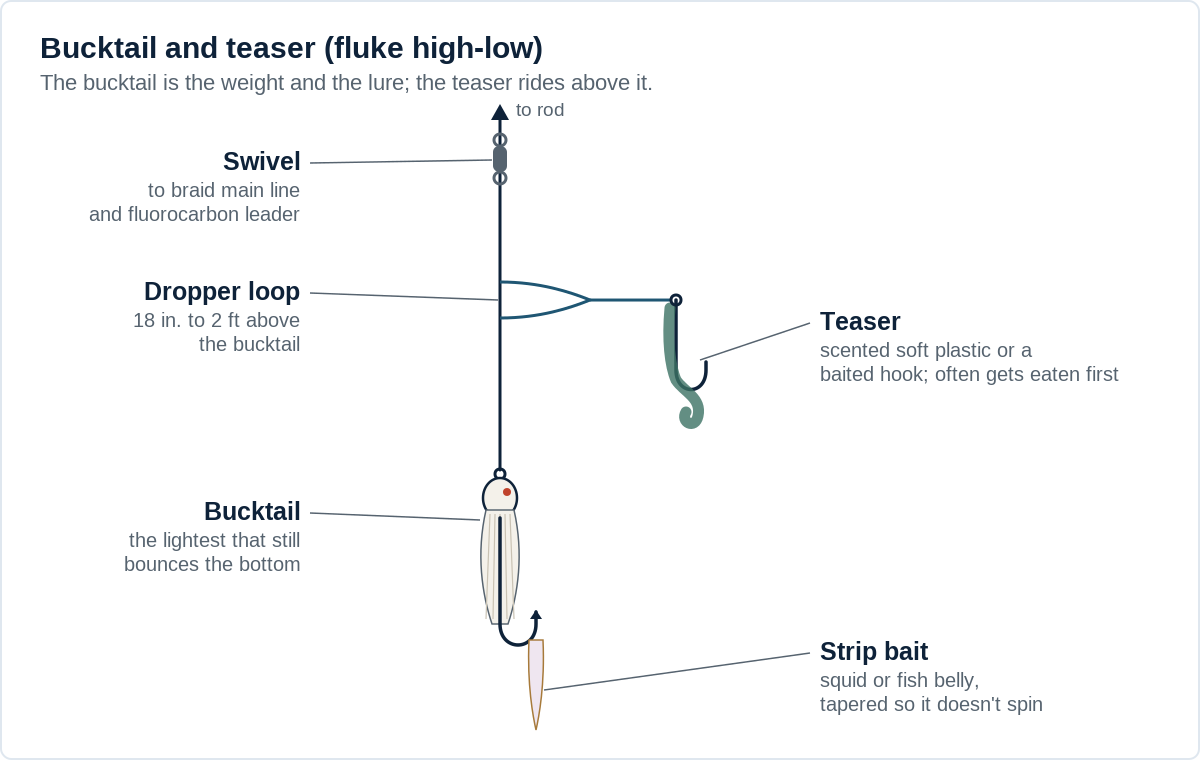
- Weight. Use the lightest bucktail that still taps the bottom, and change it with depth and drift speed: roughly 1/8 to 1/2 ounce in the back bays, 1/2 to 2 ounces in most inlets, and 3 to 6 ounces or more in deep water and strong current. Sparsely tied bucktails hold bottom better. You want it touching bottom regularly, not dragging, which fouls it and feeds the crabs.
- Color. White is the standard; pink, chartreuse and yellow are good too.
- Tipping. Add a strip of squid or fish belly, a spearing or a scented soft plastic.
- Teaser. Tie a dropper loop 18 inches to 2 feet above the bucktail and add a teaser: a small soft-plastic shrimp or minnow, a small bucktail, a feather or a baited hook. Fluke often follow the bucktail up and eat the teaser.
- Action. Keep it moving. Short, sharp twitches and steady bouncing beat letting it sit. Small changes in color, speed or bait can turn on a slow bite.
For the full technique, see Drifting and Bucktailing for Fluke.
Bait rigs and baits
Keep it simple. Three rigs cover nearly all bait fishing:
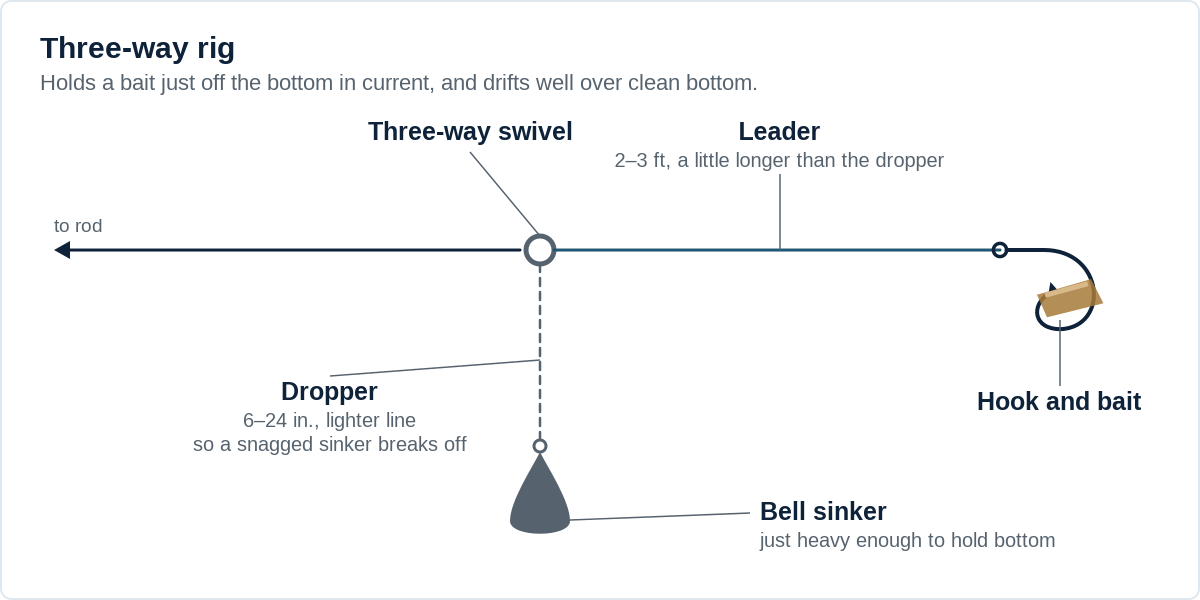
- Three-way rig. A three-way swivel with a short dropper (6 to 8 inches of lighter line) to a bank sinker heavy enough to hold bottom, and a leader of about 18 inches to 3 feet to the hook. The beginner's rig, and the best for big live baits on a fast drift.
- Fish-finder rig. A sliding sinker above a swivel and leader. Good for long strips and live baits in current.
- Top-and-bottom (high-low) rig. A bucktail or sinker at the bottom and a second hook on a dropper loop above, so you can offer two baits and switch both to whichever is working.
| Bait | How to rig it |
|---|---|
| Squid strips | 3 to 6 inches long and under an inch wide, fat at the top and tapered, hooked once through the wide end so they flutter without spinning |
| Fish strips (fluke belly where legal, bluefish, mackerel, sea robin, menhaden) | Trim and taper them. Size follows the season: 4 to 5 inches in spring to match small bait, up to 8 to 10 inches in summer for big fish |
| Live killies (mummichogs) | Hooked through the lips and lowered gently; casting can tear them off. Tough and long-lived if kept cool and moist |
| Spearing (silversides) | Alone or with a squid strip on the same hook |
| Combination baits | A squid strip plus a killie or spearing on one hook is a classic |
| Live spot, snapper blues and peanut bunker | Big live baits for doormats, hooked through the lips or back on a three-way rig |
| Scented soft plastics | Grubs and shrimp, alone or on a bucktail; they work even just dragged along the bottom |
Use a large hook, about 4/0 to 6/0. It holds big baits and lowers the chance that a short fish swallows it.
Hooking fluke
This is where a lot of fluke are lost. The hit can feel like a snag or just extra weight.
- With bait, when you feel the hit, lower your rod tip and let the fish mouth the bait. Then reel slowly until you feel solid weight and lift. With a big bait, give it even more time, even feeding a little line before coming tight.
- With a bucktail, set the hook hard as soon as you feel weight, and keep steady pressure.
- Don't give slack. Many big fluke come off right after the hookset, when the angler drops the rod tip or switches hands. Keep the rod up and the line tight all the way to the net.
- Use a net. Fluke slip off when they're swung aboard.
Tackle
| Fishing | Rod | Line and leader |
|---|---|---|
| Bays and inlets | 5½ to 7 ft light to medium spinning or conventional, with a stiff butt and a flexible tip | 10- to 20-pound line; braid gives the best feel |
| Deep water and doormats | 7 to 8 ft medium rod; spinning or low-profile conventional | 10- to 20-pound braid for light jigging; 40- to 50-pound braid to pull free of mussel beds and rocks |
| Leaders | About 20- to 30-pound fluorocarbon for most fishing; 40-pound around rough bottom and with big live baits |
Thin braid lets you use less weight and feel the bottom and the bite better. Keep your line as close to vertical as you can, and skip extra snaps and swivels. A conventional reel makes it easy to let line out as the drift deepens. For doormats specifically, see Catching Doormat Fluke, and for rigs in more depth, Fluke Rigs and Baits.
Before you go
Summer flounder are managed coastwide, and size limits, bag limits and seasons differ from state to state and change from year to year. Check your state's current saltwater regulations before every trip. For more on fluke, see the summer flounder species page.
Cover painting: New York State Forest, Fish and Game Commission, 1907 (public domain). Diagrams: Basic Fishing.