Article
Tip-Ups for Pike and Pickerel
A spread of tip-ups baited with shiners is the classic way to catch pike and pickerel through the ice. Here's where to set them, how deep to hang the bait, how to rig them, and how to work a jigging rod alongside.
November 3, 2026
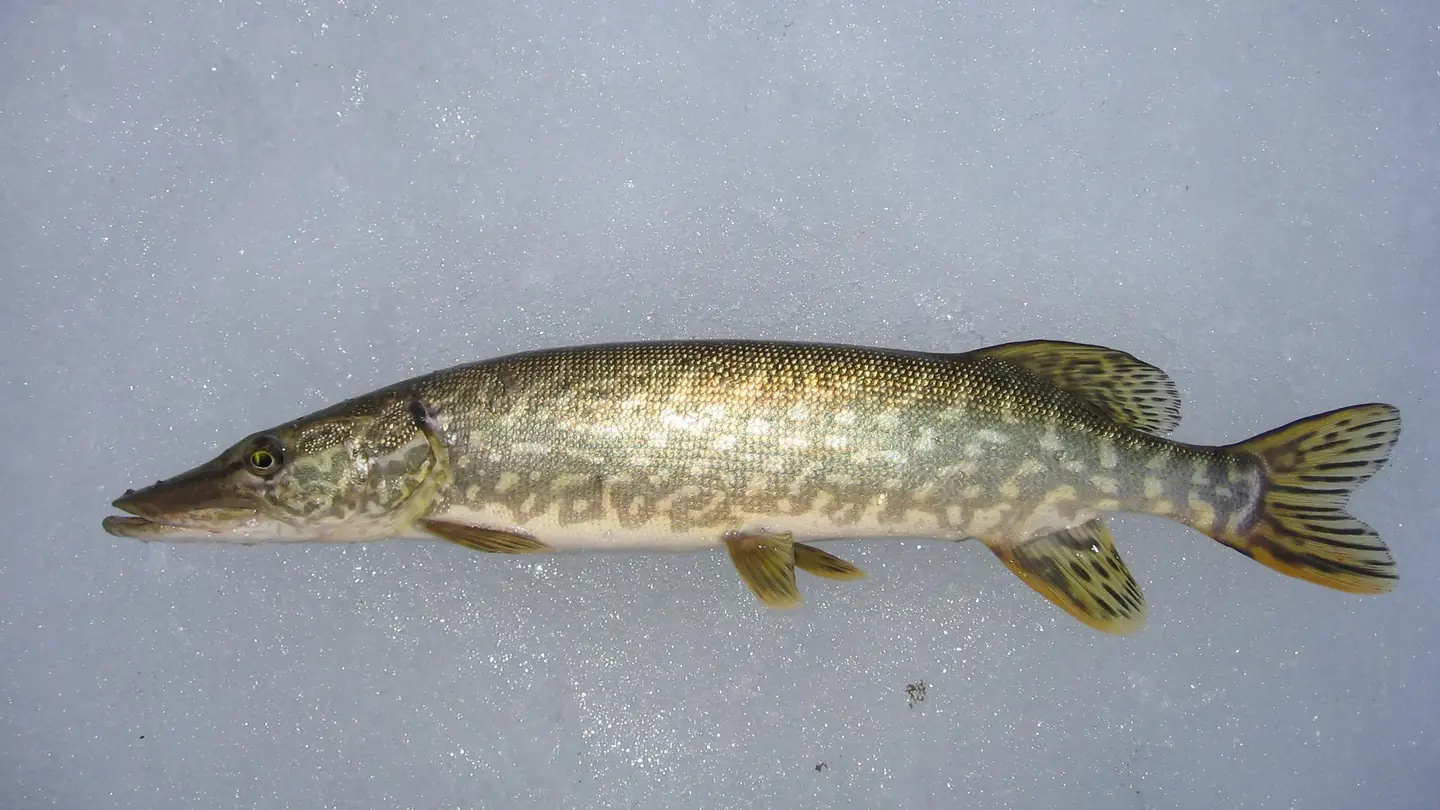
Tip-ups are the easiest way there is to catch pike and pickerel through the ice. Set a few over the weeds, bait them with shiners, and wait for a flag to fly. It's perfect fishing for kids and for anyone who wants to cover more water than one rod allows. A few details decide whether your flags fly.
Safety first
Follow your state's ice-safety guidance. One experienced guide waits for at least 4 inches of good, clear ice before walking out. Check the ice ahead of you with a spud bar on early ice, carry ice picks, and spread out from other anglers.
Where to set them
Find the weeds. Pike will suspend in open water and use deep rocky bars at times, but most of the time they're around vegetation, because that's where the food is and where they can hide to ambush it. In most inland lakes, weeds grow out to 10 to 15 feet deep. Find the weed edges and you'll find pike.
Go shallow at first ice. Early in the season, pike often cruise water less than 5 feet deep. Always put at least one tip-up shallow.
Late ice: big pike move toward shallow back bays full of panfish, shallow rocky points near spawning areas, and the mouths of incoming creeks and rivers, where current draws fish.
Pickerel: in winter, they hold in deeper weeds (even dying ones) or around deeper wood and rock. They're quick to hit a shiner.
How deep to hang the bait
This is where many anglers go wrong.
- Over weeds, think in halves. Many anglers set every bait a foot or two off the bottom. But at early ice, weeds still fill much of the water column, and a bait near the bottom can end up hidden in the weeds. In 12 feet of water over weeds, try the bait at about 6 feet. Pike cruise the water column and easily spot prey above them.
- Over clean bottom, a bait a couple of feet off the bottom is fine.
- Late ice: pike often roam high in the water column. Baits set just a foot or two under the ice can be the best.
Rigging
- Main line: a thick, strong tip-up line that's easy to handle with cold hands and stands up to the sharp edges of an ice hole.
- Leader: pike and pickerel teeth cut line. Use a leader of fluorocarbon (about 40-pound, around 30 inches long) or thin seven-strand wire.
- Quick-strike rig: small treble hooks set in the bait, so you can set the hook right away instead of waiting for the fish to swallow it. It greatly improves the hookup rate and lets you release fish safely. Small trebles, around size 4, land more fish than big ones.
Bait
Live baitfish such as shiners and suckers are the standard. Dead bait works too; pike scavenge, especially in late winter. A lively bait the fish can easily find matters more than the exact species.
Add a jigging rod
While the tip-ups soak, jig a hole nearby. Big pike will travel a long way to check out a vertically jigged rattle bait or a slow-sinking flutter spoon, especially one tipped with a piece of bait. White, yellow and chartreuse are good pike colors.
Timing
Unlike many fish, pike bite all day. You don't need to be on the ice at dawn.
For open-water pike and pickerel, see Northern Pike Fishing Through the Seasons and Chain Pickerel Fishing.
Before you go
The number of tip-ups and lines you may use, tip-up marking rules, and pike and pickerel limits differ by state. Check your state's current rules before you go.
Cover photo: Elendal (public domain).