Article
Northern Pike Fishing Through the Seasons
Pike are aggressive, toothy and easy to love. Here's where they go from the spring spawn to summer's deep, cool water, and the spinners, spoons, spinnerbaits, jigs and baits that catch them.
November 3, 2026
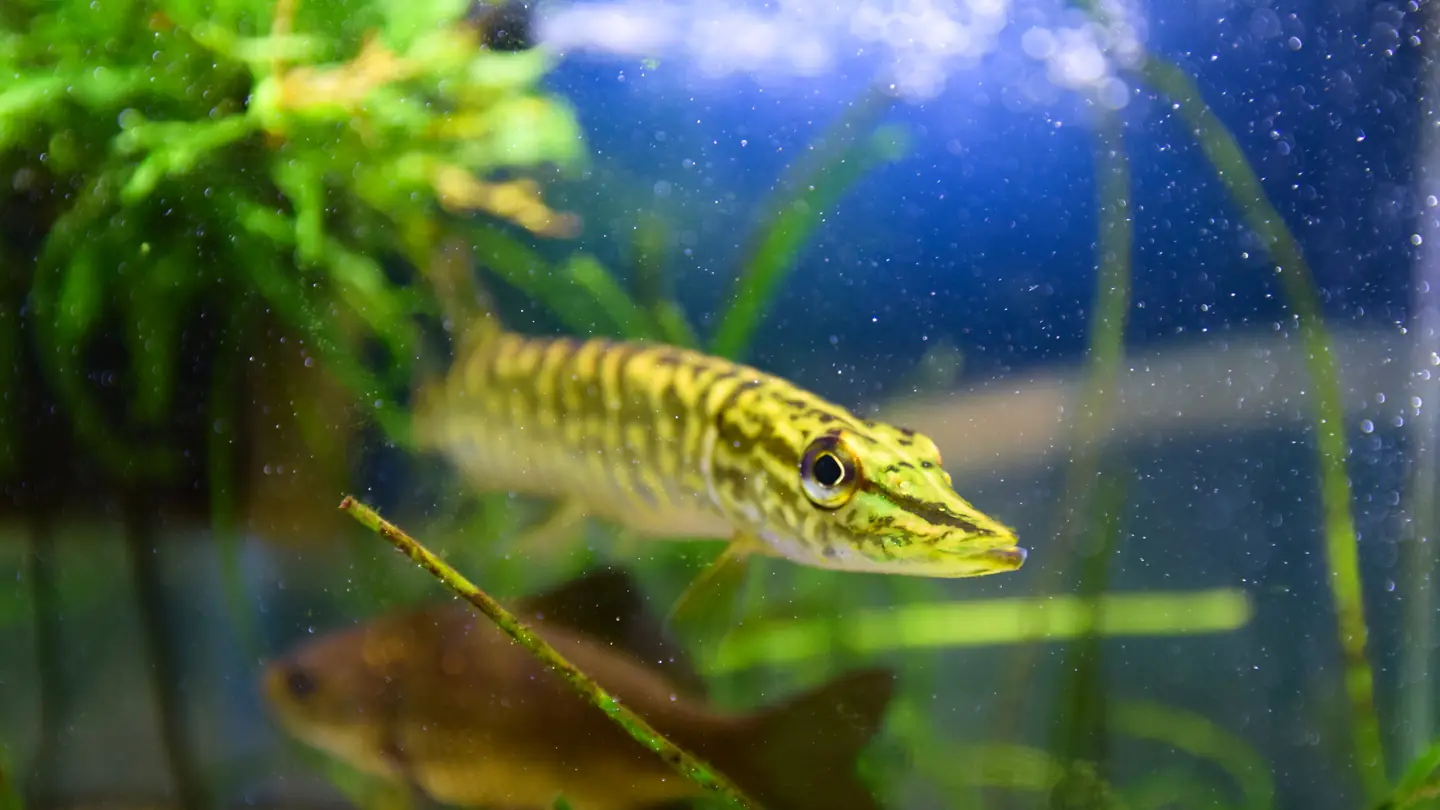
Northern pike are the bullies of the weedbed: long, toothy, aggressive fish that hit lures hard and fight hard. They're found across the northern half of the country and have been stocked well beyond it. The good news is that pike are rarely shy. The challenge is finding them, because where they live changes a lot from spring to summer.
Spring: the best pike fishing of the year
Pike spawn very early, when the water barely reaches the mid-40s °F, often right around ice-out or even while the main lake is still frozen. They move into tributaries, shallow bays, backwaters and connected sloughs to do it, pushing farther and farther back into the smallest bays, cuts and creeks they can reach.
After the spawn, they're hungry and in shallow water with little weed cover yet. In the northern U.S., May is often the best pike month of the year.
Where:
- Back bays and coves that warm first, especially shallow, mud-bottomed bays with cattails, and the north end of a bay.
- Mouths of swampy inlets and the 3- to 10-foot flats just off them.
- Where current enters the lake and necked-down areas between bays.
- Funnels and edges: channel edges, points, old weedlines and small depth changes that guide pike in and out.
- Wood: beaver dams, flooded timber and fallen trees.
How: cover water. Inline spinners and spoons cast far and find active fish. A white spinnerbait with a soft-plastic trailer, slowed or paused for a moment as it passes cover, is hard to beat. Shallow-running minnow plugs work too. Dead bait under a float, set in slack water near current, catches big spring pike.
Late spring: the weeds come up
As the bays warm and weeds grow, pike move onto cover near deeper water: weedy points, weed shoals in the middle of bays, and the edges of weedbeds next to drop-offs. When the shallows reach about 60°F, many pike set up along 6- to 10-foot drop-offs. The biggest fish leave the shallows first, heading for those deeper breaks.
How: run spinnerbaits and spoons along the weed edges; jig a bucktail or marabou jig with full 2- to 3-foot hops along the drop-offs (pike often hit on the fall, and the bite may feel as light as a perch); and on calm mornings and evenings, fish topwater lures over the weeds.
Summer: go deep and cool
Warm water stresses big pike. In shallow, weedy lakes, the big-pike bite often shuts down in midsummer except for short feeding sprees before a front.
For big summer pike, fish deeper lakes that still have cool, well-oxygenated water.
- Use a thermometer. In lakes with oxygen below the thermocline (the layer where warm surface water meets cold deep water), big pike go deep by late summer, often where the water is about 55 to 60°F.
- Look for deep structure: rock piles in 35 feet or more, deep flats right at the thermocline that drop sharply, and open basins where schools of baitfish like ciscoes suspend.
- How: troll crankbaits deep, or use a three-way rig or live-bait rig with a big chub or sucker to reach the depth of the fish.
Winter
Pike stay active under the ice. See Tip-Ups for Pike and Pickerel.
Lures
| Lure | How to fish it |
|---|---|
| Inline spinner (1/6 to 1 oz) | Steady retrieve just fast enough to stay off the bottom. Great for covering water in early spring. |
| Spoon (1/4 to 1 oz) | Steady wobble, or a "flutter" retrieve with jigging motions as you reel. Good along drop-offs. |
| Spinnerbait | Run it past weeds and stop for a three count near likely cover. Add a trailer. |
| Minnow plug or crankbait | Steady, or stop-and-go. Shallow runners early, deeper divers or swimbaits later. |
| Bucktail or marabou jig | Full hops along 6- to 10-foot drops. Watch for strikes on the fall. |
| Topwater | Over weedbeds on calm mornings and evenings. |
Colors: white, yellow and chartreuse are standards. They look like the pale belly of a struggling baitfish.
Live bait
- Float rig: a 6- to 12-inch baitfish on a 1/0 hook, hooked lightly through the back, on a wire leader, with a small float set so the bait hangs a foot or two above the weeds. When a pike takes it, give it a couple of minutes to turn the bait before setting the hook.
- Drift rig: a 6-inch minnow hooked through the lips on a size 1 hook with a little split shot, drifted along weed edges and drop-offs. On a bite, drop the rod tip, open the bail, count to 10, reel up the slack, and set.
- Jig and minnow: a 4-inch minnow on a 1/4- to 1/2-ounce jig, worked with slow, full lifts. Be ready on the fall.
- Dead bait: smelt or herring under a float, about 18 inches off the bottom in slack water next to current, is a top big-pike bait in spring.
Tackle and bite protection
- Rods and line: for average pike of 5 to 10 pounds, your bass tackle is fine: 6- to 10-pound spinning gear or a medium baitcaster with 12- to 14-pound line. For big pike in wilderness lakes, step up to spinning or baitcasting gear for 14- to 20-pound line.
- Leaders: pike teeth cut line. Use a wire leader or a short section of bite wire with live bait and soft plastics, which pike swallow deep. Long hard lures and spoons keep the teeth farther from your line, but a leader is cheap insurance.
For pike's smaller cousin, see Chain Pickerel Fishing.
Before you go
Pike seasons, size limits and slot limits differ by state and by lake. Check your state's current freshwater rules before you go.
Cover photo: Raita Futo (CC BY 2.0, cropped).