Article
Chain Pickerel Fishing
Chain pickerel live in nearly every weedy pond and creek in the East and hit lures all year, even in cold water. Here's where they hold each season, which lures work best, and when you need a wire leader.
November 3, 2026
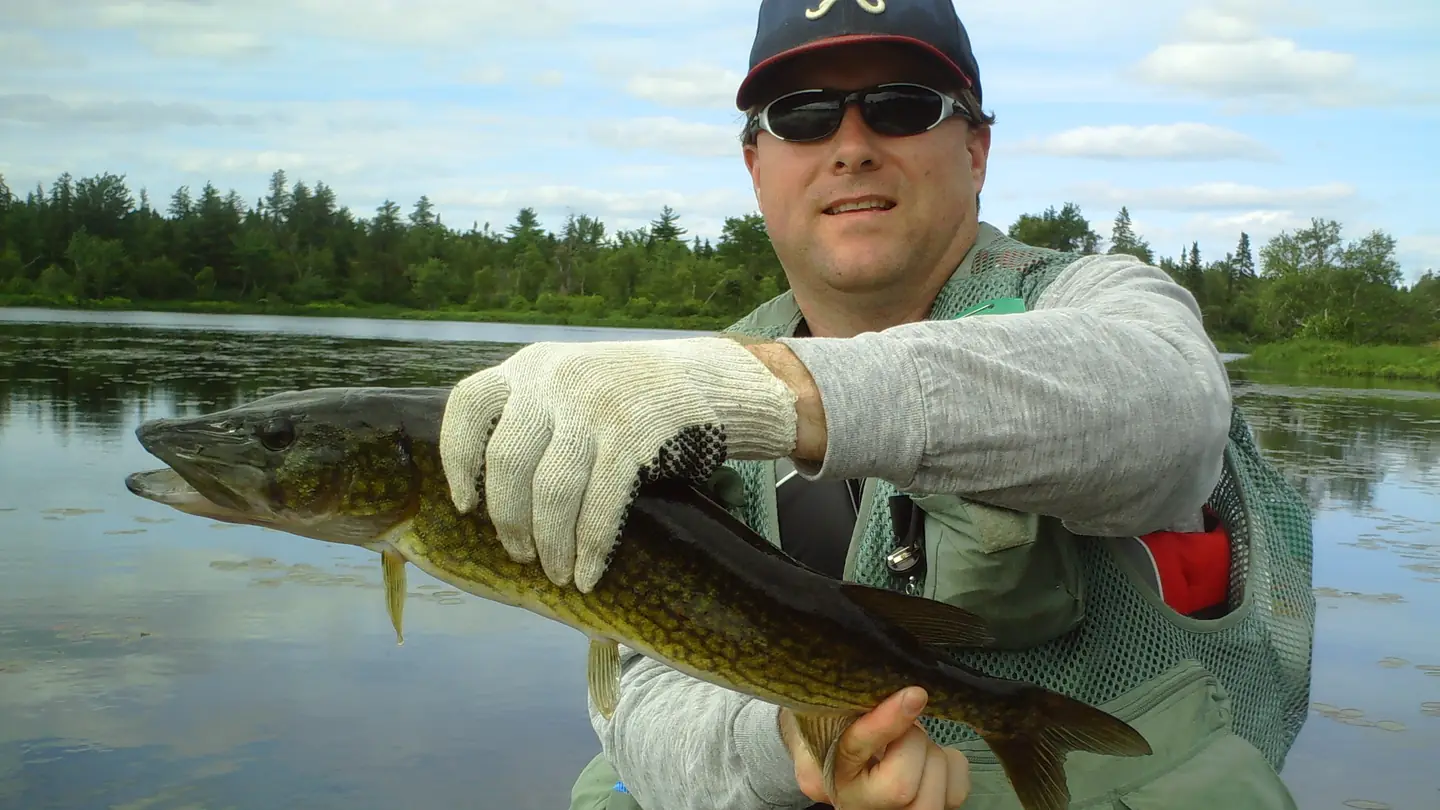
Chain pickerel are the toothy, chain-patterned predators of eastern ponds, creeks and lakes. Bass anglers curse them for cutting off lures, but pickerel are great fish in their own right: aggressive all year, found close to home almost everywhere from southeastern Canada to Florida, and willing to hit when bass and crappie have shut down.
Know your pickerel
There are three pickerel in the U.S.: the chain pickerel, which routinely tops 24 inches, and the smaller redfin and grass pickerel, which rarely pass 12 inches. All have a dark vertical slash running down from the eye. That slash is the surest way to tell a pickerel from a young northern pike where they share water.
What pickerel need
Weeds. If one thing decides where pickerel live, it's vegetation: milfoil, lily pads, flooded reeds, any plant cover they can hunt from. They lie in or just above the weeds and ambush prey that swims past.
Access to deeper water. A shallow pond or marsh can be full of pickerel, but if there's no deeper water nearby, it often holds lots of small, stunted fish. Big pickerel come from places where shallow weeds sit next to a channel or deeper water.
Through the seasons
Early spring: big fish, shallow
Pickerel spawn very early in spring, which makes late winter and early spring the best time for a big one. Once the water warms into the mid- to high 40s °F, prespawn fish feed hard. Fish the flats along channel edges and inside coves, where baitfish move for warmth. Even before the weeds grow, big pickerel ambush from depressions, wood and the edges of drop-offs along those flats.
Summer: pads and edges
Pickerel feed on shallow, weedy flats in summer. Lily pad fields are prime: cast to the holes, gaps and edges in the pads. Small pickerel stay in the shallows all day; the big ones slide in to hunt mainly at dawn and dusk. At midday, look for big fish on the channels, troughs and drop-offs next to the flats. If the small fish suddenly stop biting, a big one may have moved in.
Fall: the transition
As the water cools, pickerel still hunt the shallows, but for shorter windows, often late in the day when the water is warmest. Focus on channel edges next to flats and the transition between shallow flats and deeper water in coves.
Winter
Pickerel spend most of the winter deeper. In bigger lakes, they hold in deep vegetation, even dying weeds. Where weeds die off completely, look for wood and rock in deeper areas, which hold a bit of warmth. On mild days, they may still feed shallow for part of the day. Through the ice, they're quick to hit a shiner on a tip-up. See Tip-Ups for Pike and Pickerel.
Lures
- Jerkbaits: floating and suspending minnow baits catch pickerel all year. In warm water, work them hard so they dart wildly. In cold water, slow down to small twitches and long pauses; the hit often comes while the lure sits still.
- Spinners and spoons: classic pickerel lures that flash and cover water.
- Spinnerbaits: good along weed edges.
- Weedless soft plastics: a soft-plastic jerkbait rigged weedless darts through heavy weeds where other lures foul.
- Topwater: walking baits and hollow frogs twitched over the weeds in summer.
Tackle and leaders
- Rod and reel: a 7-foot medium-light, fast-action spinning rod with a medium spinning reel handles everything from a tiny jerkbait to a jig and swimbait.
- Line: 6-pound mono, or 10-pound braid with a 10- to 12-pound fluorocarbon leader.
Do you need wire? It depends on the lure.
- Hard jerkbaits, long spoons and spinners with rear hooks: pickerel usually grab these from the side, and the lure's length keeps their teeth off your line. Skip the wire; it can dull the lure's action.
- Soft plastics, small swimbaits, grubs and live shiners: pickerel inhale them. Always add 8 to 10 inches of light tie-able bite wire.
Before you go
Pickerel seasons and limits differ by state. Check your state's current freshwater rules before you go.
Cover photo: James Mann (CC BY 2.0, cropped).