Article
Tautog Through the Year: Where Blackfish Live and When They Bite
Tautog never stray far from hard structure, but which structure changes with the season. Here's how blackfish move between shallow rocks and deep wrecks, and when to fish each.
November 3, 2026
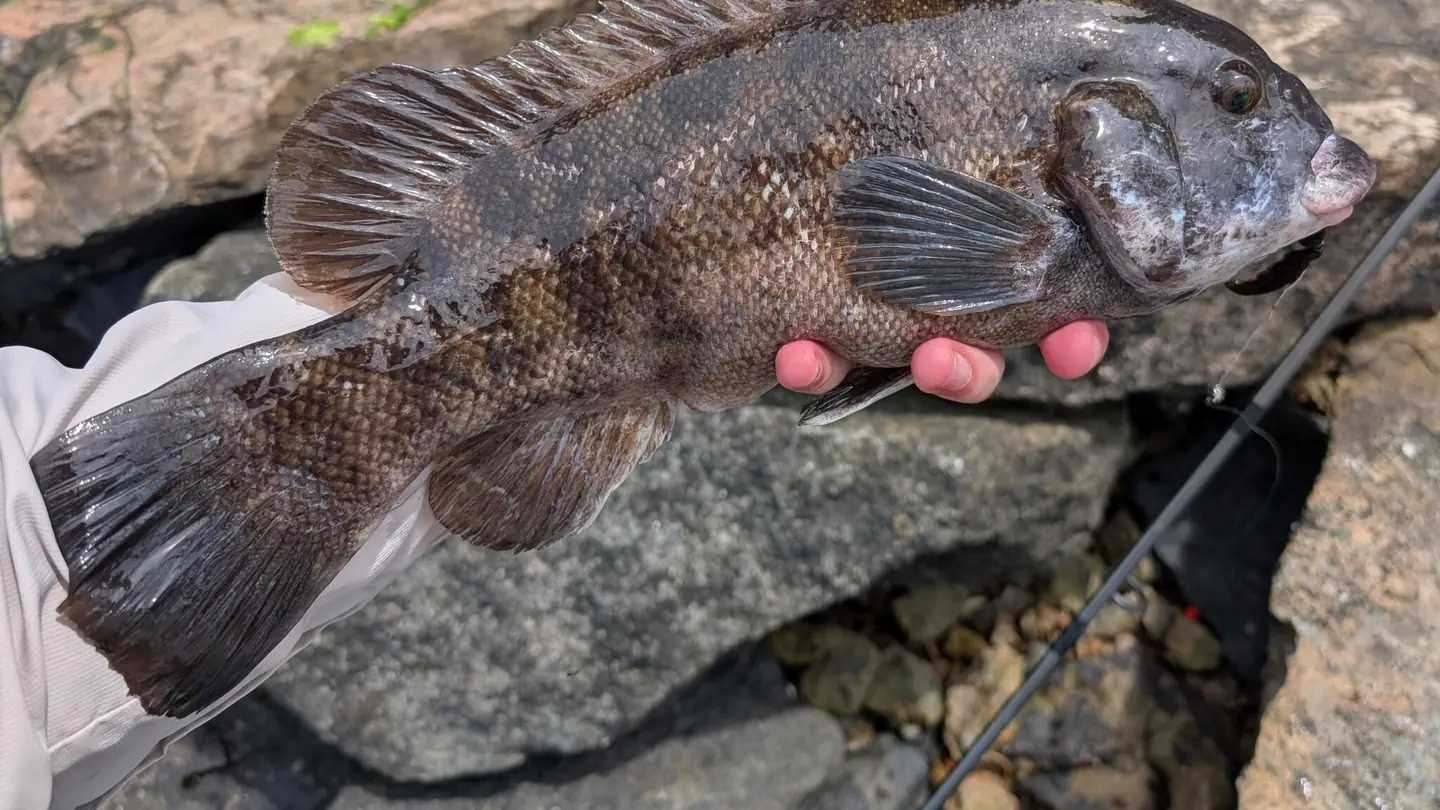
Tautog, or blackfish, are homebodies. They don't run up and down the coast like stripers and bluefish. Instead, they move in and out: shallow in spring and fall, deeper in summer heat and winter cold. And wherever they are, they're on hard structure. Find the right rocks at the right depth for the season and you've found the fish.
What a blackfish needs
Tautog eat shellfish and crabs: mussels, clams, barnacles, and every kind of crab. Their mouths have big front teeth for pulling food off rocks and flat teeth in the back for crushing shells. So they live where that food grows:
- Rock piles, boulder fields and rocky shorelines
- Jetties, breakwaters, bridge pilings and bulkheads
- Wrecks and artificial reefs
- Mussel beds and broken, uneven bottom
They feed only during the day. When they're not feeding, they rest in holes and crevices in the structure. That's why tog fishing is about putting a bait right down into the rocks, and why you'll lose rigs doing it.
They're also slow-growing and long-lived. The average fish caught by anglers is 3 to 4 pounds and 6 to 10 years old. Big ones, called "bulldogs" or "white-chinners" after the white chin big males develop, are over 10 pounds and can be decades old.
The year
Spring: moving in
As the water warms in early spring, tautog leave their winter grounds and move inshore. Around New York they appear on offshore wrecks in late March and early April, and by late April they're on shallow structure close to shore, often in just 5 to 25 feet of water: inlets, jetties, rocky shorelines and shallow wrecks.
Spring tog feed on soft foods. Clams and other soft baits work well this time of year, along with crabs. Tautog spawn in late spring and early summer, roughly May and June.
Summer: hard to find
When the shallow water gets warm, many tautog leave for deeper water and become hard to find by July. By late summer, though, tog are back around bridges, jetties and other inshore structure, where crabs are the bait.
Fall: the main season
Mid-September brings the fish back, and fall is the best tautog fishing of the year. Fish move back onto inshore rocks, jetties, bridges and reefs first, often in 20 to 40 feet, then work out to deeper wrecks and reefs as the water keeps cooling, to 60 to 100 feet or more. This is crab season: green crabs and Asian shore crabs around jetties and bridges, and bigger crabs on the reefs.
Winter: deep wrecks and big fish
By late fall and winter, most tautog are on deep structure offshore, often in 50 to 150 feet. Off New Jersey, many winter on wrecks in 85 to 120 feet. In the mid-Atlantic, winter into early spring is prime time for the biggest tautog of the year, with water in the high 40s to low 50s °F. It's mostly a party- and charter-boat fishery, on calm days between winter storms.
Tautog tend to return to the same wreck year after year, so a spot that produced big fish once is worth coming back to.
Where the big ones are
The largest tautog avoid competition from the small ones. They tend to hold on:
- High-profile wrecks rather than low rubble or scattered rock
- Less-fished structure, away from the spots everyone knows
- Holes and edges: deep in the nooks of the wreck, and where the wreck meets the sea floor
If you're catching only small fish, move to bigger, deeper or less-pressured structure.
Tide and time of day
Tautog feed in daylight only, and many anglers do best from early light into mid-morning. Tide matters a lot because current makes it hard to hold a bait in the rocks. Most tog fishing is best around slack tide or with a light current, often the end of the incoming and the start of the outgoing.
Shore and boat
From shore, look for jetties, rocky points, bridges, piers, bulkheads and canals with rocks or pilings, especially in spring and fall when fish are shallow. From a boat, fish rock piles, reefs and wrecks, and anchor precisely over them (see Anchoring on Wrecks and Reefs). Tautog share much of the same rocky ground with porgies.
Before you go
Tautog grow slowly, and states manage them closely, with size limits, bag limits and seasons that differ from state to state and change often. Check your state's current saltwater rules before you go.
For gear and bait, see Tautog Tackle: Rigs, Jigs and Rods and Crabs and Other Baits for Tautog.
Cover photo: Brighton Lee via iNaturalist (CC0).