Article
Crabs and Other Baits for Tautog
Tautog are crab-eating machines. Here's which crabs to use in which season, how to cut and hook them so they stay on, how to keep them alive, and when clams and other baits work better.
November 3, 2026
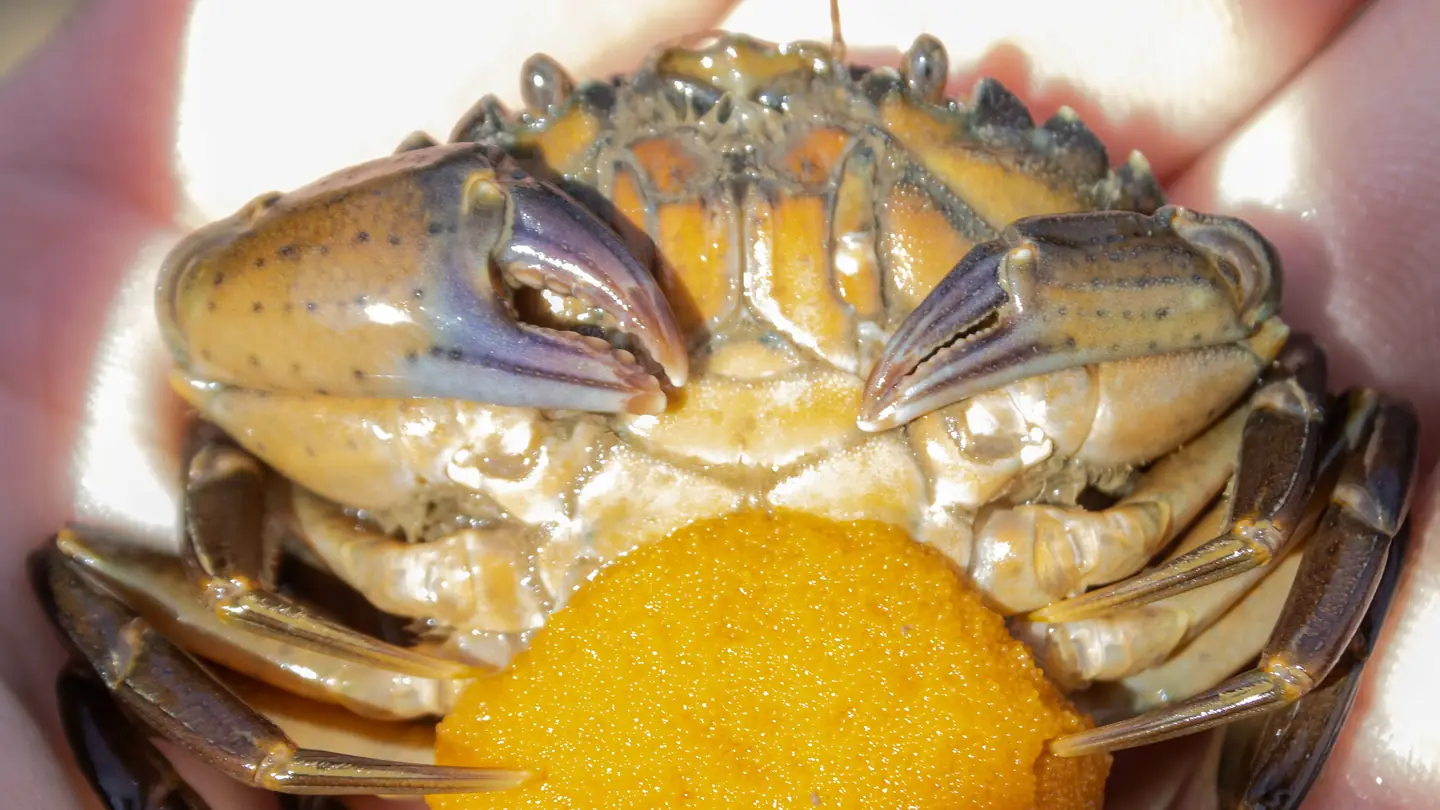
If it's a crab, a tautog will eat it. Their whole body is built around crushing shellfish, and crabs are the bait that catches the most and biggest tog nearly everywhere. But which crab, how big, and how you put it on the hook make a real difference.
The crabs
| Crab | Best for | Notes |
|---|---|---|
| Green crab | All-around, all season | The standard tog bait. Easy to buy and store. |
| Asian shore crab | Inshore rocks, jetties, shore fishing | Small; you can collect your own. Great on jigs. |
| Fiddler crab | Shallow water, warmer months | Small; fish one or two per hook. |
| Calico and hermit crabs | Warmer months; hermits for big fish | Hermit crabs are a top big-fish bait. |
| White-legger (Jonah) crab | Big fish, deep winter wrecks | Fish halves or quarters. |
| Rock crab | Winter | Like white-leggers. |
| Blue crab | Big fish | Fish whole, halved or quartered. |
Green crabs
The green crab is the classic tog bait from New England to the mid-Atlantic, and the first one to try. Small ones go on whole; big ones get cut in half or quarters. Green crabs carrying orange eggs are especially good.
Green crabs are an invasive species. They're legal to use as bait across the Northeast and mid-Atlantic, but never dump leftover bait crabs alive somewhere they could spread.
Asian shore crabs and fiddlers
Small crabs for smaller hooks, jigs and shallow water. You can collect Asian shore crabs yourself, and fiddlers from the edge of a tidal marsh, or buy fiddlers at a tackle shop. Pull the big claw off a fiddler so it doesn't spin in the current, and put one or two on a hook.
Bigger crabs for bigger fish
The biggest tautog often want a bigger meal, and a big bait keeps small tog and bait-stealing bergalls from cleaning your hook in seconds. White-legger (Jonah) crabs, rock crabs and blue crabs are trophy baits, especially in winter. Fish them whole on a two-hook rig, or cut them in halves or quarters. Hermit crabs, if you can get them, are one of the best big-tog baits there is.
Cutting and hooking
Tautog are expert bait thieves. They'll crack a crab and pick it apart before you feel a thing, so the bait has to stay on.
- Cut cleanly. Use bait scissors to cut large crabs in half or into quarters.
- Hook through the leg sockets. Run the hook through the knuckles, where the legs join the body, so the crab doesn't fall off. On a halved or quartered crab, go in through a bottom knuckle and out through the apron (the flap on the underside).
- Two hooks, one crab. On a tandem rig, put both hooks into the same crab through different leg sockets.
- Crack the shell. On a whole crab, crush the top of the shell a little to let the juice and scent out.
- Tie it on. If crabs keep getting torn off, wrap the bait to the hook with a few turns of elastic bait thread.
- Hermit crabs: take the crab out of its shell, run the hook into the tail, twist it around the body, and bring the point out through the claw so the claw shows.
Match the size to the day. When fish are biting well and you want a big one, use a whole crab. When bites are finicky or you keep missing fish, go down to half a crab or a smaller crab.
Keeping crabs alive
- Green crabs: a plastic bucket in the shade. Keep them cool and don't let them sit in water or overheat.
- Fiddlers: a small cooler with damp paper towels. They'll last for days if they don't get too hot.
Clams, mussels and other baits
Tautog are rarely caught on lures alone; it's a bait fishery. Besides crabs:
- Clams: fresh or salted surf clams and steamer clams work, especially in spring, when tog are taking soft baits. Soaking clam in a heavy kosher-salt brine toughens it so it stays on the hook. Clams tend to draw more small fish.
- Mussels: a natural tog food.
- Others: snails, conch, sand bugs and bloodworms catch tog in some places.
Clams and squid also catch the black sea bass and porgies that often share tautog structure.
Handle with care
Crab shells and the structure you're fishing will nick your hands. Wash your hands and any cuts after handling bait and fish; infections from bacteria in seawater and shellfish can be serious.
For rigs, see Tautog Tackle: Rigs, Jigs and Rods. For hooking them, see Hooking and Landing Tautog.
Cover photo: Josh Boe via iNaturalist (CC BY 4.0, cropped).