Article
Hooking and Landing Tautog
Tautog are among the hardest fish on the coast to hook, and once hooked they dive for the rocks. Here's how to read the bite, when to swing, and how to win the first five feet of the fight.
November 3, 2026
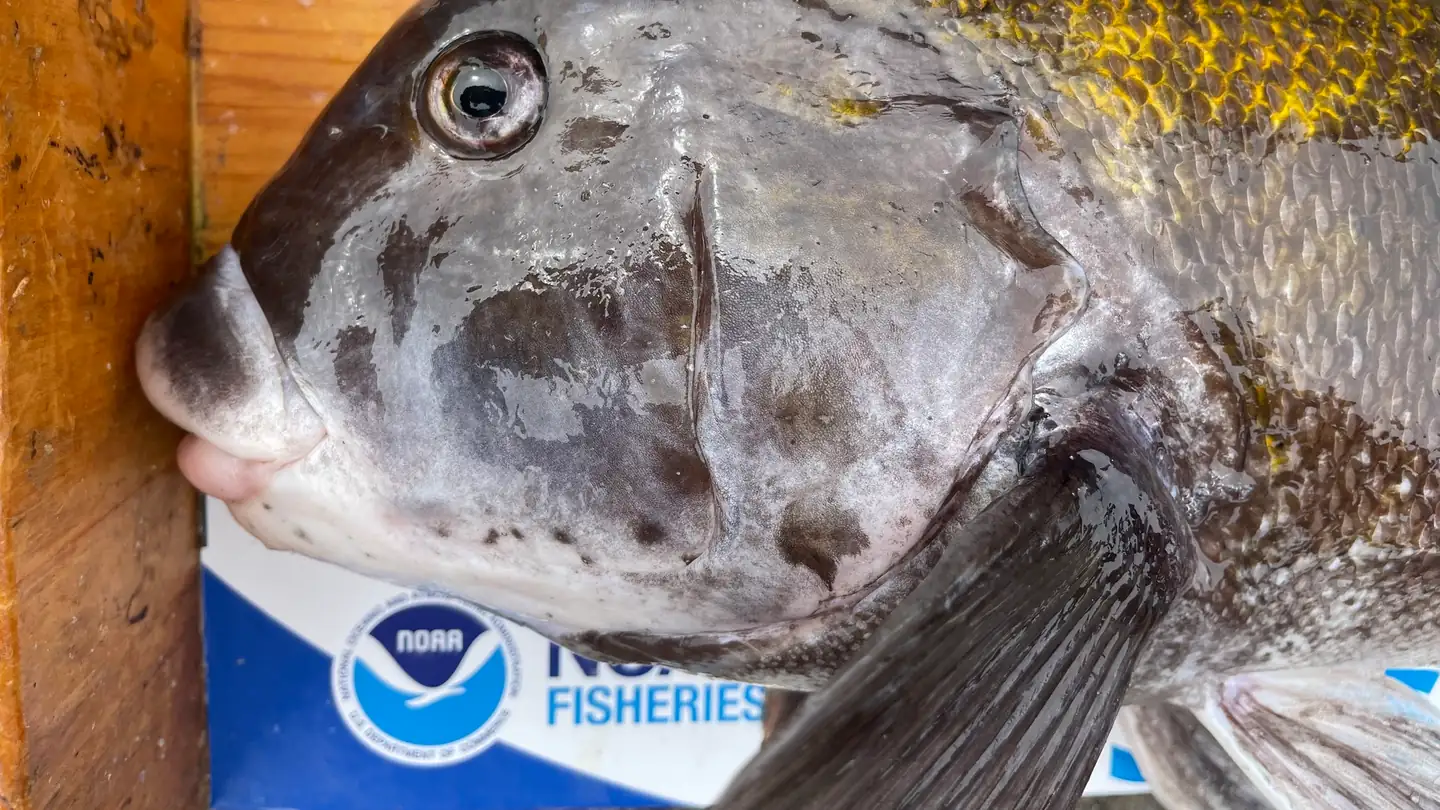
Ask any veteran tautog angler what's hard about the fish and the answer is always the same: hooking them. A tog can strip a crab off your hook while you're still deciding whether that was a bite. Nobody hooks every fish. But once you learn to read what's happening down there, your hookup rate climbs fast.
What a tautog bite feels like
A tautog doesn't inhale a bait the way a bass does. It has big rubbery lips and a few stubby front teeth, and it picks at food, crushing shells and pulling meat loose. On the end of your line that feels like:
- Taps, pecks and scratching. Quick little raps on the rod tip. That's the fish cracking the crab's shell or nibbling the legs, often holding the bait only in its lips. Swing now and you'll usually pull the hook right out of its mouth.
- A solid pull or thump. The rod loads up, or you feel real weight. That's a fish that has taken the bait into its mouth. That's when you swing.
- The sinker moves. Sometimes a big tog picks up the whole rig and moves off with it. That's a committed fish.
The bite changes from day to day. Some days fish hit hard and you can't miss; other days you barely feel a tug. Some anglers do best striking at the first pecks on those days. But for most people most of the time, patience pays: wait for weight.
Setting the hook
- Keep a tight line while you wait. Braid helps a lot here: with almost no stretch, you feel more and your hookset gets to the fish instantly.
- When you feel the pull, swing hard and start cranking at the same moment.
- If a big fish picks up the bait slowly, you can drop the rod tip a little to give it slack so it takes the crab in. Then come tight and set.
Two hooks in one crab (a tandem rig) improve your odds, because whichever way the fish grabs the crab, a hook is near its mouth. Once a hook does go into a tog's lips, it rarely comes out.
If you're getting picked clean without feeling anything solid, check your bait often. Tautog that don't get a solid strike right away will clean the hook.
The first five feet
The moment a tautog feels the hook, it turns and dives for the hole it came from. If it gets there, it wedges itself into the rocks and you're stuck. The fight is won or lost in the first few seconds.
- Reel fast and lift hard. Don't let the fish gain an inch. Get its head turned and pull it up. Once it's about five feet above the structure, you've mostly won.
- Set your drag tight. Much tighter than for most fish. Many big-tog anglers fish with the drag nearly locked.
- Use strong gear. A stiff rod and braid let you put real pressure on the fish right away. Light tackle or a soft drag lets it get back into the rocks.
When it wedges in
It will happen. If a fish gets into the structure and won't budge:
- Give it slack. Open the bail or free-spool a little line and wait. With no pressure, the fish often swims back out on its own. That works roughly half the time.
- Come tight and pull again the moment you feel it move.
- If it's still stuck, pull steadily to break off. On deep wrecks, a rig built so the sinker breaks away first sometimes lets you keep the fish while losing only the lead.
Finding the bite
If you're not getting bites, you may be just a few feet off the fish. Tautog sit tight in holes and crevices.
- Move a little. Let out a bit of anchor line or take some in, or try the other side of the boat. A few feet can make all the difference. See Anchoring on Wrecks and Reefs.
- Walk the sinker. Lift the sinker and set it down a short distance away, feeling for the holes and edges in the structure.
- Mind the tide. Tautog feed best around slack water. At dead slack, a small pluck on the line can make the crab move just enough to draw a bite.
- Keep the line straight up and down. A line angling off in the current drags your rig into snags.
From shore
Tautog live along jetties, rocky shorelines, bridges, piers, bulkheads and canals in spring and fall. Fish around slack tide, often the end of the incoming and start of the outgoing. Keep the bait tight to the rocks or pilings.
- Use a long rod so you can lift the fish up and over the rocks below you.
- Wear studded or cleated footwear on jetties. Wet rocks are treacherous.
- The same rule applies: wait for weight, then swing and pull the fish away from the rocks immediately.
After the catch
Tautog are covered in thick, slippery slime, so get a firm grip before you unhook one. They're excellent to eat. Don't overcook tautog or it gets tough. It's a classic in fish chowder.
For gear, see Tautog Tackle: Rigs, Jigs and Rods. For bait, see Crabs and Other Baits for Tautog.
Before you go
Tautog size limits, bag limits and seasons are set by each state and change often. Check your state's current saltwater rules before you go.
Cover photo: Bobby McCabe via iNaturalist (CC BY 4.0, cropped).