Article
The Striper Year: Spring Run, Summer, Fall Run and Holdovers
Striped bass move on a schedule set by water temperature and bait. Know where the fish are in each season and you'll know where to be.
November 3, 2026
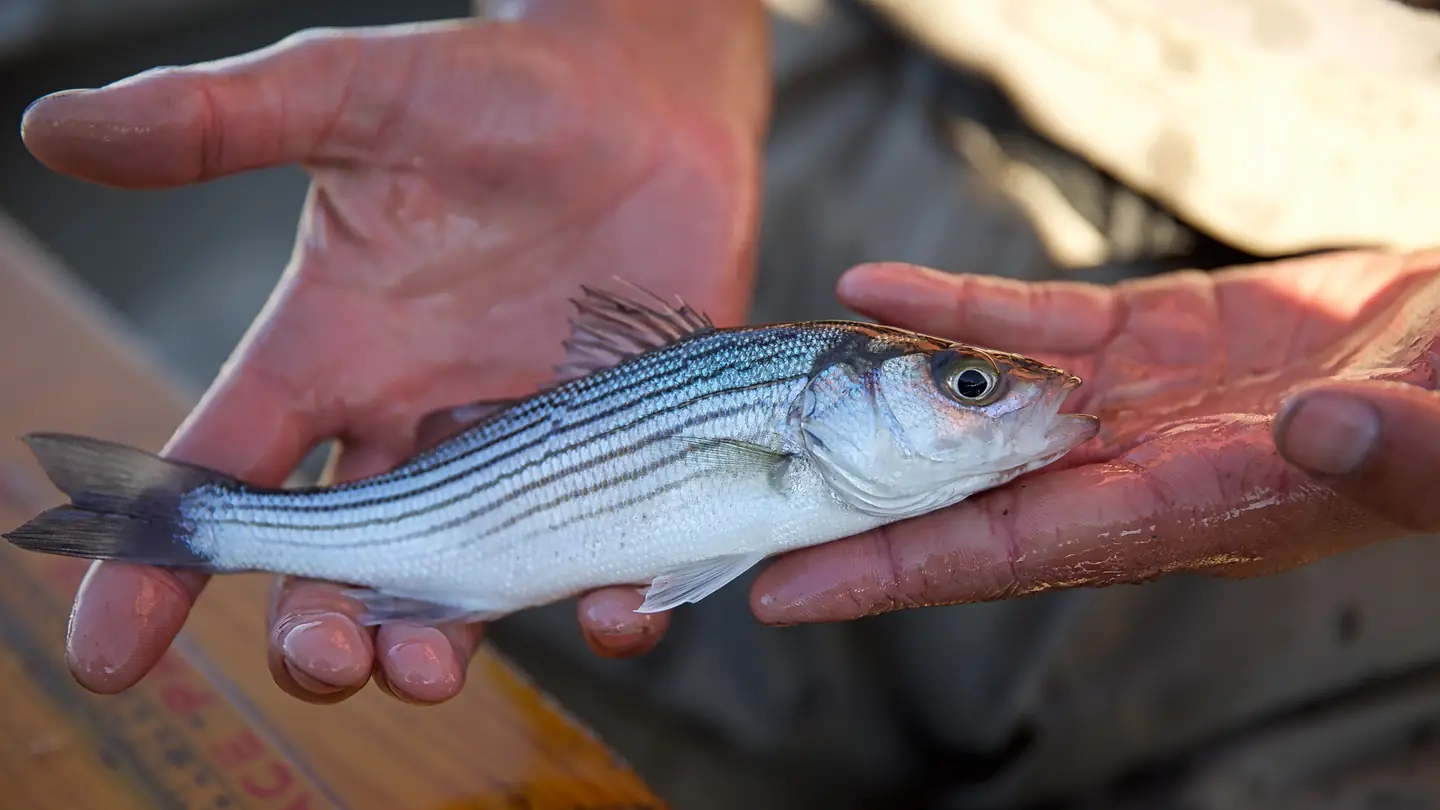
Stripers don't show up at random. The coastal fish follow the same loop every year: up the rivers to spawn in spring, north along the coast to feed in summer, back south in fall, and offshore or into deep river channels for winter. Water temperature and bait set the pace. If you know where they are in that loop, you know where to put your time.
Spring: the run up the coast
Most of the coast's migrating bass are born in four river systems: the Chesapeake Bay and its rivers, the Delaware, the Hudson and the Roanoke. In spring the big fish leave their wintering grounds and push into those rivers to spawn in fresh water near the head of tide, mostly in April and May, with the Chesapeake spawn running from April into early June.
That's why the season starts in the rivers and bays, not on the open beach. As the spawn wraps up, the fish drop out of the rivers and start working north, hugging the coast and stopping wherever there's food: rips, river mouths, estuaries and sheltered bays.
What that means for you:
- Fish the warm water first. Early on, look to tidal rivers, creeks and back bays. Shallow mud bottom heats up faster and holds warmth longer than sand or rock, and even a slight bump in water temperature gets cold bass feeding.
- Watch the reports from the south. The run moves up the coast over several weeks. When fish are caught off Long Island, the northern season has started; by June they're on the sand flats around Montauk.
- Match early bait. Spring bass feed on whatever is moving: herring, menhaden (bunker), worms and squid.
Summer: deeper, cooler and after dark
By summer the migrating fish have spread out along New England, from Long Island Sound to Rhode Island, Massachusetts, the south side of Cape Cod and beyond. Fish that didn't migrate far stay in the mid-Atlantic bays and rivers.
Hot weather changes how you fish for them. Bass slide into deeper channels and rips during the day and come into the shallows in low light. Your best windows are sunrise, sunset and the hours of darkness, and a moving tide beats slack water. Fish the current edges: inlets, points, rocky shorelines, bars and the deep side of a channel edge.
Fall: the run south
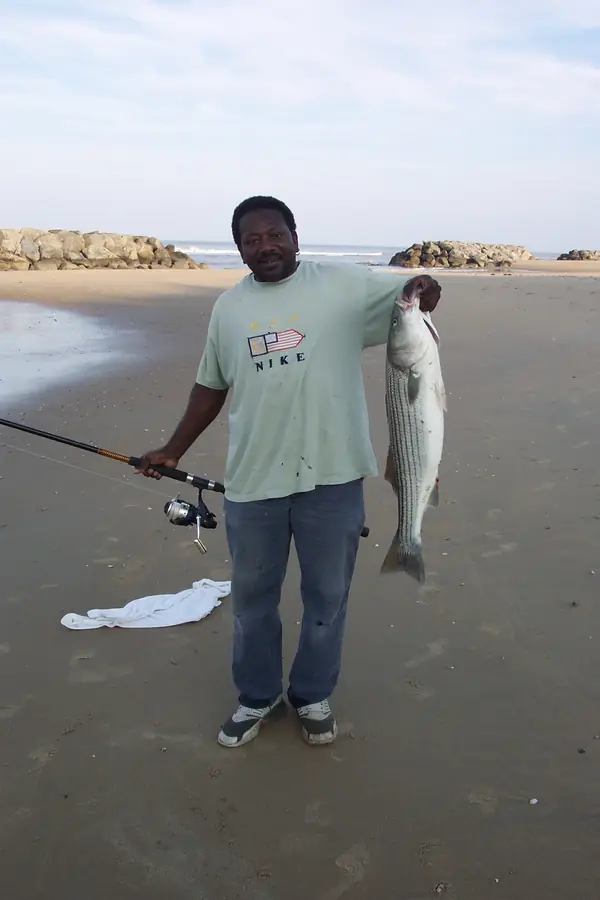
A fall striper from the beach at Virginia Beach, Virginia. Photo: Capt. Albert E. Theberge, NOAA Photo Library (public domain).
The fall run is the main event. As the water cools, the bait that grew up all summer in the bays and salt ponds pours out to the coast: sand eels, spearing, mullet, bay anchovies, peanut bunker, herring and squid. The bass follow it south and feed hard to fatten up for winter.
In the Northeast the run usually builds through September and peaks from October into December. It passes Connecticut and Long Island first and is often heaviest off New Jersey in November and December. Inshore water in the mid-50s to mid-60s °F is a good sign the fish are moving. A warm fall can push everything later.
How to fish it:
- Find the bait and the birds. Diving terns and gulls usually mean bait being pushed up by fish (see Reading Birds and Bait). Cast to the edges of a blitz rather than into the middle; a lure that looks like a straggler gets hit first.
- Work the beach at night and at the top of the tide. Slow-retrieved swimming plugs in cuts, bowls and troughs, in low light, catch the bigger fish.
- Go down when nothing shows. If your electronics mark fish but nothing is breaking, drop metal jigs or soft-plastic shads and work them slowly near the bottom.
- Troll to search. With no birds and no marks, trolling covers water until you find them.
Winter: offshore fish and holdovers
Most migratory bass spend the winter off the mid-Atlantic, from Long Island south to North Carolina, with the biggest concentrations off Virginia and the Carolinas. Some fish never make the trip and winter in the deep water of their home rivers and estuaries.
In New England those fish are called holdovers, and they make a real winter fishery in tidal rivers. Most are schoolie-sized, so this is light-tackle fishing. A few things matter more than anything else:
- Find the right water. Holdovers winter in tidal rivers, estuaries, salt ponds and marsh creeks, especially ones that reach well inland. Moving water and mud-bottomed shallows that warm on a sunny day are worth checking, even if you see no bait.
- Fish slowly. Once the water drops into the 40s, bass barely feed and won't chase. A soft plastic on a jig head, just heavy enough to reach bottom, is the go-to. Twitch it or drag it slowly, and on tough days barely move it at all. A medium-heavy spinning rod with a 2500- or 3000-size reel is plenty.
- Pick your day. A small rise in water temperature or a warm rain can turn them on. Fish at the top and the ends of a school bite best; the middle of a big school on your sonar is often the hardest to catch.
- Look for the hand-off. As the rivers warm in early spring, holdovers drop downriver and mix with the first fresh migrants, which is often the first good fishing of the year.
For the fishing itself, see Night Fishing for Striped Bass, Striped Bass Lures: What to Throw and When and Stripers, Blues and Fluke: A Month-by-Month Calendar.
Before you go
Striped bass are tightly managed. Size limits, bag limits, seasons and gear rules differ from state to state and change often, and every Atlantic state requires inline circle hooks when you fish bait for stripers. Check your state's current saltwater rules before every season.
Cover photo: Steve Martarano, U.S. Fish and Wildlife Service (public domain).