Article
Reading Birds and Bait
Birds and baitfish tell you where stripers and blues are feeding, what they're eating and how to fish for them. Here's how to read the signs and match your lure to the bait.
November 3, 2026
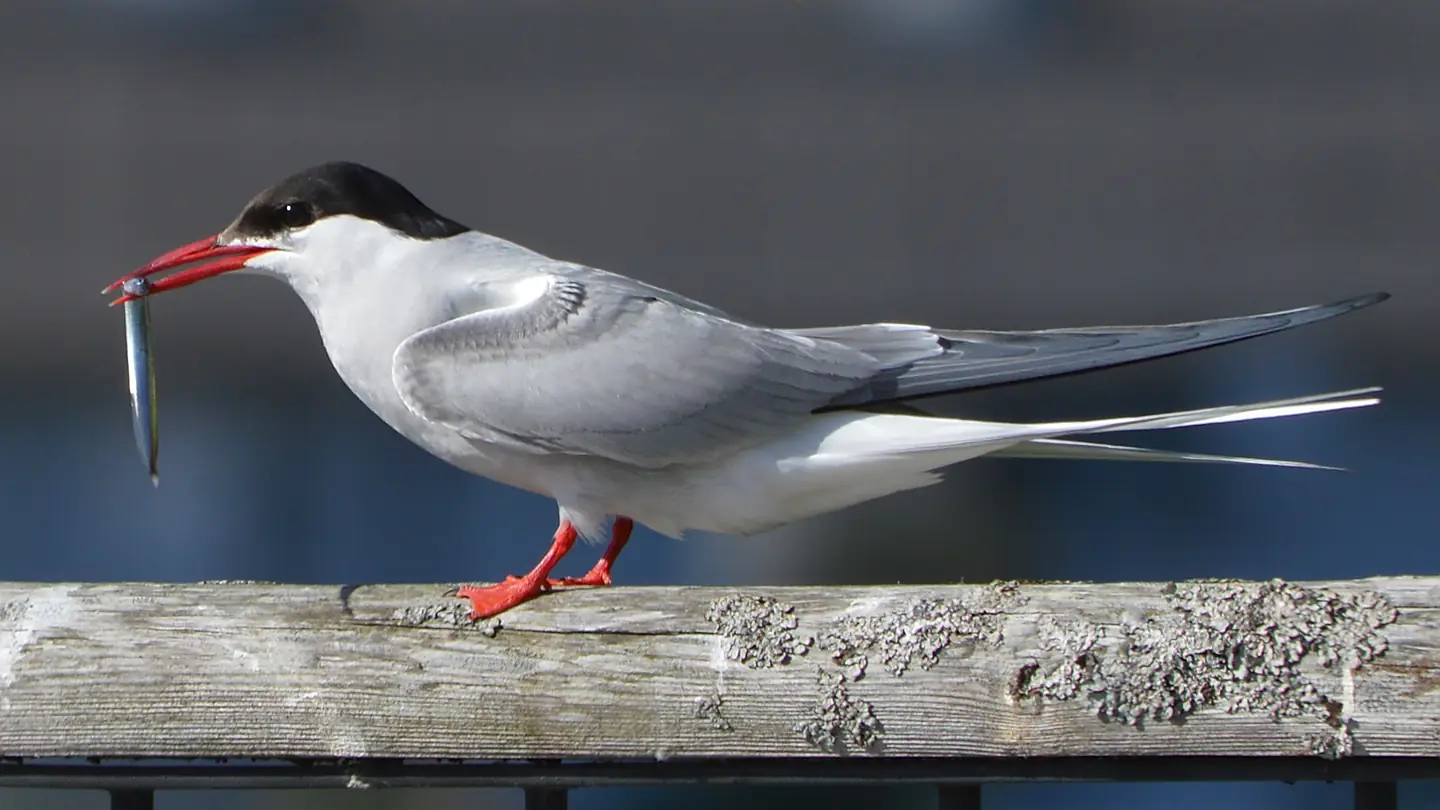
Some of the best fishing information on the water isn't in a report. It's flying over your head. Birds find bait long before you do, and when stripers or bluefish push that bait to the surface, the birds go crazy. Learning to read what the birds are doing, and what bait is under them, tells you whether there are fish, what they're eating, and what to throw.
What the birds are telling you
Birds diving and hovering: terns and gulls dipping, diving and hovering low over one spot mean bait is at the surface, and usually that gamefish are pushing it up from below. Watch which way the flock moves; it shows you where the bait and fish are heading.
A tight flock vs. a scattered one: the tighter the ball of bait, the tighter the flock above it. When bluefish arrive, they crash straight through the bait ball and scatter it, and the birds spread out and go wild over a wide area.
Birds sitting on the water: gulls resting on the water in a group, waiting, often means the bait is there but too small for them to catch. Fish feeding on tiny bait like that can be hard to catch, too.
Birds hovering high, not diving: birds circling and waiting over an area often know fish are there and are waiting for the next explosion. Get ready.
Gannets: big white seabirds that fold up and plunge from high up, mostly in the ocean and the lower bays in fall and winter. Gannets don't need fish to push bait up for them. They can dive dozens of feet down after menhaden on their own. Gannets alone may just be feeding; gannets mixed with diving gulls and terns usually mean bait is near the top or gamefish are driving it up.
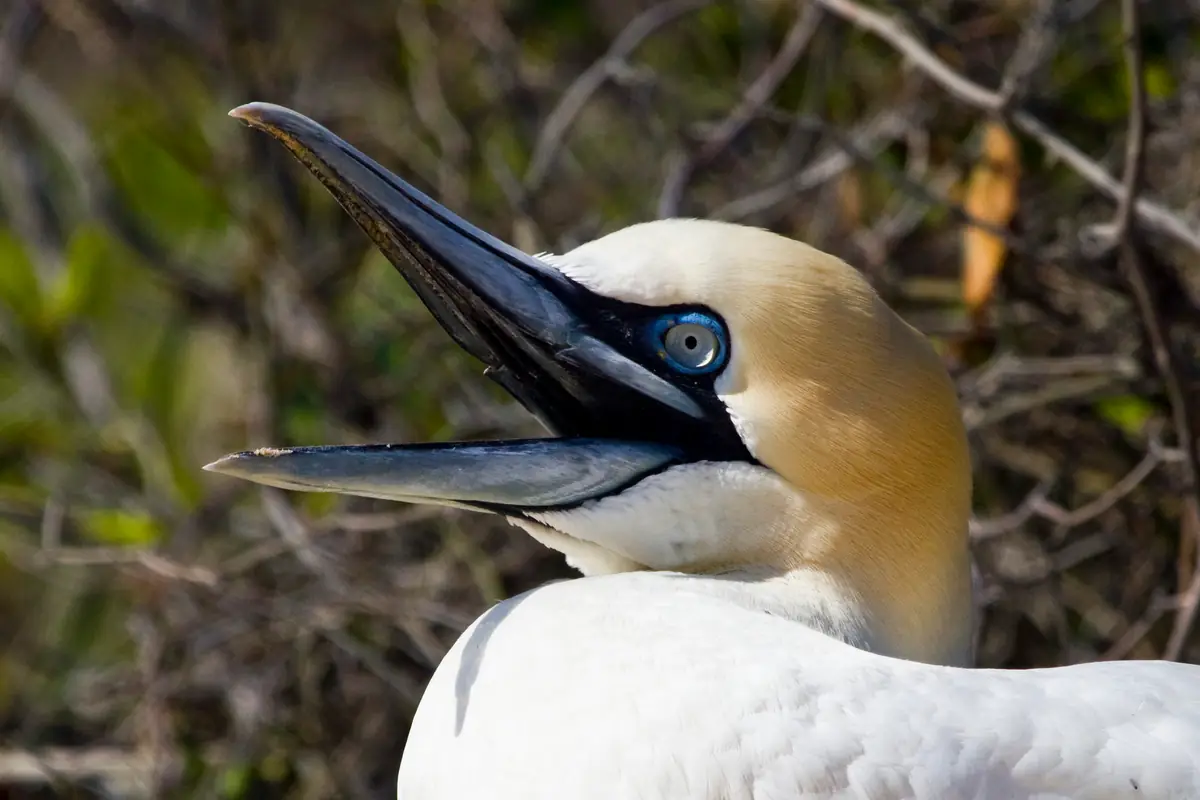
A northern gannet, the big plunge-diver of fall and winter. Photo: U.S. Fish and Wildlife Service (public domain).
Birds over deep water but nothing breaking: sometimes birds work over bait that bass are feeding on deep. If your surface casts get nothing, the fish may be on the bottom. A metal jig dropped straight down can be the only thing that catches them.
The bait
Menhaden (bunker)
Silvery-blue fish with a dark spot behind the gill and smaller spots behind it. Adults reach 14 inches or more. You'll see schools just under the surface, rippling, flashing and splashing, through spring, summer and fall. Bunker are the most important food for big stripers and bluefish on the coast. Gannets love them.
Peanut bunker are this year's menhaden, under about 5 inches. They grow up in the back bays over summer and leave for the ocean in fall, when stripers and blues gorge on them.
Match it: big swimming plugs and surface swimmers, big soft-plastic shads, and bunker spoons for adults. Smaller plugs, metal and swim shads for peanuts.
Bay anchovies
Small, almost see-through fish up to about 4 inches with a silver stripe down the side, in tight schools. They're among the most abundant fish in the bays and a critical food for blues, weakfish and stripers, and for birds. Anchovies of 1 to 3 inches form the classic bait ball with a cloud of terns and gulls on top.
Match it: small, slim, light-colored lures: small metal, small soft plastics, small flies.
Spearing (silversides)
Slender fish up to about 5 or 6 inches with a bright silver stripe along each side, similar to anchovies but with a smaller mouth. They school along the shoreline in summer and move to deeper water in winter. Spearing don't ball up; they spread out close to the beach and leap from the water to escape predators, which draws small groups of birds picking them right out of the air.
Match it: slim swimmers, small soft plastics and small bucktails, fished close to the beach.
Sand eels
Also called sand lance: long, slender baitfish with pointed snouts that live over sand and gravel bottoms and bury themselves in it. When stripers are on sand eels, slim metal jigs catch more bass than anything else. Bass on sand eels are often deep, so be ready to jig the bottom.
Match it: slim metal jigs, needlefish plugs, and long, thin soft-plastic eels.
Other fall bait
In fall, bait pours out of the bays as the water cools: spearing, sand eels, anchovies, peanut bunker, mullet, herring, mackerel and squid. Stripers and blues key on whatever bait is around, so pay attention to what you see on the beach and in the water, and match it.
How to approach birds and a blitz
The fastest way to ruin a blitz is to run into it.
- Stay out of the middle. A boat running through a school scatters the bait and puts the fish down for everyone.
- Get up-wind or up-current, shut the engine off, and drift down onto the fish. Stay quiet. Surface-feeding fish spook easily.
- Cast to the edges. A lure coming out of the side of the commotion looks like an easy straggler. Cast into the middle only when fish are feeding hard everywhere.
- Avoid topwater plugs under diving birds. Terns and gulls grab them. Metal is safer.
- When it breaks up, go down. After a blitz scatters, drop a jig to the bottom. Fish often stay below to pick up the leftovers.
- If birds are working but nothing hits: run up-current past the birds while watching your sonar, then drift back down over the fish while jigging near the bottom.
Get out early. You'll often have the birds to yourself in the first light, before other boats arrive.
From the beach
You can't chase birds from shore, but you can watch them. Birds working just off the beach, bait spraying in the wash, or bunker flipping on the surface all mean fish may come within casting range. Have a popper or metal tied on and ready. Even when nothing is breaking, a surface plug that draws a swirl tells you where the fish are.
For lure details, see Striped Bass Lures: What to Throw and When and Catching Bluefish on Lures and Bait. For the months when birds and bait are most active, see Stripers, Blues and Fluke: A Month-by-Month Calendar.
Cover photo: Ryan Hodnett (CC BY-SA 4.0, cropped).