Article
Catching Bluefish on Lures and Bait
Blues will hit almost anything, but some days they're smarter than their reputation. Here's how to work a blitz, fish metal and poppers, chunk and chum, and troll for them.
November 3, 2026
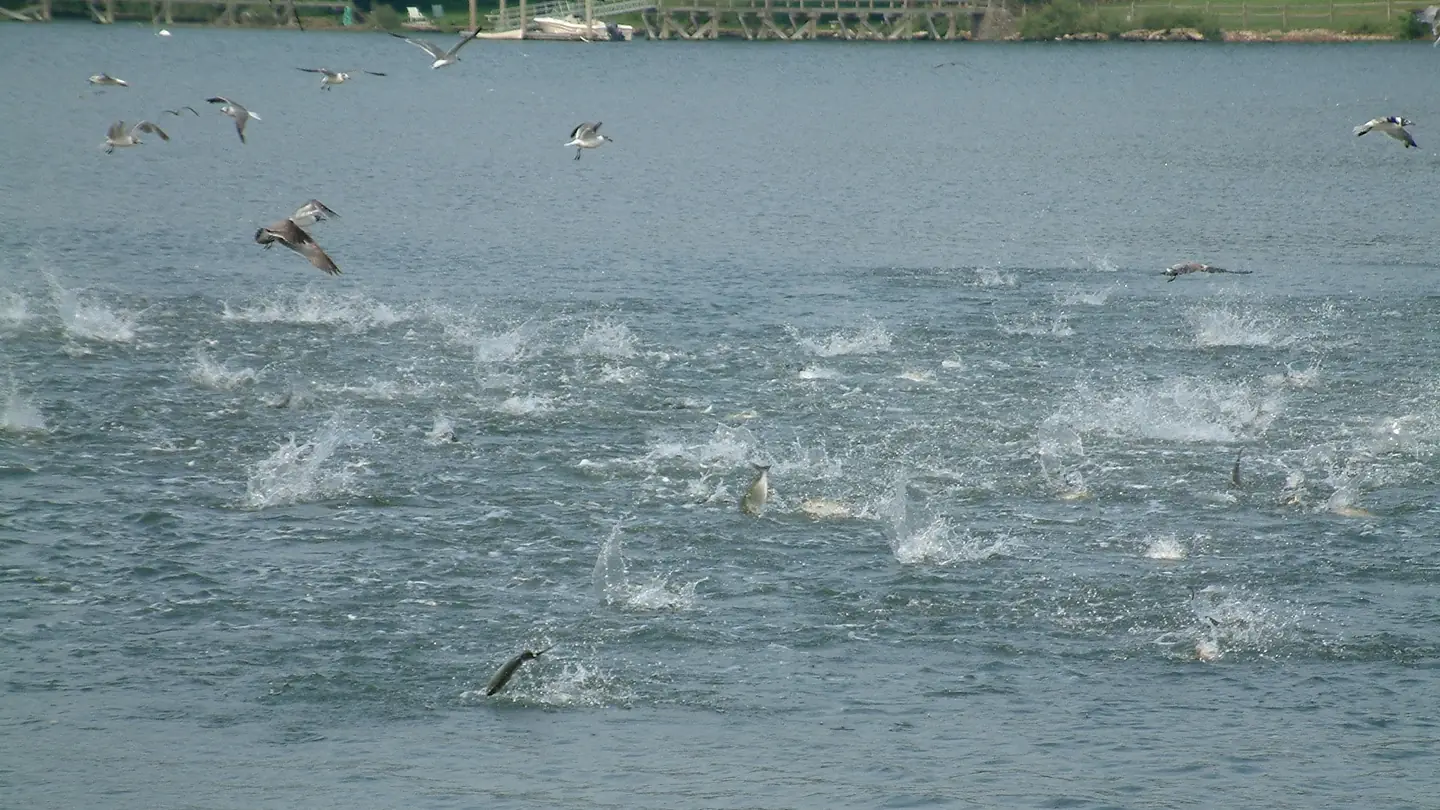
Bluefish have a reputation as fish that will eat anything, and most days they do. Their teeth and appetite make them one of the most exciting fish on the coast, and when a school is up and feeding, a lure cast into the frenzy is about as close to a sure thing as fishing gets. But blues can also be picky, and their eyesight is excellent. Knowing a few methods well, and when to switch, is what fills the cooler.
Working a blitz
When blues push bait to the surface, you'll see it: the water boils, bait sprays into the air, and birds go wild over it. Bluefish tend to crash straight through a bait school and scatter it, so a bluefish blitz is often spread over a wide area, with the birds scattered and frantic.
From a boat: don't run into the school. Get up-wind or up-current of it, shut down and drift onto the fish. Stay quiet: blues on top spook easily, and a dropped cooler lid or a loud radio can put them down.
Where to cast: along the edge of the school. A lure coming out of the commotion looks like a stray baitfish. Cast into the middle only when the fish are feeding hard.
How fast: fast. Blues like a moderate to fast retrieve, and when they're on top, cranking as fast as you can is often best. If they're following but not eating, vary the speed until you find what they want.
When it ends: blitzes break up as fast as they start. Drop a metal jig to the bottom after the surface feed dies; fish often stay below.
The lures
- Metal: diamond jigs, slab spoons and casting spoons. Anything shiny works on blues. Metal casts the farthest and sinks fastest, so it reaches fish that are breaking far off or holding deep. Cast and retrieve fast, or jig it up and down from a boat. Tie metal straight to a heavy mono leader; it's long and hard enough that the lure itself keeps teeth away from the line.
- Poppers. Watching a blue blow up on a popper is the best part of bluefishing. Hard-plastic poppers survive their teeth. Swap the treble hooks for a single hook on the tail: you'll still hook them, you'll lose fewer fish to cut leaders, and unhooking is safer. Avoid topwater plugs under diving birds, which grab them too.
- Swimming plugs and soft plastics. Swimming plugs and tough soft-plastic swimbaits catch blues when they're feeding below the surface.
- Bucktails. For deeper fish in inlets and current. Choose long-shank bucktails with synthetic hair, which blues can't strip as quickly.
- Wide spoons wobble at slower speeds, for days when the fish won't chase.
Leader choice matters as much as the lure. See Bluefish Tackle: Rods, Line and When to Use Wire.
Fishing cut bait from the beach
Menhaden (bunker) is the standard bluefish bait from shore. Fish fresh or frozen chunks, or half a bunker, on the bottom with a fish-finder rig or a standard bottom rig and a pyramid sinker to hold on sand. Bunker is oily and tough, and it stays on the hook in rough surf better than clams. Use a long-shank or circle hook (if striped bass are possible, a circle hook is required). Blues also eat baits intended for other fish, so you'll catch them on squid, clams and worms whether you meant to or not.
Chunking and chumming from a boat
When blues go deep in summer heat, chumming brings them to you. It's a slow, steady game.
- Set up. Anchor up-current of a lump, ridge, or other structure that holds bait. In light wind and current you can also drift.
- Start the slick. Fresh-ground menhaden is best. Mix it about half and half with seawater and ladle a small amount over the side at a steady rate, roughly a big ladle every 30 seconds. The goal is to draw fish and keep them looking, not fill them up. Two 5-gallon buckets last most of a tide in midsummer.
- Add chunks. Cut bunker into pieces about 2 inches long and toss a few into the slick now and then.
- Bait up. Use a 4- to 6-inch slab of bunker, butterfish, spot or another oily fish with the skin on. Run a 5/0 to 7/0 hook through the thick end.
- Drift it back. No weight. Lower the bait and feed out line so it drifts at the speed of the current, in the slick, back 50 to 75 feet. Then reel up and send it back again.
You won't need to wonder whether you've had a bite. A heavy mono leader instead of wire often gets more bites in a slick, because the bait drifts more naturally. With a circle hook, don't set the hook; reel tight and let the fish turn.
When blues are swarming in the slick, try skipping a big topwater plug across the surface as fast as you can.
Trolling
Trolling covers a lot of water when blues are scattered. Spoons, tubes, swimming plugs, deep-diving plugs and umbrella rigs all catch blues. Run wire to the hook on trolled lures, and swap the trebles on diving plugs for single hooks to make unhooking easier.
Timing
In summer, blues feed best at dawn and dusk from shore, when they come up from deeper, cooler water. In late summer and fall, they blitz along the beaches and inlets. See Bluefish Through the Season for when and where each size class shows up.
Before you go
Bluefish bag limits and size rules change from year to year. Check your state's current saltwater rules.
Cover photo: gmgshepherd via iNaturalist (CC0).