Article
Bluefish Through the Season: Snappers, Cocktails and Choppers
Bluefish come in sizes from finger-length snappers to 15-pound choppers, and each size shows up in different water at a different time of year. Here's when and where to find them.
November 3, 2026
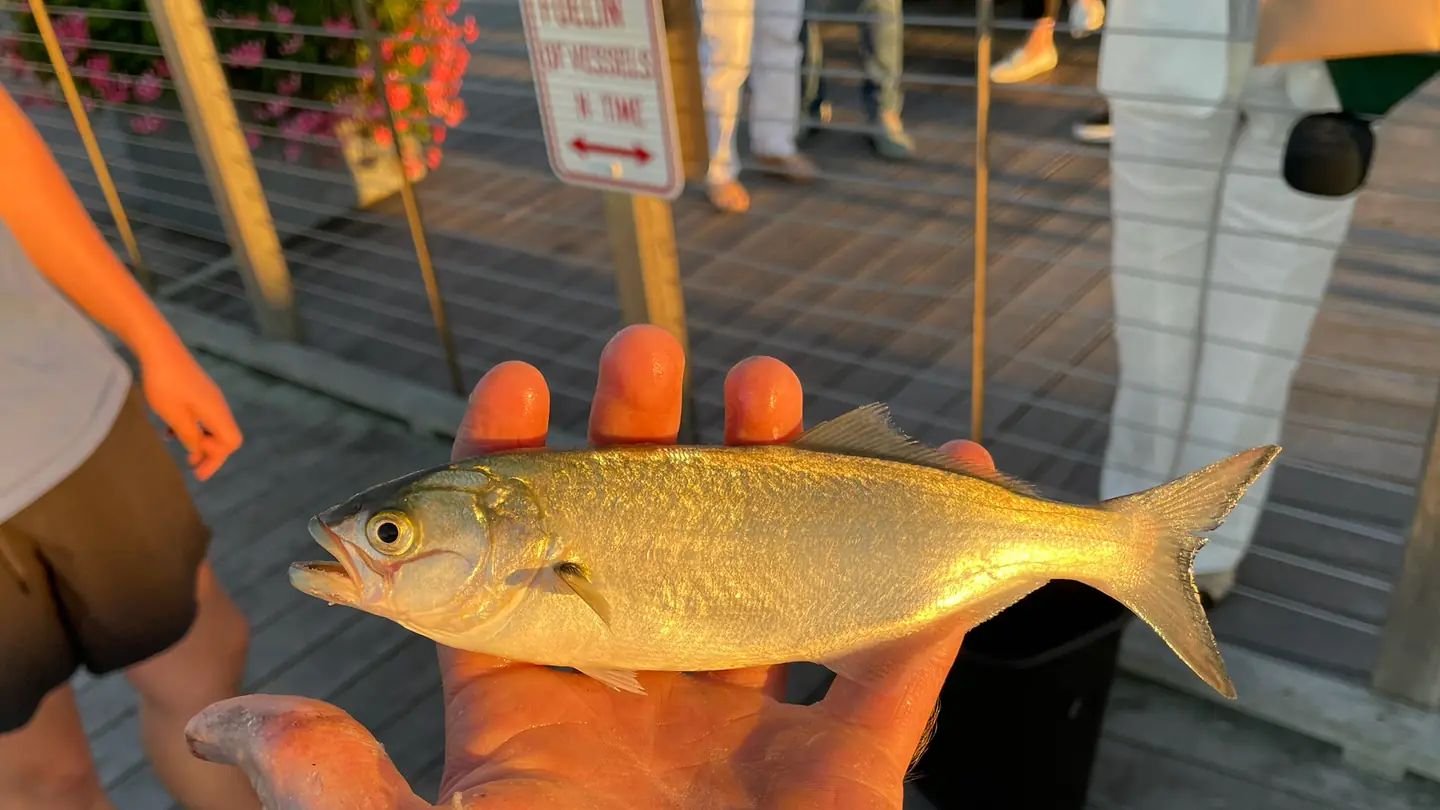
Bluefish are one of the easiest fish on the coast to find and one of the hardest to forget once you've had a school of them tear into your lures. They're also one of the most size-sorted fish you'll catch. Blues travel in schools of fish the same size, so on a given day you'll catch all little ones or all big ones, and those different sizes live in different places at different times of the year.
What the names mean
| Name | Size | Where you'll find them |
|---|---|---|
| Snappers | Young of the year, a few inches up to about 10 inches | Tidal creeks, marshes, canals, docks and marinas, mid to late summer |
| Cocktail blues | Around 2 pounds | Bays, inlets, beaches, everywhere in summer and fall |
| Choppers, slammers, gators | Big adults, roughly 10 to 15 pounds or more | Ocean beaches, inlets, offshore lumps and rips |
Blues mature at about two years and 18 inches. Fish over 20 pounds are rare, but blues can grow past 25 pounds and live more than 12 years.
The yearly migration
Bluefish follow warm water. They move north along the coast in spring and summer as the ocean warms and head south in fall toward the waters off the Southeast. North of the Carolinas, they're a warm-season fish. Temperature and day length drive the move. When the water drops below about 57 to 61°F, the adults leave the mid-Atlantic.
They also follow food. Schools of blues trail menhaden, river herring and mackerel up the coast, and where the bait gathers, the blues show up.
Spring arrival
The first fish reach the mid-Atlantic in spring. Off Maryland and Delaware, big blues are often on the inshore lumps by mid-May, feeding on menhaden moving north. Farther north the first schools appear offshore in mid-May to early June and wait for inshore water to warm before moving in. Around New York they're usually close to the beaches by late June. Across the Northeast you can expect blues from roughly late April through October.
Summer
As the water heats up in July, bigger blues drop into deeper, cooler water and come up shallow mainly at night. In Long Island Sound, for example, they often hold in 60 to 80 feet. That makes early morning and late evening the best times to fish for them from shore in midsummer.
Late summer and fall: the best of it
August and September are often the best bluefish months of the year in the Northeast, as the schools feed hard before heading south. The biggest fish are frequently the last to arrive and come through in October and November. In fall, blues blitz bait along the beaches and in the inlets, and surf fishing peaks. In warm years, big blues can hang around past Thanksgiving.
Where the babies come from
Bluefish spawn offshore, all the way from Massachusetts to Florida, in groups that spawn in spring, summer and fall. The young drift inshore and grow up in bays and estuaries over sand, eelgrass and marsh. Those are the snappers.
Snapper blues: the best kids' fishing on the coast
Snapper fishing is one of the best ways to get a kid hooked on saltwater fishing. Snappers show up in the bays in June, reach about 6 inches by August when most people start fishing for them, and grow to 10 inches or more before they leave in late September.
Where: tidal creeks, marsh edges, canals, around docks and bulkheads, and inside marinas.
How: keep it simple. A light spinning rod (or even a cane pole) with a small bobber and a small hook baited with a spearing or a killie is the classic setup. Small, shiny spoons and small metal lures on ultralight tackle and small saltwater flies work just as well. Snappers feed on young spearing, so anything small and silver gets hit.
Watch for weakfish. Young weakfish often feed alongside snappers and look similar. Weakfish have size limits and must be released when they're short. The easy way to tell them apart: a bluefish has a deeply forked tail and sharp teeth; a weakfish's tail isn't forked.
Even small snappers have teeth. Use pliers or a dehooker, and don't let children unhook bluefish themselves.
How to use this
- Spring: look for the first blues where bait is gathering, on inshore lumps and at inlets and beaches.
- Midsummer: fish early and late from shore, or go deeper by boat. Snappers start in the bays.
- Late summer and fall: the main event. Watch for birds and blitzes along the beaches and inlets, and expect the biggest fish late.
For how to catch them, see Catching Bluefish on Lures and Bait. For gear that survives their teeth, see Bluefish Tackle: Rods, Line and When to Use Wire.
Before you go
Bluefish bag limits and size rules are set by state and federal managers and change from year to year. Check your state's current saltwater rules before you keep fish.
Cover photo: Luke Padon via iNaturalist (CC BY 4.0, cropped).