Article
Smallmouth Bass in Rivers and Lakes
Smallmouth live on rock, current and clear water, and they eat crawfish above all. Here's how to find them in rivers and lakes through the season and the handful of lures that catch them.
November 3, 2026
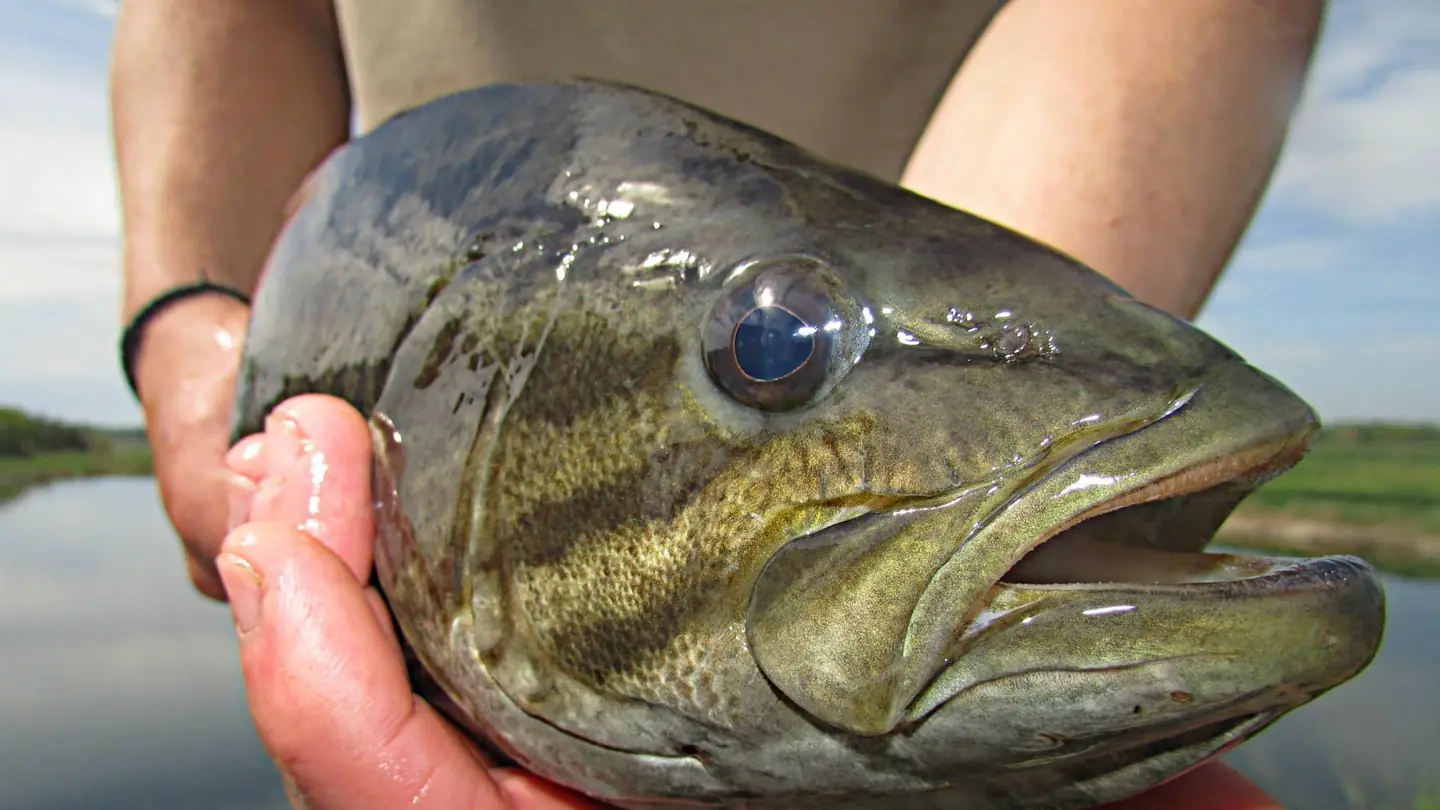
Smallmouth bass are the rock-and-current cousins of the largemouth. Where largemouth like warm, weedy, still water, smallmouth like clearer, cooler water with rock, gravel and moving current. They eat crawfish more than anything else, and they're as much at home in a wadeable river as in a big northern lake.
River smallmouth
Read the water like a trout angler
River smallmouth sit out of the strongest current, or right beside it, and grab food as it drifts past. Look for:
- Current seams: the line where fast water meets slow water. Bass hold on the slow side and dart into the fast side to feed.
- Behind boulders, logs and ledges that break the current.
- Deep pools, rocky riffles, undercut banks and slow runs.
- Rock and gravel bottom, where crawfish live.
Bass in swift water often have a small ambush window, like the slack water behind one boulder. Accurate casts catch fish; you'll lose a few lures getting close to cover, and that's part of the game.
The river season
- Winter: smallmouth gather in slow, deep holes and barely feed.
- Early spring (40 to 50°F): as the river warms, bass leave the winter holes and start feeding hard to bulk up for the spawn. This early bite can produce numbers of big fish. Look for them moving along current seams, toward the banks, and onto rock flats just above or below the wintering holes. On sunny days, flats that were empty in the morning can fill with fish in the afternoon. High, muddy water delays the bite. Below about 40°F, bass eat mostly baitfish; from the mid-40s on, crawfish.
- After 50°F: fish scatter as they move toward spawning areas and can get picky.
- Summer: in many northern rivers, mid- and late summer is peak smallmouth time. Warm water and lots of food make them aggressive. Fishing is often best in the afternoon and evening, and under clouds. On bright days, bass stay close to cover and shade.
River smallmouth also roam. A stretch that's full of fish one month can be empty the next, so scout before you commit to a section.
How to fish a river
Most river smallmouth fishing is simple: wade, fish from the bank, or float in a canoe or kayak.
- Gear: a medium-action spinning rod with 6- to 8-pound line handles almost everything.
- Search with spinners and surface lures. They draw reaction strikes and cover shallow water fast.
- Pick apart spots with jigs and tubes. A 3- to 4-inch tube or soft-plastic tail on a light jighead looks like a crawfish. Cast upstream and let it bounce along the bottom with the current.
- Match the weight to the current. You want the jig to tick the bottom, not drag or float. If you can't feel bottom in a fast run, go up a size.
- Watch your line. River bass sometimes just stop a jig or quietly take a surface lure. Any twitch or sideways movement of the line means set the hook.
Lake smallmouth
Where they live
In lakes, smallmouth relate to rock: rock piles, reefs, boulder points, gravel flats and rocky drop-offs.
The lake season
- Spring, after ice-out: in northern lakes, prespawn smallmouth move shallow over sand, gravel and rock. Clear water lets you see them.
- Summer: fish rock piles and reefs, where jerkbaits and drop-shots shine.
- Fall: some of the best big-fish fishing of the year. As the water cools, crawfish get harder-shelled and bass switch to baitfish. Look for places where bass can move fast between shallow and deep, such as steep breaks between about 10 and 20 feet. On cool days fish the shallow side; on warmer days, the deep side.
Lures for lake smallmouth
- Suspending jerkbait: the top cold-water lure, from ice-out until the spawn, especially in clear water from the mid-40s to the upper 50s. Jerk it down, then pause, and pause some more. A minute isn't too long in cold water. Smallmouth often hit on the pause or the next twitch.
- Hair jig: a small, sparse bucktail jig retrieved so slowly it almost hangs in the water, on a long, light spinning rod. A classic early-spring tactic.
- Drop-shot: a staple. Nose-hook a small worm, minnow shape, leech or tiny craw. Use a short leader when bass are feeding on crawfish and gobies on the bottom, longer over weeds.
- Minnow plastic on a jighead: for bass suspended off the bottom or holding tight to it.
- Football jig with a craw trailer or a Carolina rig, dragged over rocky breaks in fall.
- Spinnerbaits and bladed jigs: in fall, drift big shallow flats in the wind and fan-cast to cover water. If you're not getting bit, keep moving.
- Topwater: once the water reaches about 55°F in spring, and on calm summer mornings.
For more on rigging, see Soft Plastics for Bass and Bass Lures: Crankbaits, Spinnerbaits, Jerkbaits and Topwater.
Before you go
Bass seasons, size limits and any catch-and-release periods are set by each state and can differ for rivers and lakes. Check your state's current freshwater rules before you go.
Cover photo: Spencer Neuharth, U.S. Fish and Wildlife Service (public domain).