Article
Live and Cut Bait for Striped Bass
Bunker, eels, worms, clams and crabs account for a lot of big stripers. Here's which bait to use when, how to rig each one on a circle hook, and how to hook the fish once it bites.
November 3, 2026
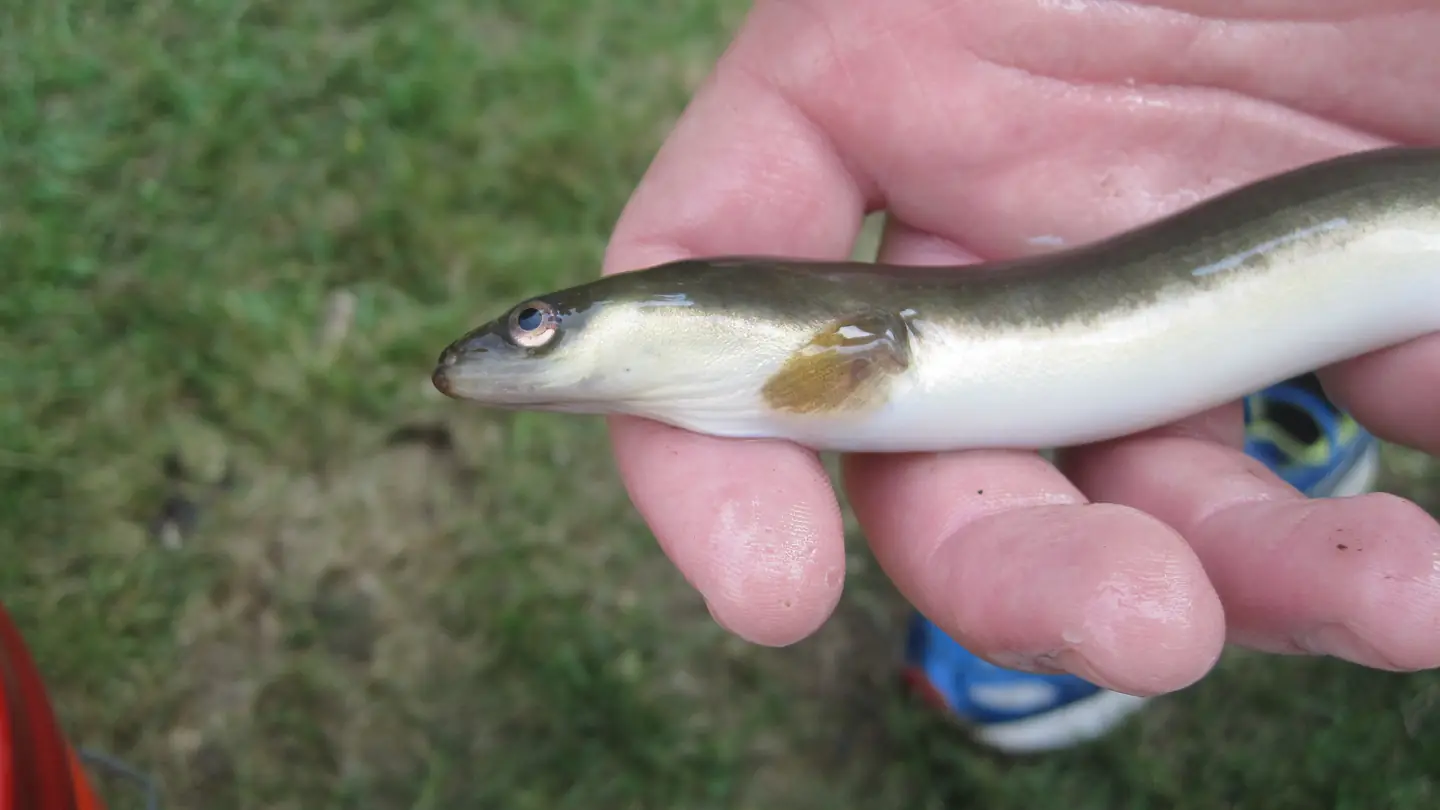
Lures are fun, but bait catches a lot of the biggest striped bass every year. On days when bass won't touch a plug, a live bunker or eel often gets eaten right away. The trade-off is effort: many of the best baits have to be netted, raked or caught before you can fish them.
First, the hook rule
When you fish bait for stripers anywhere on the Atlantic coast, you must use inline circle hooks. Inline means the point isn't bent off to the side. Circle hooks catch the fish in the corner of the mouth instead of the gut, so a released fish lives.
The rule covers live bait, cut bait, rigged dead eels and a bunker you snagged on a treble hook (switch it to a circle before you fish it). A lure tipped with bait, such as a bucktail with a strip or a tube-and-worm, doesn't need one. Sizes from 7/0 to 10/0 suit most keeper-size bass; go smaller for small baits.
Menhaden (bunker)
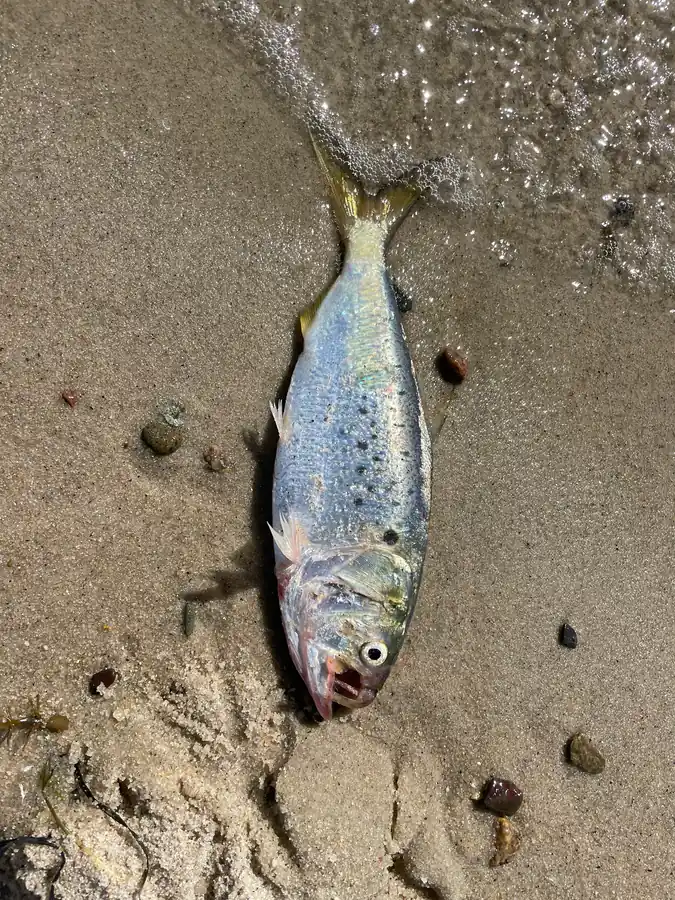
An Atlantic menhaden (bunker) on a Cape Cod beach. Photo: ricofish via iNaturalist (CC0).
Menhaden are the most important bass food on the coast, and the bait that accounts for more 40-pound-plus stripers than any other. An adult bunker can be 14 inches long. When one gets eaten, it's usually by a bass of 15 pounds or more.
Getting them: watch for schools rippling and flashing on the surface. Throw a cast net, or where it's legal, snag one with a weighted treble hook.
Live: move the bunker to a 9/0 inline circle hook and either let it swim free with no weight (freelining) or fish it on a light sliding egg sinker. Hook it near the tail so it swims naturally and leaves the hook gap open, or through the back.Snagging a bunker from a surface school and freelining it right back there is a classic way to catch the bass under it.
Chunks: cut fresh bunker into chunks and fish them on the bottom from the beach or at anchor on a channel edge. Use a light-wire 6/0 to 8/0 circle hook on 18 inches of 25-pound fluorocarbon with a fish-finder slide and a bank sinker. Pass the hook lightly through one corner of the chunk so the bait doesn't fill the hook gap.
Live eels
Eels are the classic big-bass bait, and the best one at night. From the surf, a jetty or a drifting boat, a live eel tends to pick the largest fish out of a school.
- Handling: eels are slippery and will tie themselves around your leader. Grab one with a rag and, before hooking it, give its head a light knock on something hard to slow it down without killing it.
- Hooking: a 5/0 to 8/0 circle hook through the nose or jaw, so the eel swims straight.
- Rigging: a Carolina rig, with a small egg sinker sliding on the main line above a swivel and about 4 feet of 50-pound fluorocarbon to the hook. Use just enough weight to hold the eel where you want it. From a boat, eels can be drifted or slow-trolled at about 1 knot.
- Bluefish: eels are a poor choice when blues are around. Their teeth make short work of them.
Worms
Bloodworms are the first bait of the year in back bays and tidal rivers. Bass hunt the dark mud flats in early spring because mud warms faster than sand, and that's where the worms live. Expect small fish like white perch to steal some.
Sandworms are one of the surest ways to catch a striper of any size, especially after dark. Fish them on a bottom rig with a small float a short way above the hook, holding the worm a couple of feet off the bottom.
Clams, crabs and sand fleas
From the beach, fresh clams and sand fleas fished on the bottom catch bass; sand fleas are a summer bait. Crabs are an old-time surf bait that still works: rake calico crabs at the surf line, break off the claws, hook through the outer point of the shell, and cast only a short way, because bass come in close hunting crabs.
Spot and peanut bunker
- Live spot are a favorite bait from Virginia to New York, especially in fall. They're tough enough to catch more than one bass. Hook them through the back just ahead of the dorsal fin (so they swim down) or in the mouth and out the cheek, on a 5/0 circle.
- Peanut bunker are juvenile menhaden under about 5 inches, and bass of every size gorge on them in fall. They're fragile: use a small circle hook, a 20-pound leader and a lighter drag, or they die fast.
Rigs that keep it simple
- Fish-finder rig: a sliding sleeve with a sinker on the main line, then a swivel and leader to the circle hook. The bass picks up the bait without feeling weight. Add a small float on the leader to keep bait above crabs and skates.
- Freeline: no weight at all, for live bunker near the surface.
- Carolina rig: a light egg sinker sliding above a swivel, for eels and live bait near the bottom.
Keep leaders 30 inches in dirty water and up to 48 inches in clear water, and tie the hook on with a palomar or uni-knot so it can pivot.
Setting a circle hook: don't
The hardest part of circle hooks for experienced anglers is not swinging. The hook is designed to set itself with steady pressure, not a hard jerk.
- When you get a bite, let the fish take the bait and start moving off.
- Point the rod at the fish and reel up the slack until the line comes tight.
- Keep steady pressure. As the fish turns away, the hook slides to the corner of its jaw and sets itself.
If the rod is in a holder, leave it there until the fish is pulling line off the reel, then pick it up and start reeling.
When bait makes sense
Bait is the answer when bass are present but won't hit lures, when you want a shot at the biggest fish in a school, and at night. For the lure side of things, see Striped Bass Lures: What to Throw and When. For the seasonal pattern that tells you which bait the fish are on, see The Striper Year.
Before you go
Striped bass size limits, bag limits, seasons and gear rules are set by each state and change often. Check your state's current saltwater rules, including any limits on snagging or netting bait, before you go.
Cover photo: U.S. Fish and Wildlife Service (public domain).