Article
Black Sea Bass: Where They Live Through the Year
Sea bass live on rock, wrecks and reefs, and they move shallower or deeper with the seasons. Here's where to find them each month and how to find the best part of a piece of structure.
November 3, 2026
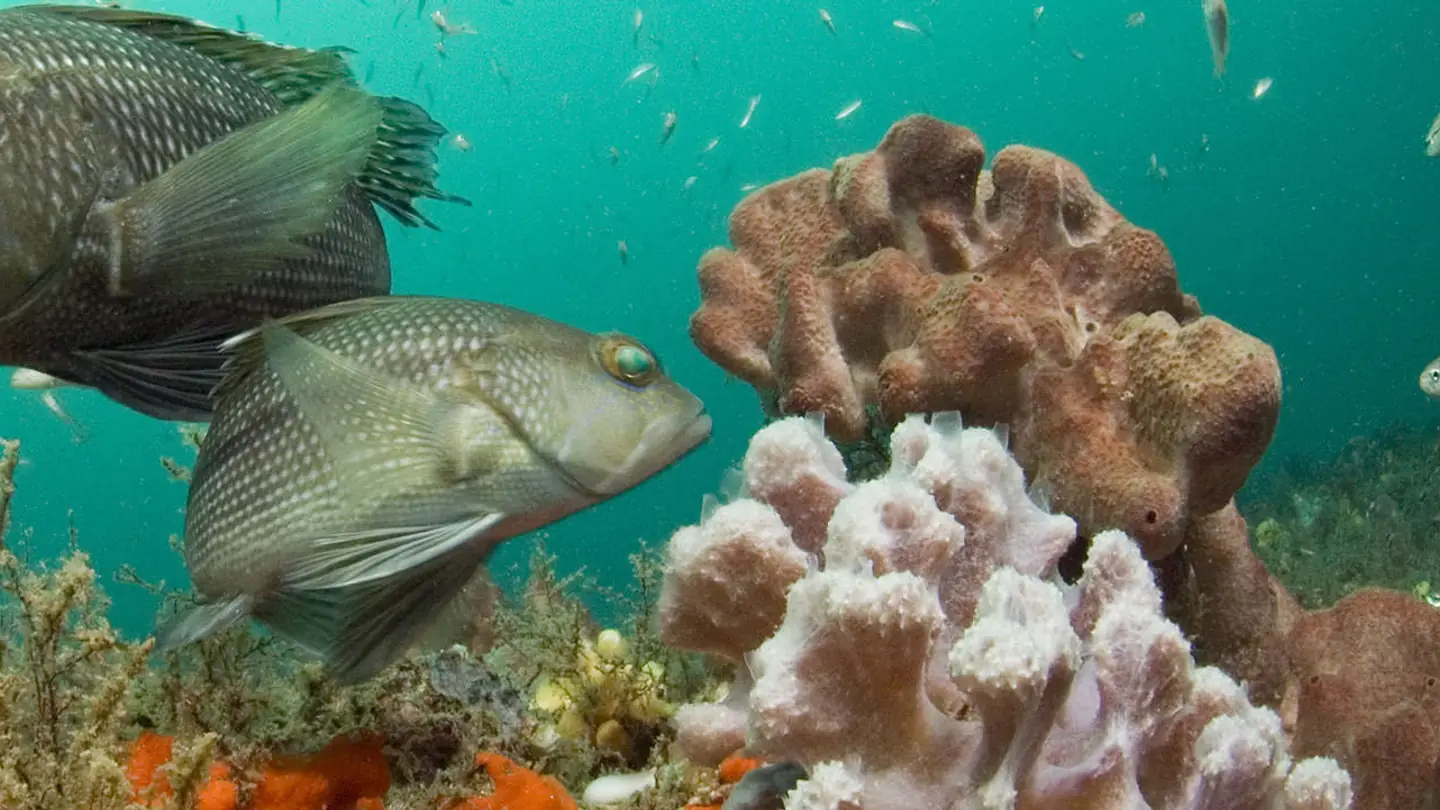
Black sea bass are reef fish. They live on hard bottom, and if you're not on the structure, you won't catch them, even if it's only a few yards away. The good news is they're aggressive, they bite all day, and once you find a school on a rock pile or wreck, the action can be nonstop.
What sea bass need
Sea bass feed on crabs, baby lobsters, worms, squid, mussels, clams and small fish, which live on and around hard structure:
- Wrecks and artificial reefs
- Rock piles, ledges, boulder fields and humps
- Steep gravel banks and shoals
- Inshore structure like jetties, pilings and buoys, mostly for small fish
Most sea bass are around a foot long. Big ones are called "humpbacks" or "knotheads" for the hump that grows on a big male's head, and fish can top 8 pounds. Like many reef fish, sea bass start life as females and some of the larger ones become males.
The yearly move
North of Cape Hatteras, sea bass migrate inshore and north in spring and offshore and south in fall. They move shallower as the water warms and deeper as it cools.
Spring and early summer: shallow reefs
Sea bass move onto inshore structure in spring, often in 20 to 40 feet, as the water warms. In southern New England, reef fishing for sea bass runs from late May through September. Spring can be fast fishing on the near-shore reefs.
Summer: deeper reefs
As the shallows heat up, the bigger fish move to deeper rock. In southern New England many leave the shallow spots by late June and settle on deeper reefs from July through September, often 35 to 70 feet in August. In the mid-Atlantic, summer sea bass are spread out on inshore wrecks and reefs, often 50 to 80 feet, with lots of small fish to sort through.
Fall: moving out, and the best fishing
Sea bass fishing gets better as the water cools in September. Fish start moving offshore to deeper structure, and fall is often the best sea bass fishing of the year. By November, off the mid-Atlantic, they're thick on wrecks in around 100 feet; in New England, they move to 130 to 200 feet in late fall.
Winter: deep wrecks
In winter, the biggest sea bass are on the deepest structure, often 120 to 300 feet and far offshore. Off Virginia, December through February is when the biggest sea bass of the year are caught, on wrecks 40 to 50 miles out.
Sea bass have also been moving north as the ocean warms. They're now abundant from New Jersey to southern Massachusetts and are showing up in places like Boston Harbor where anglers never used to target them.
Finding sea bass
Pick the structure
- Check the chart for places where the depth rises and falls sharply: humps, ledges, rock piles and banks.
- Rocky humps surrounded by sand concentrate fish.
- Go where others don't. Unmarked reefs and rock piles get less pressure and hold bigger fish. A fleet of boats can clean the big fish off a famous spot fast. Areas full of lobster pots and gill-net gear often see fewer boats.
- Rips form where current pushes over a reef or ledge, and they hold sea bass all season.
Find the fish on the structure
A wreck or reef isn't evenly covered with fish. They bunch up on certain parts, and the best part can change with the tide.
- Make several passes over the structure while watching your depth finder. Fish can be on one end, one side, or even 100 yards off the marked numbers.
- Mark the fish with a waypoint each time you see a concentration.
- Note the high point. The highest part of a wreck pushes current upward and creates eddies where sea bass feed. It's often the best spot.
- Watch for changes. As the tide changes, a hot spot can go quiet and another part of the structure turns on.
Then either anchor right over the fish or drift across them. See Anchoring on Wrecks and Reefs.
Tide and time
Unlike many gamefish, sea bass bite all day. You don't need to be on the water at dawn. Current matters more: in deep water and strong current, the best fishing is often around slack tide, when you can keep your line straight down and sea bass feed actively.
On popular spots, getting there early and fishing midweek both help. Fish taken off a wreck on the weekend are slowly replaced during the week.
Sharing the reef
Sea bass share structure with porgies, which steal baits, and with tautog. If you're catching mostly small sea bass and porgies, try a jig to pick out bigger fish (see Black Sea Bass Rigs and Jigs) or move to deeper, less-fished structure. If another boat is already on a spot, anchor well away or move on.
Before you go
Sea bass size limits, bag limits and seasons are set by each state and change often. Federal waters have their own rules. Many sea bass are caught deep enough to suffer from barotrauma; see Releasing Fish Caught in Deep Water. Check your state's current saltwater rules before you go.
Cover photo: NOAA National Ocean Service, Gray's Reef National Marine Sanctuary (public domain).