Article
Red Drum Fishing
Red drum live in the marsh as puppy drum and on the beaches as 40-pound bulls. Here's where to find them through the year, how the tide moves them, and the baits, lures and rigs that catch them.
November 10, 2026
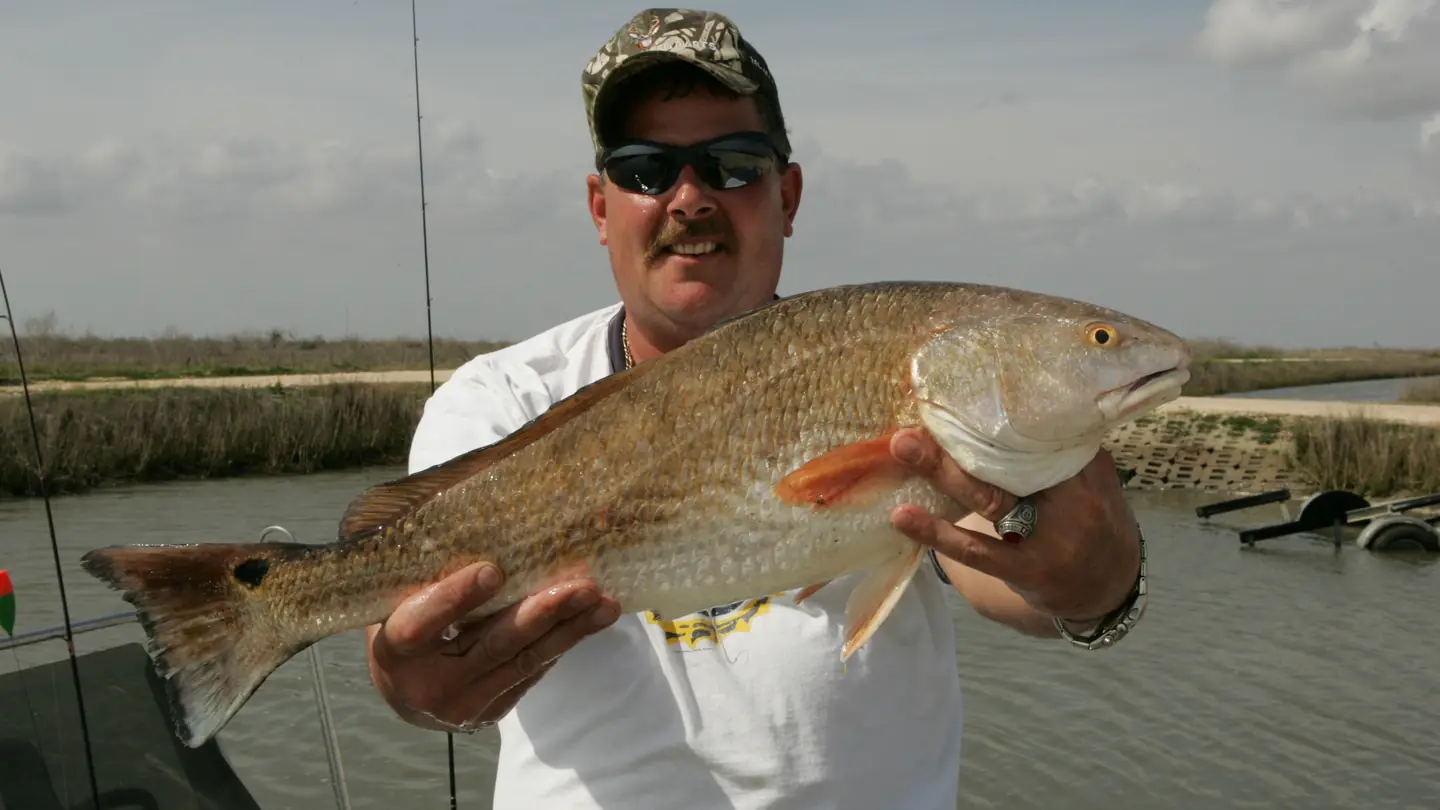
Few fish give you as many ways to catch them as red drum. The same species tails in six inches of water in a grass marsh, schools up by the hundreds in winter creeks, crushes topwater plugs at the inlet and pulls drag on a surf rod in the fall. Once you understand how the tide and the seasons move them, reds are some of the most dependable fish on the coast.
Know the fish
Red drum (redfish, channel bass, puppy drum, bull red) are copper to bronze on the back with a silvery belly. Look for one or more black spots near the base of the tail. The mouth sits low on the head, which tells you how they feed: nose down, rooting crabs, shrimp and baitfish off the bottom.
Anglers name reds by size:
- Puppy drum are the young fish. They live in the marsh and are the fish most people catch.
- Slot reds are the mid-size fish between puppy drum and bulls, named for the size range many states let you keep. They live in the larger creeks, rivers and along the front beaches of barrier islands.
- Bull reds are the mature adults, roughly 30 inches and up. They reach maturity at 3 to 5 years old, around 28 inches for males and 33 inches for females. From then on they spend much of their time in the ocean, in the surf and in the big sounds and bays, and they keep growing well past 40 inches.
Reds live in inshore waters along the Atlantic and Gulf coasts. On the East Coast the big fisheries run from the lower Chesapeake Bay through the Carolinas and south, and many of the adults that spend summer in Virginia waters head back down to North Carolina for winter.
Where reds live
The marsh
Young and slot reds are marsh fish. They feed along the edges of the grass, around oyster bars and in the shallow creeks that wind through the marsh. Their main foods there are grass shrimp, small baitfish such as mud minnows and juvenile spot, and crabs, especially fiddler crabs and mud crabs.
The spots that hold fish:
- Oyster bars next to creek mouths. Shell holds crabs, shrimp and baitfish, and a bar right where a feeder creek meets a bigger channel is the best spot in the marsh. The best bars have a slight dip or rut in the bottom next to them.
- Creek mouths. On a falling tide, everything that went into the marsh has to come back out through these mouths, and reds wait for it.
- Cuts and drains. Water squeezed through a gap in the grass speeds up and carries bait into a small area.
- Broken marsh. Patchy grass with gaps, lagoons and clumps lets reds move through the cover easily. It's where you'll see tailing fish and wakes.
- Grass islands. An isolated clump of marsh often holds a bigger fish that doesn't run with the school.
- Shallow flats near deeper water. Flats of about 1.5 to 3 feet with grass or shell, close to a channel and with moving water over them.
Watch for signs of life: jumping mullet, nervous bait dimpling the surface, banks covered in fiddler crabs, and wading and diving birds working an area.
Docks, rocks and jetties
Reds also hold around docks, rock piles, jetties and bridges, sitting in the eddies and on the down-current side where the tide brings bait to them. Cast from several angles to every side of the structure before you move.
The beach and the sounds
Bigger reds work the front beaches, inlets and the big sounds. On the beach they cruise the surf and the inlets, and big schools roam the bars and shoals just off the beach. Deep rocks, jetties, bridges and channel edges with strong current hold bulls in the sounds and inlets.
In the bays, the big fish travel along set routes such as bridge-tunnel islands, ledges, bottom contours, rocks and holes near shore. If you learn those routes and anchor on them, the schools will come to you.
How the tide moves reds
In the marsh, the tide decides everything.
High and rising tide. Rising water lets reds push far back into the grass to hunt fiddler crabs. That's also where they're safe from dolphins, their main predator. On big flood tides you can sight-fish reds tailing up in the flooded grass. Most of the time, though, the fish are spread out and hard to pin down at high water.
Falling tide. As the water drops, the feeder creeks drain. Bait and reds get pushed out of the grass, through the creek mouths and into the channels. The last part of the outgoing tide, when they're crowded into the creek mouths and channel edges, is often the best bite of the day. Learn where the bars and creek mouths are by scouting at low tide, when the shell is exposed and you can see the bottom.
Moving water beats slack water. Whether it's coming in or going out, current is what gets reds feeding. If the tide goes slack, move to a place where the water is still moving.
Big tides. On a full or new moon the tide runs higher and lower than usual and the current moves harder. On those tides, reds tend to feed near the top of the rise and the bottom of the fall, when the water slows. While the current is ripping, look deeper inside the marsh where the flow is gentler. On weak tides, fish the outside edges of the marsh closest to open water.
A safety note: it's easy to follow the rising tide deep into a marsh. Watch the clock and know your way out, or you can be left sitting on a mud flat until the next tide. Some marsh mud is soft enough to trap a wading angler.
Red drum through the year
Spring
As the water warms, the adults that wintered offshore move back to the beaches and into the sounds. The marsh fish leave their winter holes and spread back across the flats and creeks. Spring is one of the best times to catch reds in the marsh.
Summer
In the hottest months, shallow marsh water gets warm and low in oxygen, and the fishing slows. Reds move to deeper, cooler water: deeper creek holes, channel edges, docks and jetties. Fish early and late in the day. Summer reds can be lazy about chasing, so this is a good time to soak cut bait in the holes. The big adults are in the sounds and bays all summer, and in the lower Chesapeake.
Fall
Fall is the season most red drum anglers wait for. In late summer and fall the adults leave deeper water and gather to spawn near the inlets and passes along the barrier-island beaches and in the big sounds. That brings the bulls within reach of anglers.
Along the Carolina coast, the big fish (called "old drum" in North Carolina) move into Pamlico Sound and miles up the Neuse and Pamlico rivers from midsummer into fall. From Cape Fear south to Little River Inlet, they gather from late August through the fall, from the surf out to the nearshore reefs. On the Outer Banks, fall is when big drum show up along the beaches and around the piers, mixed with puppy drum and mid-size fish. Fall mullet runs also pull bulls into the surf and the inlets as they chase the bait.
Winter
The big adults move offshore for winter. The young fish leave the shallow marsh for deeper water: river channels, deep creek holes and high-salinity creeks near the inlets, where the water stays steadiest.
Winter reds school up tightly, sometimes by the hundreds, and the water in those back creeks is often very clear. That makes it a sight-fishing season for anglers with a kayak or a shallow skiff.
- Watch the weather. A few days of light south wind and sun can warm shallow water from the low 40s °F into the 50s, especially over dark mud bottoms, and the reds wake up and feed.
- Fish the low tide. Get to the creek before dead low, when the fish crowd into the deep holes in the creek bends. Then work back in with the rising tide.
- Be quiet. Reds hear well and spook at shadows and movement. Wear polarized glasses and look for color changes and small puffs of mud rather than big wakes.
- Don't overfish a school. Catch a few and move on. A school that gets hammered stops eating or leaves the area. One you leave alone will often still be there next time.
Baits
Red drum eat almost anything, but some baits work better than others.
- Live shrimp. Many anglers consider live shrimp the best red drum bait there is. Keep them in aerated water. Shrimp that die are still good bait.
- Crabs. Blue crabs are a favorite. For big reds, take the claws off, split the crab in half and hook it through the swimming-fin area. Use quarters for smaller fish. Fiddler crabs work around oyster bars and docks.
- Cut bait. Mullet, menhaden, spot and whiting (sea mullet) are the standard baits for bull reds. Fresh is far better than frozen. The best is bait you caught that day.
- Fish heads. A head section of mullet or menhaden is a durable bull red bait that small fish can't pick apart easily.
- Mud minnows and finger mullet. Good live baits in the marsh.
Bring more than one bait. On days when reds ignore menhaden, they may eat a chunk of whiting or a piece of crab. If one bait keeps getting bites and the others don't, switch everything over to it.
Bait thieves such as pinfish, small croaker and catfish will strip a hook fast. Check your bait often.
Lures
Lures let you cover water and fish the marsh faster than bait.
- Weedless spoons. A gold or silver weedless spoon is the classic red drum lure. It casts a mile, fishes over grass, potholes and oyster shell without hanging up, and works on windy days. Add a swivel or split ring to stop line twist. A 1/2-ounce gold spoon is a great search lure for finding fish.
- Jig heads and soft plastics. Paddle-tail, curly-tail and straight-tail baits on a jig head catch reds everywhere. In the surf and inlets, 4- to 5-inch paddle tails give a bigger profile.
- Soft-plastic shrimp. Fished on a light jig head or pre-rigged. Scented versions can help in cold water.
- Topwater. Walking baits are deadly in calm water. Fish them at dawn, dusk and on overcast days, around creek mouths and in calm surf.
- Twitchbaits. Suspending or slow-sinking twitchbaits are good over potholes and along current seams. Soft-bodied ones work in cold months when reds are picky.
- Bladed jigs. The flash and vibration work well in murky marsh water.
- Popping corks. A noisy cork with a jig, soft-plastic shrimp or live shrimp hung 18 to 24 inches below it. Pop the cork sharply so it gurgles like feeding fish. It's one of the best ways to find reds in murky water or across open areas.
Match the lure to the water clarity. In muddy water use bigger, brighter, louder lures. In clear water use natural colors and lighter, quieter presentations.
Rigs
Popping cork rig
Tie your main line to the top of the cork. Add 18 to 24 inches of 20- to 25-pound fluorocarbon below it, and finish with a jig, soft-plastic shrimp or a live shrimp on a light hook. Adjust the leader so the bait rides just above the bottom.
Split shot and free-line
For shrimp on the flats or around structure, use a light hook with a split shot. Hook the shrimp through the head between the two dark spots, missing the spots themselves. A split shot close to the hook keeps the bait near bottom and helps you cast accurately. When the current runs into a channel or across a flat, drop the weight and let the shrimp drift naturally past the fish.
Short-leader circle-hook rig for bull reds
Bull reds will swallow a bait on a long leader. A short leader with an inline circle hook hooks them in the corner of the mouth instead, which is much better for the fish.
- Snell a 7/0 to 9/0 inline circle hook to about 2 feet of 60-pound leader. Mash the barb if you like.
- About 5 inches above the hook, add a crimp, a bead, a sinker, another bead and a second crimp, all snugged up so the sinker stays put.
- Tie a loop in the top of the leader and clip it to a snap swivel on your main line.
- Hook a fish head under the lower jaw and out the upper jaw. Leave the point of the circle hook clear.
A flat-sided sinker keeps the bait from rolling along the bottom. In current or heavy surf, a piece of tough scented synthetic bait added to the hook keeps the natural bait from washing off.
Fish-finder rig
In deep, strong current around jetties, bridges and channel edges, a sliding-sinker rig works well: a heavy egg sinker (6 ounces in strong current) on the main line above a swivel, then 2 feet of 60-pound fluorocarbon and an 8/0 circle hook. In the surf, the same idea with a sinker slide and a pyramid or other surf sinker holds bottom.
Fishing methods
Sight-fishing the shallows
Pole, wade or paddle slowly along the marsh and flats, looking for tails, backs, wakes and mud puffs. Work out which way the fish are facing and cast well ahead of them, then let them find the bait. A cast that lands on top of the fish sends them running.
Working the marsh with lures
Keep moving. Fish creek mouths, oyster bars, points and cuts, make a few casts to each, and move on. When you catch one, slow down: reds travel in groups.
Soaking bait in holes and channels
In summer and winter, when reds sit in deeper holes, anchor up-current of the hole and cast cut bait or shrimp into it. Leave the rods in holders. A bait that lies still on the bottom and moves only with the current looks natural. A bait that keeps getting twitched does not. A few small pieces of cut bait tossed up-current will drift into the hole and draw fish in.
Bull reds in the bays
Anchor where big fish travel and set out several rods with a mix of baits: spot, menhaden, mullet and crab. The schools circle through an area and will find the baits. Fish moving water, and ideally anchor where the wind and current run the same way so your lines don't tangle.
Surf and pier fishing
On the beach, cast chunks of mullet or menhaden on a short-leader circle-hook rig with a long, heavy surf rod, and be patient: bull red fishing is a lot of waiting broken up by a few big fish. Fresh bait makes a big difference.
When mullet are running along the beach in fall, bulls chase them right into the surf and inlets. That's the time to cast big swimbaits and topwater plugs, or a weedless gold spoon, where you see the bait being pushed around. At inlets and jetties, a 1-ounce jigging spoon gets down to fish holding deep.
Tackle
| Fishing | Rod | Reel and line | Leader |
|---|---|---|---|
| Marsh, flats and winter sight-fishing | 7 to 7½ ft medium spinning | 2000 to 3000 size, 10 to 15 lb braid | 20 to 25 lb fluorocarbon |
| Bull reds in the surf, on piers and in the bays | Long, heavy surf rod, or a heavy boat rod | Large spinning or conventional reel | 2 ft of 60 lb fluorocarbon |
| Fly fishing | 8-weight | Floating line | Shrimp and crab patterns |
Before you go
Bull reds are the spawning fish that keep the fishery going, and most anglers release them. A circle hook on a short leader hooks them in the corner of the mouth and makes the release quick. If you plan to keep a slot fish, check your state's size and bag limits first: they differ from state to state, and red drum may not be kept at all from federal waters (beyond 3 miles).
Cover photo: Steve Hillebrand, U.S. Fish and Wildlife Service (public domain).