Article
Handling, Cleaning and Cooking Bluefish
Bluefish has a bad reputation at the table, and most of it comes from poor handling. Unhook them safely, bleed and ice them right away, trim the dark meat, and they eat well.
November 3, 2026
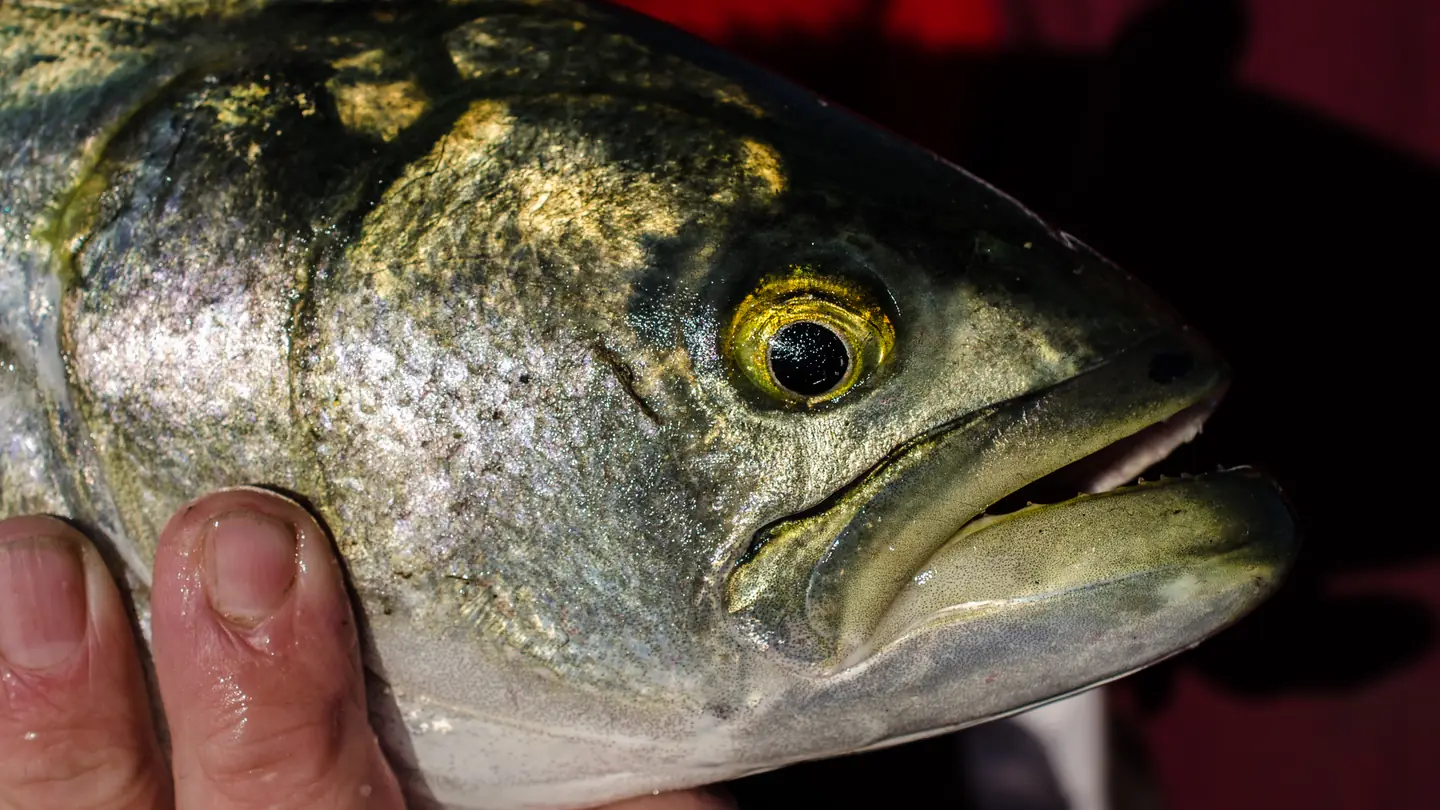
Ask around the dock and you'll hear that bluefish are too oily, too strong, too fishy. Then ask the people who eat them every summer and you'll hear something else: a fresh bluefish, bled, iced hard and trimmed, is very good. The difference is almost all in what happens in the first hour after the fish comes over the rail.
Unhooking without getting hurt
Bluefish teeth are sharp and triangular, much like a shark's, and a big blue can cut you badly. Treat every one with respect.
- Never use your fingers near the mouth. Unhook blues with long-nose pliers or a dehooker.
- Control the fish first. Many anglers subdue a fish they're keeping before they remove the lure.
- Kids watch, adults unhook. Children should never unhook a bluefish.
- Single hooks help. Lures with one hook instead of trebles are much faster and safer to remove.
Big blues will chew up a landing net. Boat anglers keeping fish often use a gaff instead.
Bleed it
Bluefish have dark meat, a thick red bloodline along each side, and a lot of oil. Those are what people mean by "strong," and blood is a big part of it. Bleeding a bluefish takes a minute and makes a real difference in how the fillets look and taste.
- Cut one or two gills on one side of the head with a knife or shears.
- Put the fish back into water right away: a bucket of seawater, the livewell, or a fish box with water in it. The heart keeps pumping and pushes the blood out through the cut gills.
- Leave it until the bleeding stops, then put it on ice.
Don't cut all the gills or rip them out on a big fish; it dies too fast to bleed out. And don't cut a fish and throw it straight into a dry cooler, where it just sits in its own blood.
Bleeding won't turn a bluefish into a mild white fish. It takes the edge off, and the fillets come out cleaner and lighter.
Ice it hard, and fast
Bluefish flesh spoils quickly, so chilling it fast matters more than anything else you do.
- Make a slurry. Fill the cooler with crushed ice and pour in seawater until you have a slush. A fish dropped into slush chills much faster than one lying on top of cubes.
- Bring more ice than you think you need. Fish should be completely surrounded and packed so they don't slide around.
- Time it. If you're keeping fish alive in a livewell for a few hours, bleed them when you're ready to put them on ice, not hours before. A bled fish sitting in warm water in summer goes bad.
- From shore, keep a cooler with ice in the car and get fish into it as soon as you can.
Cleaning
Bluefish have small scales and soft flesh, so they're easy to fillet.
- Fillet each side off the backbone and ribs.
- Skin the fillets.
- Trim the dark meat. Cut away the red flesh and the fat. That dark strip is where most of the strong flavor is.
- Rinse in salt water, not fresh. Don't wash the fillets under the tap. Give them a quick rinse in seawater or a light brine, then pat them dry with paper towels.
- Keep it cold. Store the fillets at 40°F or below until you cook them.
Cooking
Bluefish is good baked, broiled or fried, and it's especially good smoked.
Cook fish to 145°F inside, or until the flesh turns opaque and flakes apart easily with a fork.
Bigger blues and health advisories
Bluefish have been the subject of consumption advisories because of PCBs, and the advice focuses on the larger fish. In Connecticut, for example, people in the state's high-risk group are advised not to eat bluefish over 25 inches from Long Island Sound and connected rivers. Other states set their own advice. If you plan to eat your catch, check your state health department's current fish advisory, and favor the smaller blues for the table.
For gear and rigs that make unhooking easier, see Bluefish Tackle: Rods, Line and When to Use Wire.
Before you go
Bluefish bag limits and size rules change from year to year. Check your state's current saltwater rules before you keep fish.
Cover photo: Jack Flanagan (CC BY 2.0, cropped).