Freshwater
Landlocked Salmon
Where to find them, how to catch them and the tackle to use.
At a glance
- Typical size
- Averages 16 to 18 inches and 1 to 1½ pounds; 3- to 5-pound fish are not unusual
- Range
- Native to a few lakes in Maine and eastern Canada; stocked in cold, smelt- or alewife-rich lakes elsewhere in the Northeast
- Habitat
- Cold, deep, well-oxygenated lakes with smelt or alewives; the rivers flowing into them
- Best season
- Spring after ice-out and fall near the surface; winter through the ice; deep in summer
- Common methods
- Trolling near the surface in spring; casting from shore; deep trolling in summer; fly fishing; ice fishing
- Baits and lures
- Smelt and minnows; smelt-imitating streamers, stickbaits and spoons; copper, gold and silver lures
01Introduction
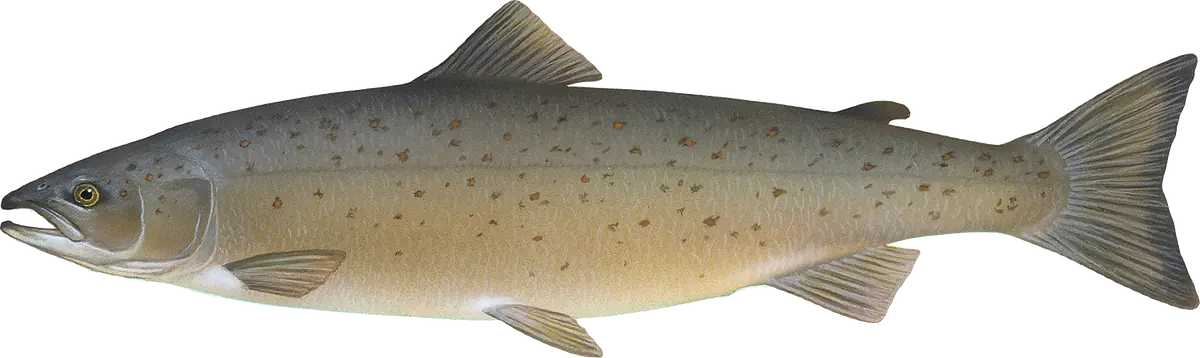
The landlocked salmon is the freshwater form of the Atlantic salmon, living its whole life in cold lakes and the rivers that feed them. It's silvery with small X-shaped marks and a slightly forked tail, and it's famous for leaping clear of the water when hooked; anglers call it the "leaping landlocked." Most run 16 to 18 inches and a pound or so, but 3- to 5-pounders aren't unusual.
02Where to Catch
Range: native to only a few lake systems in Maine and eastern Canada (Quebec, Newfoundland, Labrador, New Brunswick and Nova Scotia). Fisheries agencies have stocked them in many other cold, deep lakes in the Northeast.
Habitat: cold, clear, well-oxygenated lakes with a good supply of rainbow smelt or alewives, their main food, plus the rivers flowing into those lakes. Salmon prefer water below 65°F:
- Spring (after ice-out) and fall: near the surface and close to shore, often chasing smelt.
- Summer: deep, usually 30 to 60 feet from June through August.
- Winter: often in the top 15 feet under the ice.
03How to Catch
Spring and fall
This is the classic time. Troll smelt-imitating streamer flies, stickbaits and spoons near the surface, or cast from shore with small spoons, spinners and jerkbaits. Salmon can be anywhere from the surface to the bottom, so vary your depth. Fly fishing is excellent in rivers and during insect hatches on lakes; dry flies, nymphs and smelt-imitating streamers all work.
Summer
When salmon go deep, troll with lead core line or a downrigger, using copper, gold or silver lures or smelt.
Through the ice
Fish live or dead smelt or other minnows, or jig small lures, within about 15 feet of the underside of the ice.
04Tackle
A light to medium spinning outfit with light line lets you cast small lures and enjoy the jumps; add fluorocarbon in clear water. A fly rod with streamers works well for trolling and casting. Keep a light drag, since salmon leap and dive hard. Check your state's regulations; salmon rules often differ by lake.
05Questions anglers ask
What is a landlocked salmon?
A freshwater form of the sea-run Atlantic salmon that spends its whole life in lakes and their tributaries. It's silvery with small X-shaped marks, and it's known as the "leaping landlocked" for its acrobatic jumps.
Why does smelt matter so much?
Rainbow smelt are the main food for landlocked salmon, and without enough smelt, salmon grow poorly. Maine's fisheries agency calls keeping smelt numbers up the most important part of managing its salmon.
How deep should I fish in winter?
Salmon are often right under the ice. Maine's agency suggests fishing within the first 15 feet below the ice with smelt, minnows or jigs.