Article
White Perch Fishing
White perch school up in tidal rivers, brackish creeks and bays, and they bite all year. Here's how to follow them from the spring spawning run to summer oyster bars and winter channels, and the small jigs, spinners and baits that catch them.
November 10, 2026
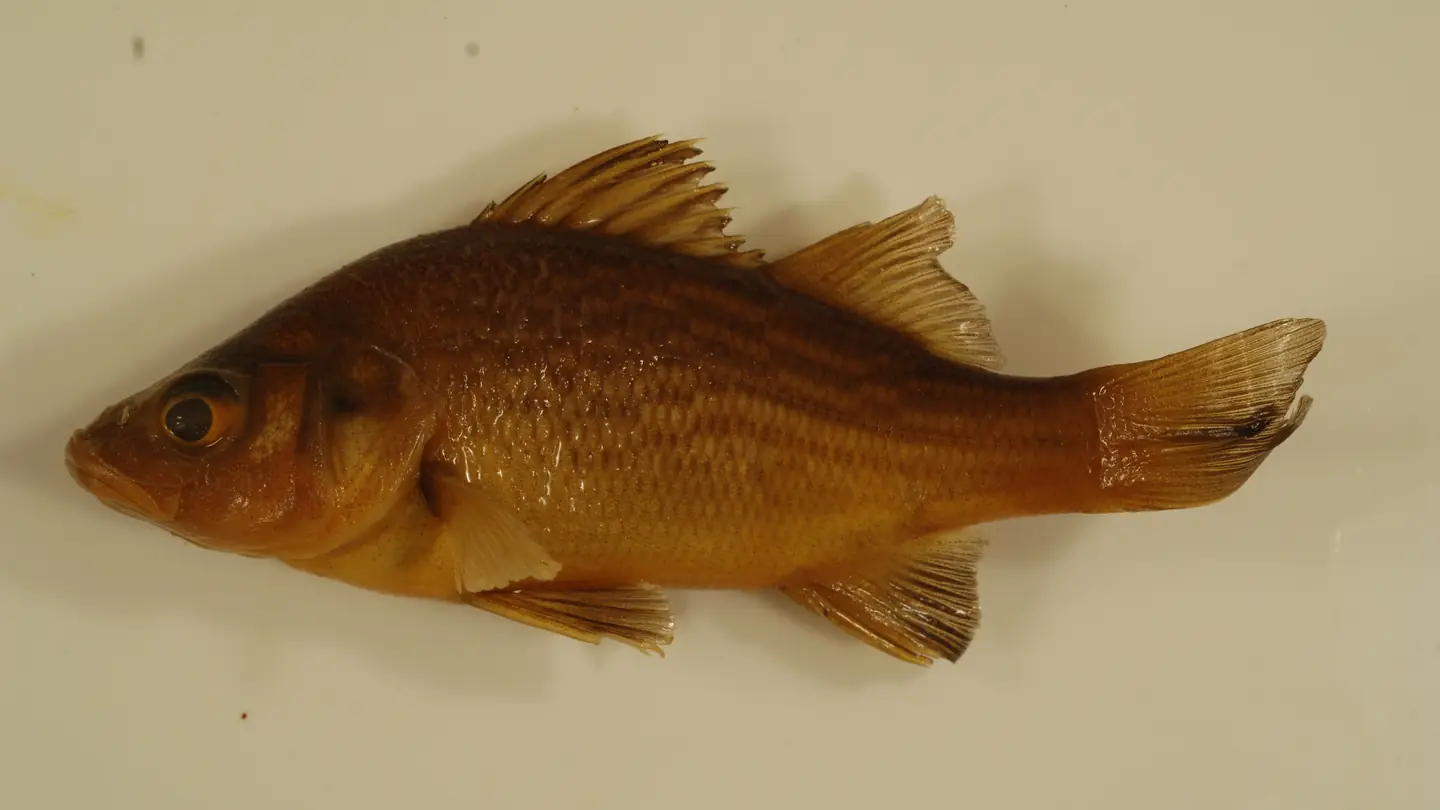
White perch are the fish that keep tidal-river anglers busy all year. They school by the hundreds, bite small jigs and bait readily, and fight hard for their size on light tackle. You'll find them in brackish creeks, tidal rivers, bays and some freshwater lakes, and once you understand how they move with the seasons, you can find them almost any month.
Know the fish
Despite the name, white perch aren't true perch. They're close relatives of striped bass. They're silvery to olive-gray with a deep, slightly humped back, a lower jaw that sticks out a bit, and three spines at the front of the anal fin.
Most white perch run 7 to 10 inches and a half-pound to a pound, and few grow past 14 inches.
White perch live along the Atlantic coast from Canada to South Carolina and are most abundant from the Hudson River to the Chesapeake Bay. They're at home in fresh, brackish and salty water. Most live in tidal rivers and bays, but there are also landlocked populations in lakes and reservoirs, and they've spread into the Great Lakes region.
White perch eat small fish, grass shrimp, worms, insects and fish eggs.
The white perch year
Tidal-river white perch spend their whole lives in the same bay and its rivers, moving up and down with the seasons. Each river may even have its own population.
Spring: the spawning run
Spring is prime time. As the water warms in late March and April, white perch leave their wintering spots in the lower rivers and run up into fresh and low-salinity water to spawn over hard, gravelly or sandy bottom. Spawning runs into June in some places.
- Water temperature: the run kicks in as water nears the mid-50s °F. The best spawning temperatures are about 54 to 57 °F.
- Look for the warmest water. Smaller streams and shallow areas on the downwind side warm fastest on sunny days and draw perch first.
- Males first, then females. Smaller males arrive first, and the bigger females fill in behind them as the run goes on.
- Fish the upper rivers. Head well up the tidal rivers and creeks to the spawning reaches, where the water is fresh or nearly fresh.
Summer: structure and current
After spawning, white perch drop back down to the lower rivers and into the bays for summer. Look for three things together: structure, current and food.
- Shoreline structure: submerged rocks, old piers and docks (the older the better), bulkheads, rock jetties and points.
- Oyster bars, shoals, knolls and lumps out in the bays.
- Bridge pilings.
- Drop-offs and artificial reefs.
In summer, cast to shoreline structure in the early morning and evening, then fish deeper water with bait during the day.
Fall: big perch feeding hard
Fall may be the best time for big white perch. They've been growing all summer and they're feeding heavily ahead of winter. They hold in the tidal creeks and middle stretches of the rivers while the water stays in the 60s, and they're active into December. As the water cools, they move deeper.
Winter: channels and ledges
In winter, white perch school up in the deeper channels and the lower parts of the tributaries. They still bite, especially when the water is about 40 to 48 °F.
- Fish the edges. Mud flats that drop into channels 3 to 12 feet deep, and the ledges between them.
- Fish the warm part of the day. Sunny late mornings and early afternoons, especially on an outgoing tide.
- Chum. A steady trickle of grass shrimp keeps a school feeding under you.
White perch can also be caught through the ice on freshwater lakes. Brackish-water ice is rarely safe.
Baits
- Grass shrimp. One of the best white perch baits, on a hook or as chum. You can catch your own instead of buying expensive bloodworms.
- Bloodworms. A small piece of bloodworm is a classic perch bait.
- Minnows. Small live minnows, lip-hooked on a jig head or fished on a bottom rig.
- Peeler crab. Small pieces work well in deeper water.
- Worms. In fresher water, worms work too.
Keep your bait pieces small. Small hooks and small bits of bait catch more perch than big hooks and big baits.
Lures
- Small jig heads. A 1/16- to 1/8-ounce jig head with a small soft-plastic grub, small paddle tail or scented soft plastic. Tip it with a grass shrimp or a bit of bloodworm for even more bites.
- Spin-jigs and beetle-spins. A small jig head with a little spinner blade on a wire arm. A classic perch lure for casting to shorelines.
- Small spinnerbaits and inline spinners.
- Small crankbaits.
- Shad darts. Tipped with bait during the spring run.
Rigs and methods
Jig and bait in the current
During the spring run, the most popular method is a small 1/16- to 1/8-ounce jig head tipped with grass shrimp, a lip-hooked minnow or a piece of bloodworm. Cast it out, let it sink close to the bottom, and let the current sweep it in an arc downstream while you keep the line tight.
Casting shoreline structure
In summer and fall, work shorelines with structure early and late in the day. Cast a spin-jig, beetle-spin or small spinner to docks, rocks, points and bulkheads, and reel steadily. When you catch one, stay put: white perch school, and there are usually more.
Top-and-bottom rig
In deeper water, a two-hook top-and-bottom rig is the simplest way to catch perch:
- Tie a top-and-bottom rig to your main line.
- Add small hooks, around #6 bait-holder style.
- Bait with small pieces of bloodworm or grass shrimp.
- Start with a 1-ounce sinker. If you can't feel it on the bottom, go heavier, because the perch are on the bottom.
- Hold the rod level and keep the slack out of the line so you feel the bites.
Doubles, with a perch on each hook, are common.
Float
Hang grass shrimp or a minnow under a bobber near deeper shorelines and docks. In winter, set floats at different depths until you find the school.
Tackle
- Rod and reel: a light to medium spinning outfit.
- Hooks: small, #6 or so for bait.
- Lures: 1/16- to 1/8-ounce jigs and small spinners.
White perch tackle is simple, and light gear lets you enjoy a fish that fights hard for its size.
Bonus fish
Fishing for white perch, you'll often catch other fish: striped bass, catfish, yellow perch and, in spring, hickory shad. Small white perch are also a favorite live bait for striped bass.
Before you go
White perch rules differ by state. Maryland, for example, has no minimum size or creel limit for perch caught on hook and line. Little perch under about 9 inches have very little meat, so many anglers keep only bigger fish. Check your state's current rules before you go.
Cover photo: Matthew Patterson, U.S. Fish and Wildlife Service (public domain).