Article
False Albacore Fishing
False albacore are small tunas that crash bait along the beaches, jetties and inlets every fall, then vanish. Here's when the run happens, where to look, how to approach a blitz without spooking it, and the jigs, flies and tackle that hold up to their runs.
November 10, 2026
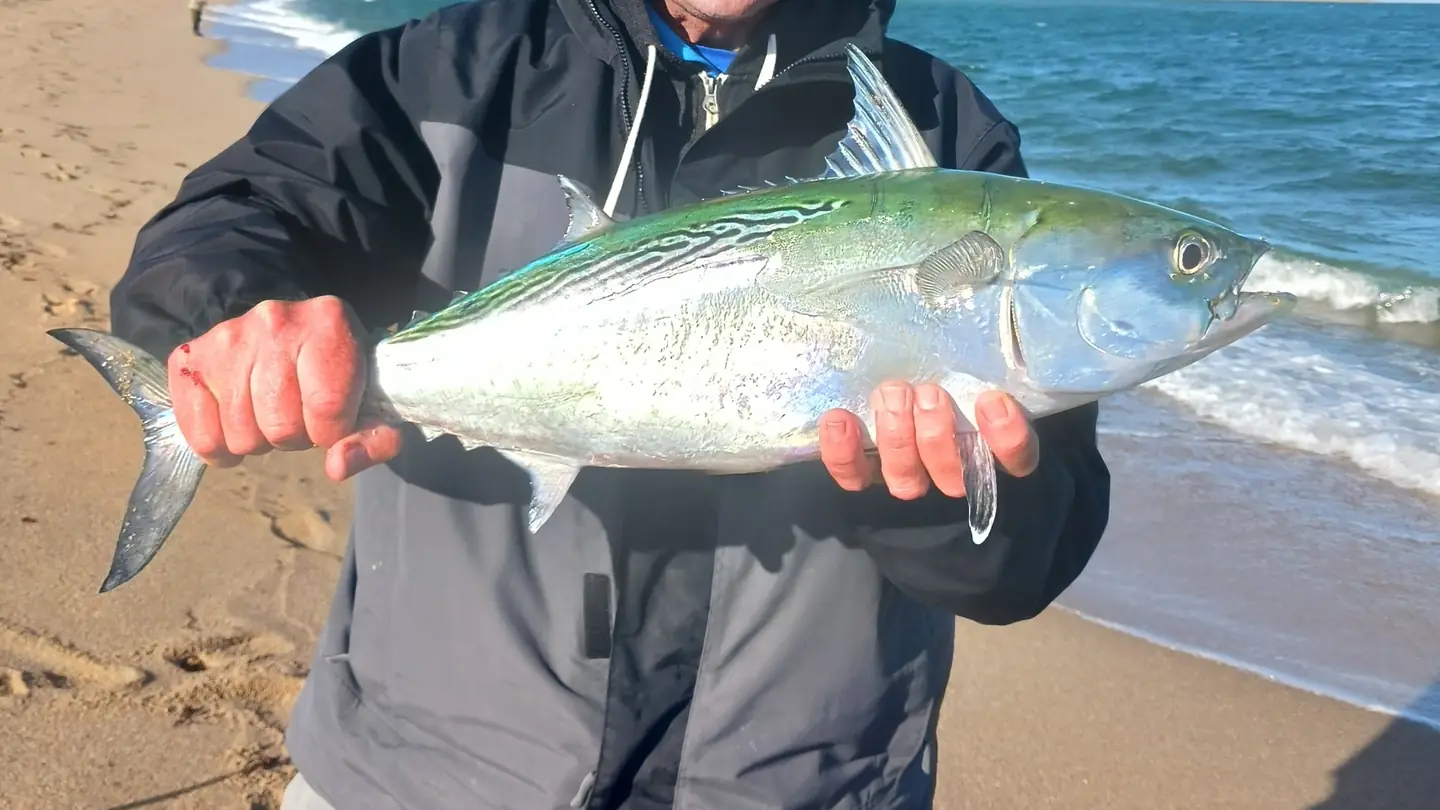
False albacore, "albies" to most anglers, are the fish that make otherwise calm surf casters run down the beach. They're small tunas, built for speed, and every fall they crash schools of tiny baitfish within casting range of the shore. Then they're gone, sometimes within minutes. Hooking one takes a quick, accurate cast. Landing one means surviving a run that can take most of your line.
Know the fish
False albacore (little tunny, albies, Fat Alberts, and "bonito" in Florida) are members of the tuna family. They have a steel-blue back with wavy dark lines over the rear half, a silver belly and, the giveaway, a few dark spots below the pectoral fin. The fins fold flat against the body for speed.
The main look-alike:
- Atlantic bonito have straighter stripes and no spots under the pectoral fin.
Most albies run 4 to 12 pounds. Fish of 15 to 20 pounds turn up, especially in the late-fall run in North Carolina.
Albies hunt by sight in daylight. They feed on small baitfish: bay anchovies, silversides, peanut bunker (young menhaden) and sand eels. Those tiny baits explain a lot about how you fish for them.
The fall run
False albacore live in warm water and expand their range north in summer and early fall. Along the East Coast, they're caught from about Cape Cod to the Carolinas, and they're a fall fish almost everywhere.
- New England and New York: albies show up in late summer and early fall. September and October are the heart of the season along the beaches, jetties and points.
- North Carolina: the late-fall run around Cape Lookout, from late October into November, is famous for big fish and big numbers.
Overall, September through November is albie season from Cape Lookout to Cape Cod. The exact timing changes every year with water temperature and bait.
Where to look
Albies don't hang around reefs and bridges the way bottom fish do. They go where current pins bait against something:
- Points, jetties and breakwaters. Fish can be caught from shore off beaches, jetties and breakwaters all around New England.
- Inlets and harbor mouths. In fall, bait flushes out of the bays and rivers through the inlets, and albies wait for it.
- Islands and rips. Anywhere tide pushes bait into a corner.
- Beaches. Along the surf line where bait is moving.
- Behind shrimp trawlers. In North Carolina, albies follow working trawlers to feed on the bycatch thrown overboard.
Reading the signs
- Birds. Gulls and terns diving on bait are the fastest way to find albies.
- Blitzes. Albies feeding hard drive bait out of the water. The bursts of spray often pop up and disappear quickly as the school moves.
- Repeat spots. Albies often come back to the same places. Mark where fish keep showing up on your chart or GPS and watch your sonar for bait.
How to approach a blitz
This is where most anglers go wrong.
- Approach slowly. Albies spook easily. Running the boat into or right next to the school puts them down.
- Cast ahead and beyond. Put your cast ahead of the fish and past them, then bring the lure into their path. A lure that lands on their heads spooks them.
- Be quick and accurate. Albies surface briefly and move fast. You often get only one good cast, so have your lure ready.
Don't just wait for blitzes, either. Blind-casting rips, drop-offs and points can catch albies that are feeding below the surface, and you might pick up a bluefish or striper too.
Lures
Match the bait, which is usually small and slim.
- Epoxy jigs. Small, slim, clear-bodied jigs that imitate tiny baitfish. They're the most popular albie lure.
- Metal casting jigs. Slender metals cast far into the wind and reach fish that are out of range for other lures.
- Slim soft plastics. For picky albies feeding on tiny bait, a slender soft plastic on a light jig head is often the answer.
- Bucktails. Small bucktails catch albies too.
- Popper and fly. A hookless popper with a small albie fly on a 3- to 4-foot dropper behind it. Pop it slowly. The popper draws them in and the fly gets eaten.
The retrieve
Albies usually want a fast lure. Cast, let it sink a moment and reel quickly. For picky fish, a steady retrieve with the rod tip down keeps the jig running just under the surface.
That said, albies often wheel around after a pass through the bait to pick off stunned and injured fish. When fast retrieves aren't working, try slowing down and twitching your lure like a crippled baitfish.
Fly fishing
Albies are one of the best fly-rod fish on the coast.
- Rod: a 9-weight for most albies. For the big late-fall fish in North Carolina, many anglers step up to an 11-weight.
- Flies: small, slim baitfish flies, such as clouser-style flies in pink, chartreuse and white, and epoxy baitfish patterns.
- Backing: plenty. A big albie can take a couple of hundred yards of backing on its first run.
- Presentation: get the fly in front of the fish quickly. Make fast strips.
When albies are "sipping," feeding on tiny bait just under the surface, they can be extremely fussy. Go to the smallest, sparsest fly you have.
Spinning tackle
- Rod: a 7- to 8-foot medium, fast-action spinning rod. A fast rod helps you cast small jigs far and fight a fast fish.
- Reel: 3000 size or so, with a smooth drag and enough capacity for long runs.
- Line: 20-pound braid.
- Leader: 15-pound fluorocarbon. Albies have sharp eyes. Some anglers catch plenty on heavier mono leaders, but fluorocarbon is the usual choice.
Fighting and releasing albies
Let the first run go. Don't try to stop an albie on its first blistering run, and keep your drag smooth. Albies fight hard right to the boat, and just when you think they're done they'll blast off again.
Most East Coast anglers release their albies, which makes them a sustainable catch-and-release fishery. Unhook them quickly and get them back in the water.
Before you go
False albacore aren't regulated the same way in every state. Check your state's current saltwater rules before you go.
Cover photo: robbieedun via iNaturalist (CC BY 4.0, cropped).