Article
Carp Fishing
Common carp live in almost every lake, pond and river, grow past 30 pounds, and pull harder than nearly any freshwater fish. They're also wary and picky. Here's how to find them, chum them in, rig a hair rig, and land a big one.
November 10, 2026
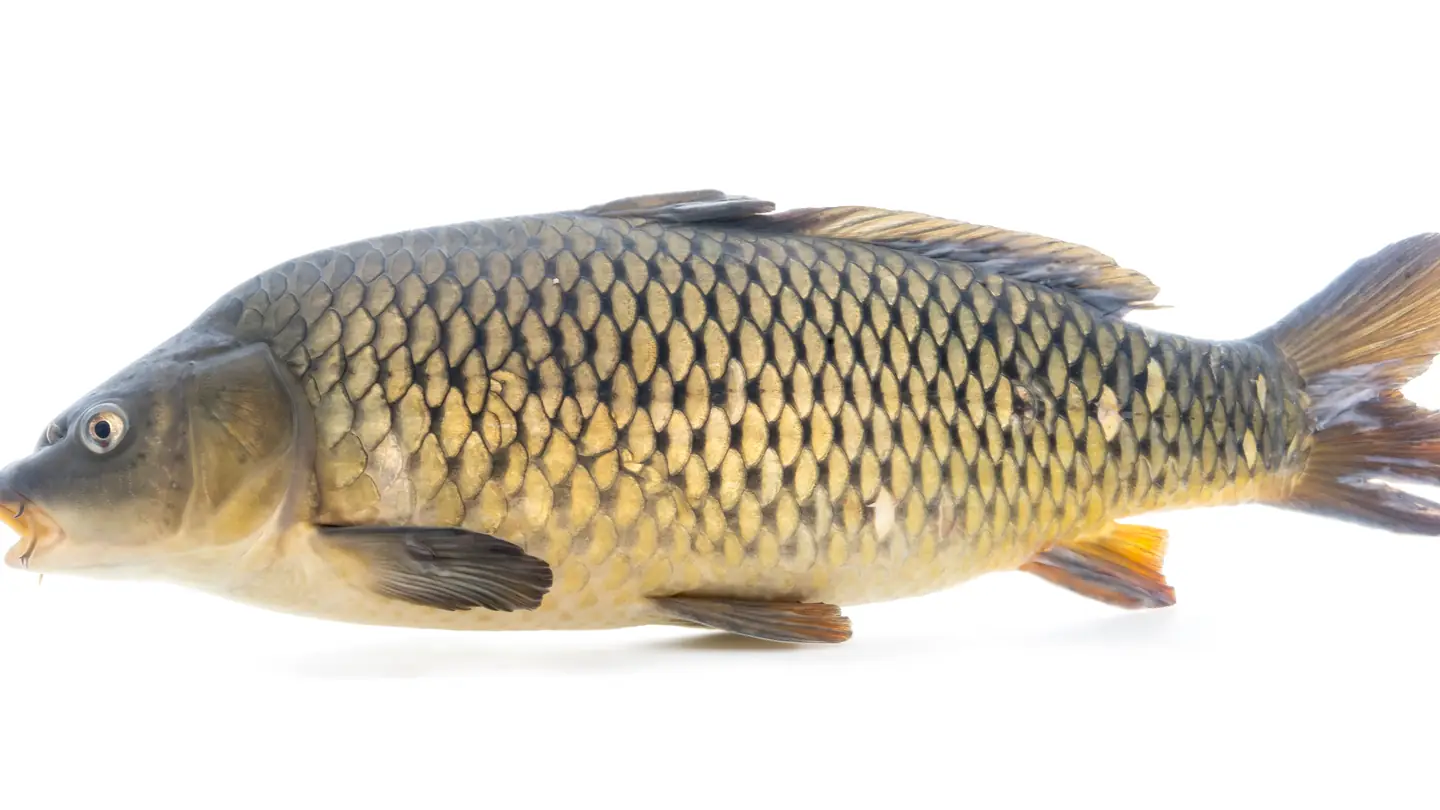
In much of the U.S., carp are still called trash fish. In Europe, they're the most popular sport fish there is. The Europeans have it right: common carp grow past 30 pounds, they're smart and wary, and once hooked they make long, powerful runs that will test any freshwater tackle. Best of all, there's probably a carp lake or river near you, and you can fish for them from the bank with a can of corn.
Know the fish
Common carp are heavy-bodied members of the minnow family, brassy green to golden brown, with large scales, a downturned mouth and barbels at the corners of the mouth. Mirror carp, with a patchy pattern of big scales, are a variety of the same species. Common carp are not the jumping silver carp (Asian carp) you've seen in videos.
They're native to Europe and Asia and were brought to North America in the 1800s. Today they live in almost every state, in lakes, ponds, reservoirs, rivers and even city waters.
Most carp you'll catch weigh 5 to 12 pounds. Many waters hold fish of 20 to 40 pounds, and the biggest top 50.
Carp eat just about anything: aquatic insects and larvae, worms, crayfish, snails, mussels, plants, seeds and fallen fruit. They find most of it by taste and smell, with barbels covered in taste receptors.
Why carp are hard to catch
Carp have sharp senses and quick reflexes. They spook easily from noise, shadows and movement. They can see heavy line, and they test food by sucking it in and spitting it out. If a carp feels a hook point, or tension on the line, it drops the bait instantly.
So carp fishing comes down to a few things: get them feeding, hide the hook, and let them take the bait without feeling anything until it's too late.
Where and when to find carp
Spring
As the ice melts and the water warms, carp leave deeper water and start feeding in the shallows. On sunny days, look for shallow flats, coves and bays that catch the sun and warm first, especially near deeper water. In rivers, high, cold snowmelt flows can make early fishing hit or miss. Look in sheltered coves, backwaters and eddies until the water drops back to normal.
Summer
Spring and summer are the best seasons for carp. Carp feed all over in summer, including at the surface. Look for:
- Fruit trees: when mulberries ripen in late spring and early summer, carp gather under trees that overhang the water to slurp fallen berries.
- Insect hatches: during cicada swarms, carp feed hard on the surface.
- City ponds: in park ponds where people feed ducks, carp are used to bread and come to it fast.
Big rivers
Big rivers produce many of the biggest carp. Use the smallest sinker that holds bottom in the current, and look to sheltered coves, backwaters and eddies when the river is high.
Chumming and prebaiting
Chumming is the single biggest key to carp fishing. Carp are creatures of habit. When they find food in the same place day after day, they keep coming back. And when several carp compete for food, they lose their caution and eat more boldly.
- Prebait. Where it's legal, toss corn or other bait into your spot every day for a couple of days (or longer) before you fish. Your spot becomes a regular feeding area.
- Chum while you fish. Even on a new spot, throw a handful of corn, dough or oatmeal around your hook bait after every cast or two.
Check your local rules first. Some waters don't allow chumming, or don't allow corn.
Baits
- Sweet corn. The classic American carp bait. It's cheap, easy to find, bright yellow and sweet-smelling. Fish one or several kernels, and toss loose corn as chum.
- Feed corn (field corn). Cheaper and tougher than sweet corn, so it stays on a hair rig better. Soak dry kernels for about 24 hours in lightly salted water, then boil for 30 to 40 minutes. Add flavoring if you like.
- Dough baits. Mix flour and water, then add flavors: something savory like garlic or something sweet like fruit gelatin or jam. Add oatmeal for texture.
- Boilies. Hard, boiled dough balls with flavors and attractants, tough enough to stay on a hair rig.
- Bread. Deadly where carp are used to people feeding ducks. Squeeze it firm on the hook.
- Worms and nightcrawlers. Carp eat them, but corn and dough usually work better.
- Surface baits. Floating dog biscuits, bread crust, mulberries and buggy topwaters for carp feeding on top.
Rigs
The hair rig
The hair rig is the most important carp rig. Instead of putting the bait on the hook, you hang it on a short piece of line (the "hair") just past the hook. When a carp sucks in the bait, it doesn't feel the hook. When it tries to spit the bait out, the bait pivots on the hair and pulls the bare hook point into its lip. Carp often hook themselves.
How to tie a simple hair rig:
- Cut about 12 inches of 30-pound braid.
- Tie it to a size 4 or 6 heavy-wire hook with a knotless knot, leaving a loop of braid (the hair) hanging an inch or so past the bend of the hook.
- Tie the other end to a swivel, making a hooklength of about 8 inches.
- Thread a 1- to 2-ounce in-line sinker onto your main line, add a bead, and tie on the swivel.
- Use a baiting needle to thread your bait (two or three corn kernels or a boilie) onto the hair. Push a small stop into the loop to hold it on.
Ready-made hair rigs are easy to buy if you don't want to tie them.
Simple bait rig
You don't need a hair rig to start. A small bait-holder hook on a sliding-sinker (fish-finder) rig with as little weight as possible works too. Bury the hook in the corn or dough so the point doesn't show.
Method feeder
The method feeder is a European rig that puts your bait and chum in the same spot. Thread a method feeder (a weighted frame) onto your main line, tie on a short hair-rigged hooklength of 3 to 4 inches, and mold groundbait or pellets around the feeder. When it lands, the feed breaks apart around your hook bait.
Setting up and waiting
Carp need to pick up the bait and swim off without feeling any resistance. A tight line or a heavy drag makes them drop it.
- Bait-runner reel. A bait-runner (bait-feeder) spinning reel lets line run off freely while a fish swims away. When you turn the handle, the normal drag kicks in. This is the most useful piece of carp tackle you can buy.
- No bait-runner? Set your drag very light or leave the bail open, then tighten up as you set the hook.
- Rod holders. Use a holder that cradles the rod without pinching the line, such as a forked bank stick or horizontal rod rest.
- Bite alarms. Electronic bite alarms tell you when line is moving, which helps on long waits. They're nice to have, not essential.
When a carp takes, the line runs off steadily. Pick up the rod, engage the reel and lift into the fish.
Tackle
Carp are strong, but heavy line costs bites.
- Rod: a heavy spinning rod or a light surf rod. A medium 6- to 7-foot spinning rod works on smaller waters.
- Reel: a spinning reel that holds 150 to 200 yards of line, ideally a bait-runner.
- Line: 15- to 20-pound mono for most fishing. On clear water with wary fish, you may need to go lighter, even to a 6-pound leader, and rely on your drag and patience to land big fish.
Fighting carp
A big carp's first run can take 20 to 40 yards of line or more. Don't rush it. Keep your drag set light enough that the fish can run, keep steady pressure, and expect strong surges right at the net.
Handling and releasing carp
Carp are tough, but big ones can be hurt by rough handling.
- Use a big net. Unhook the carp in the net while it's still in the water when you can.
- Use an unhooking mat. If you lift a carp out, lay it on a padded mat (or a piece of foam inside a trash bag) instead of letting it flop on the ground.
- Never lift a carp by the gills.
- Watch the spine. Carp have a sharp, serrated spine at the front of the dorsal fin.
- Slide it back gently after a quick photo.
Before you go
Carp rules differ by state. Some waters limit chumming or the use of corn. Check your state's current rules before you go.
Cover photo: Sam Stukel, U.S. Fish and Wildlife Service (public domain).